



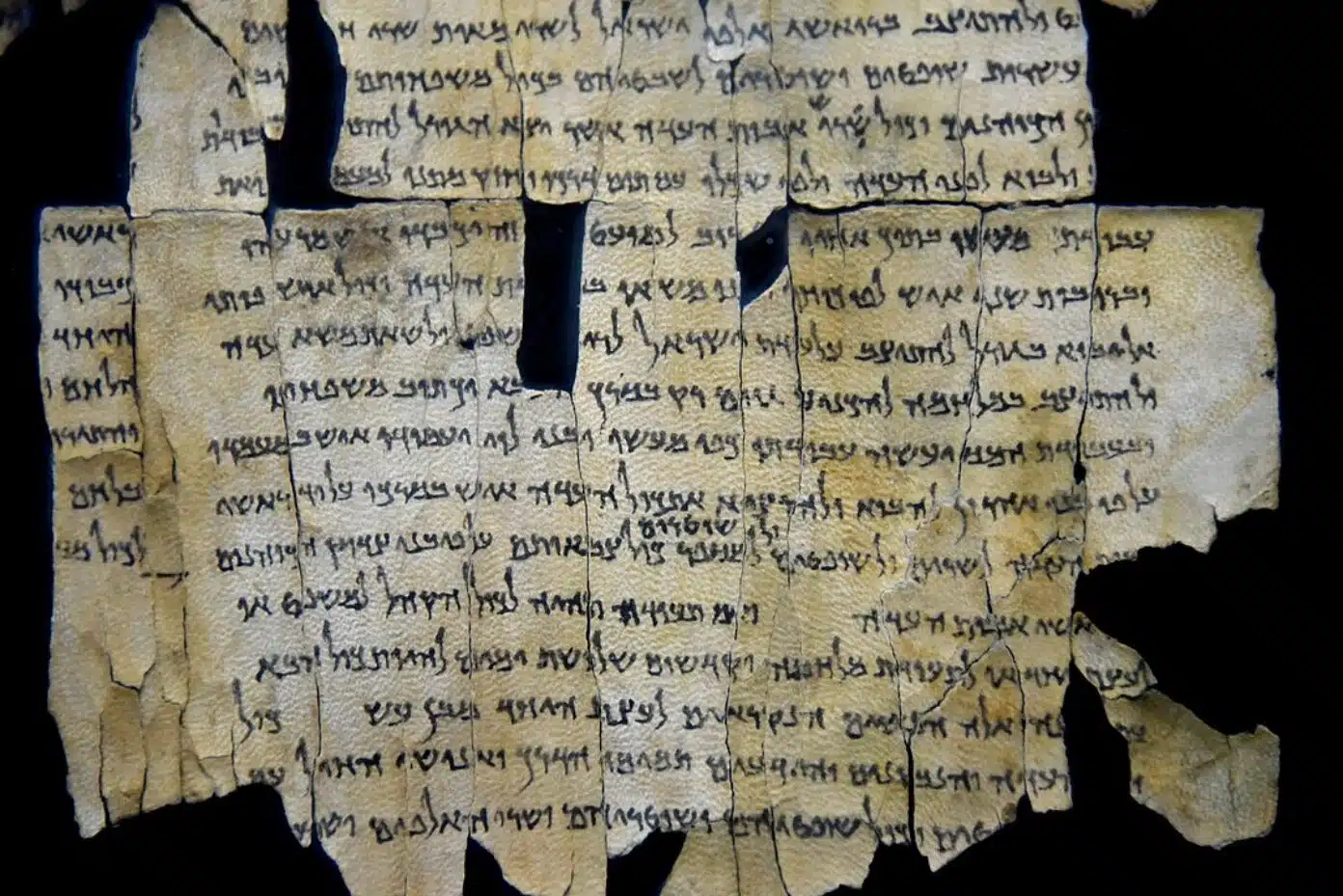
For decades, scholars studying the Dead Sea Scrolls have puzzled over a small group of strange symbols and alphabets that appeared to belong to no known writing system. Now, a researcher says one of those scripts—long dismissed as impossible to decipher—may finally have been read.
Emmanuel Oliveiro of the University of Groningen in the Netherlands claims he has decoded Cryptic B, an unfamiliar alphabet found in a handful of Dead Sea Scroll fragments. Because so little material survives, many experts believed the script could never be understood. Oliveiro presented his findings in December in the academic journal Dead Sea Discoveries.
Why Cryptic B resisted interpretation
Cryptic B survives almost entirely in two badly damaged scrolls, known as 4Q362 and 4Q363. In a few other manuscripts, scribes briefly inserted Cryptic B symbols into otherwise standard Hebrew texts before switching back. There are no complete passages and no continuous lines of writing.
That scarcity posed a major obstacle. With no long texts to compare and few repeated symbols, scholars lacked the patterns usually needed to identify an unknown script. For decades, the material was considered too fragmentary to analyze.
A method borrowed from earlier breakthroughs
Oliveiro approached the problem using a method pioneered in 1955 by scholar Józef Milik, who deciphered another coded script from Qumran known as Cryptic A. The approach assumes a mono-alphabetic substitution system, in which each Hebrew or Aramaic letter is consistently replaced by a single symbol.
Oliveiro also noted visual similarities between Cryptic B and Cryptic A. Several symbols resembled modified Hebrew letter forms, suggesting the two systems followed related principles. This strengthened the case that Cryptic B was not decorative or random, but a structured form of writing.
A single word unlocks the script
The breakthrough came when Oliveiro identified a sequence of five symbols in a fragment from 4Q362 that appeared to spell the Hebrew word Yisrael. The symbols matched known letter shapes, including a modified yod, a paleo-Hebrew he used as shin, a damaged resh, an aleph known from Cryptic A, and an embellished lamed.
Haaretz (İsrail):
Ölü Deniz Parşömenleri’ndeki bilinmeyen alfabe çözüldü 📜
🔹 Hollanda’daki Groningen Üniversitesi’nden araştırmacı Emmanuel Oliveiro, Ölü Deniz Parşömenleri’nde yer alan ve “Gizemli B yazısı (Cryptic B)” olarak adlandırılan alfabeyi çözdüğünü açıkladı 🔍
— Yabancı Basın (@yabancibasin) December 12, 2025
Statistical searches of the Hebrew Bible showed Yisrael was among the most likely five-letter words with no repeated letters. “Once you’ve seen it, you can’t unsee it,” Oliveiro said in an interview. From that point, he says, much of the script began to fall into place.
What the texts appear to say
The Cryptic B passages do not copy biblical texts word for word. Instead, they echo familiar biblical language and themes common in Qumran writings. Identifiable terms include references to Judah, abandonment, the “tents of Jacob,” and numerically structured events that may refer to dates. Such patterns align with broader biblical traditions, in which numbers often mark significant moments in history or prophecy.
Scholars once assumed cryptic scripts concealed mystical or supernatural knowledge. Oliveiro argues otherwise. He suggests Cryptic B was designed to signal status rather than enforce secrecy. The ability to read it likely marked education or rank within a learned community. The system obscured meaning without making it truly inaccessible.
Cautious reception among experts
Christopher Rollston, a professor of Biblical and Near Eastern Languages at George Washington University, describes Oliveiro’s decipherment as plausible but difficult to confirm. The methodology follows established scholarly practice, he says, but the lack of additional manuscripts makes independent verification nearly impossible.
Five of the script’s 22 letters remain uncertain, largely due to damage and rarity.
A shift, not a conclusion
Cryptic B may never be deciphered with complete certainty. Still, a script once considered unreadable now appears to follow clear linguistic rules. If Oliveiro’s interpretation holds, it offers new insight into how ancient scribes used writing not just to record ideas, but to signal identity and authority. For a millennia-old alphabet long shrouded in mystery, that alone marks a significant shift.
See all the latest news from Greece and the world at Greekreporter.com. Contact our newsroom to report an update or send your story, photos and videos. Follow GR on Google News and subscribe here to our daily email!

