



Thousands of Turks rushed to Thessaloniki on Monday, November 10th, to honor the 87th anniversary of the passing of Turkey’s leader, Mustafa Kemal Atatürk.
Waving Turkish flags and singing traditional songs in his honor, Turkish nationals flocked to the house, which is regarded as Atatürk’s birthplace and now houses Turkey’s consulate in Thessaloniki.
The streets around the house had become jammed with tourist buses, and some streets were closed to traffic to accommodate the high volume of guests, according to local news media.
@thes.gr «Πλημμύρισε» από κόσμο σήμερα το τουρκικό προξενείο στη Θεσσαλονίκη με αφορμή την επέτειο θανάτου του Κεμάλ Ατατούρκ! Στο χώρο υπάρχει και το σπίτι-μουσείο, στο οποίο φέρεται να γεννήθηκε ο ιδρυτής του σύγχρονου τουρκικού κοσμικού κράτους. . . #thessaloniki #turkey #fyp #salonica #fy
Visitors from Turkey flooded Apostolou Pavlou Street and celebrated the memory of Atatürk with fervent events. Some of them wore T-shirts with the former leader’s image and were photographed outside Atatürk’s House.
Among the visitors were many students and school teachers from every corner of the neighboring country. All came to pay homage to the founder of modern Turkey.
“For us, he is our father,” said a lawyer from Istanbul, who came to Thessaloniki with his young son.
Mustafa Kemal Atatürk: Founder of Modern Turkey
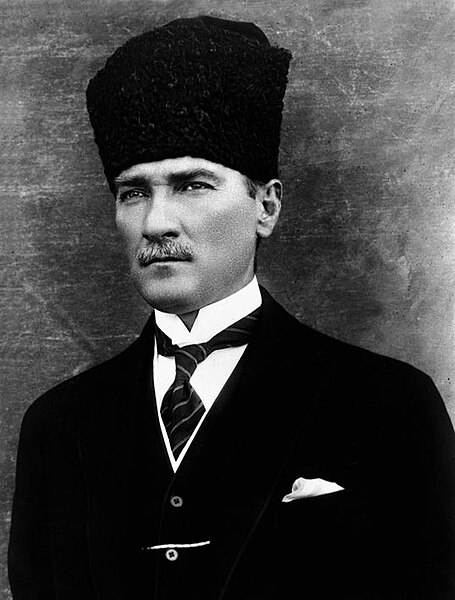
Μilitary officer, politician and reformer, Mustafa Kemal Atatürk was born to a humble Turkish family in Thessaloniki on May 12, 1881. At the time, the city was still under Ottoman rule.
While attending military school, a teacher who admired his performance recommended that he take the name Kemal, which means maturity and perfection.
He served in the Ottoman army and was politically active as well. In 1923, he became the first president of the Republic of Turkey.
The Modern Turkish State
As President, Mustafa Kemal Atatürk abolished the Caliphate, implementing his broad reform program. He closed all institutions based on Islamic canon law. He abolished the traditional education system, which was mainly religious, and established new-type folk schools.
He modernized the Ottoman legal system and established gender equality. Oriental molds in dress, which had religious significance, were thrown away in favor of European clothes.
In 1928 he replaced the Arabic script with the Latin alphabet and made sure that Western classical music and theater were spread to the people.
With a broad research program in the field of Turkish language and history, he wanted to strengthen national consciousness, rather than religion, as a cohesive link.
In 1933, he published a law that made it mandatory for citizens to use a family name, and the National Assembly gave Kemal the name Atatürk (Father of the Turks).
The reformer of the Turkish state died on November 10, 1938, in Istanbul.
See all the latest news from Greece and the world at Greekreporter.com. Contact our newsroom to report an update or send your story, photos and videos. Follow GR on Google News and subscribe here to our daily email!

