



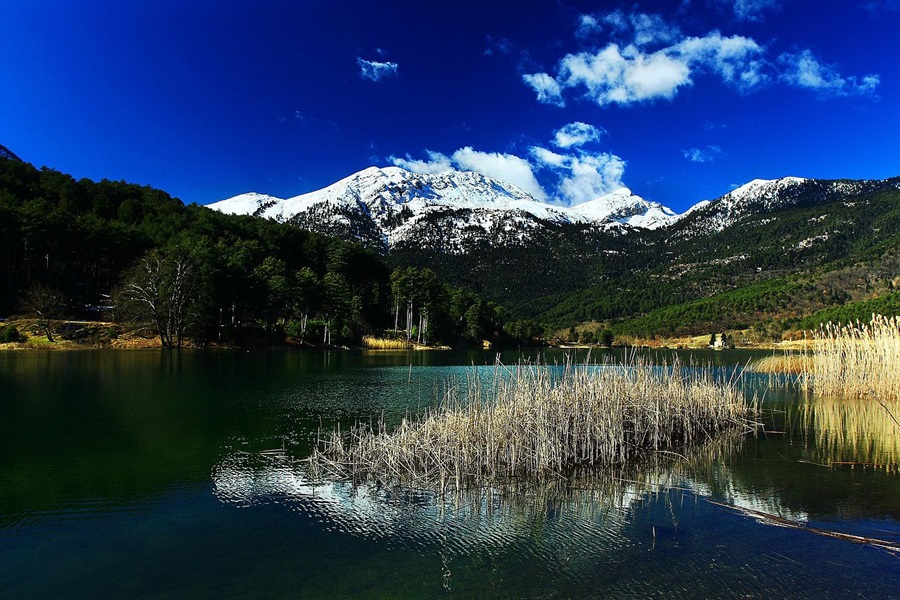
Lake Doxa, located in the lesser-known corner of Corinthia on the Peloponnese, is a place of astounding beauty that has been dubbed “the Switzerland of Greece.”
Nestled in the triangular-shaped Feneos Valley—bordering Achaia and Arcadia—the lake is surrounded by mountainous terrain and dense pine forests. It is the crown jewel of the region and sits at an altitude of 900 meters (2,953 feet) near the village of Archaia Feneos.
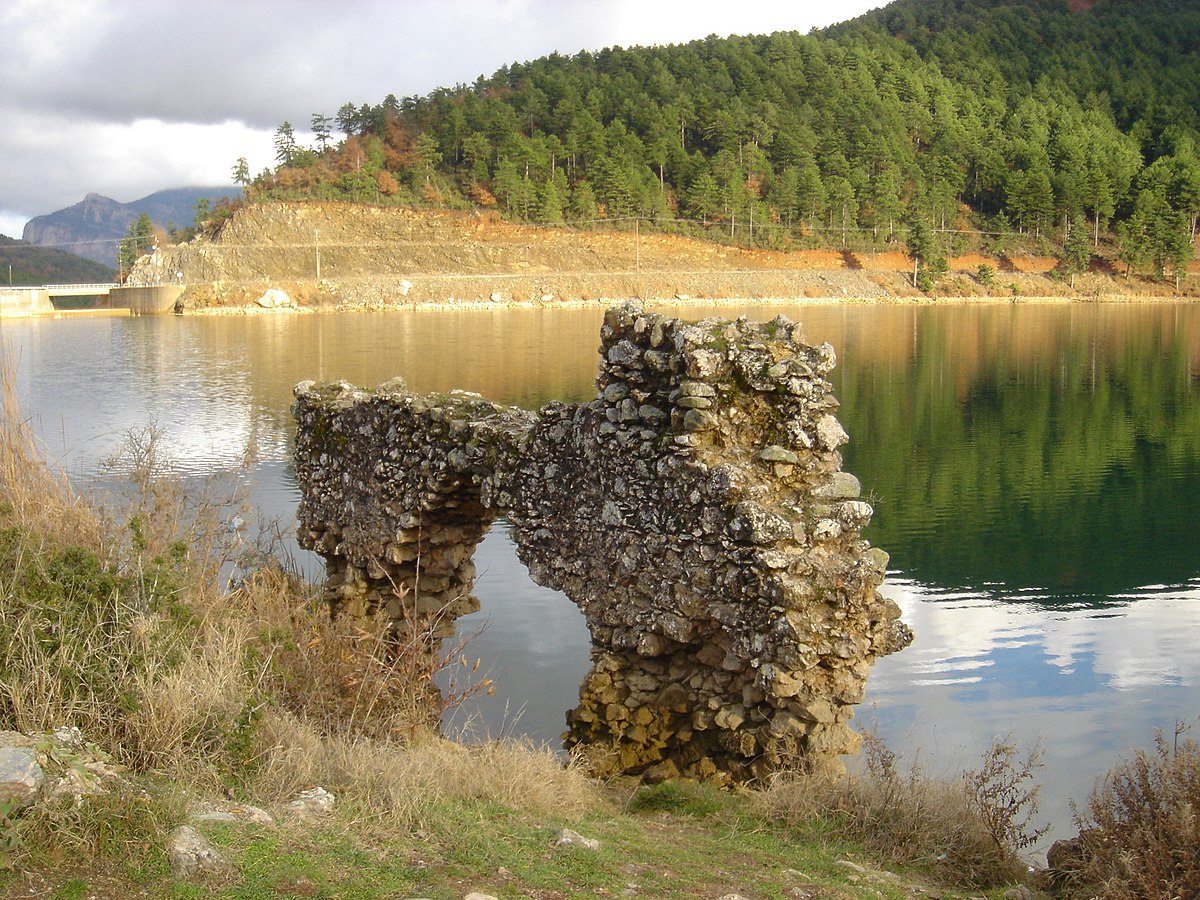
The picturesque artificial lake is surrounded by pine forests, and construction was completed in the late 1990s. Lake Doxa is one of the most remarkable lakes in the Peloponnese, along with Lake Tsivlos, in Achaia, also in the northern Peloponnese. The small river Doxa feeds and drains the lake, which empties into the plateau of Feneos.
Nine stone-built villages surround the lake, adding impressive touches to the area’s astounding beauty. The quiet road that circles the lake is recommended for romantic walks and bicycle rides while enjoying the mountain view.
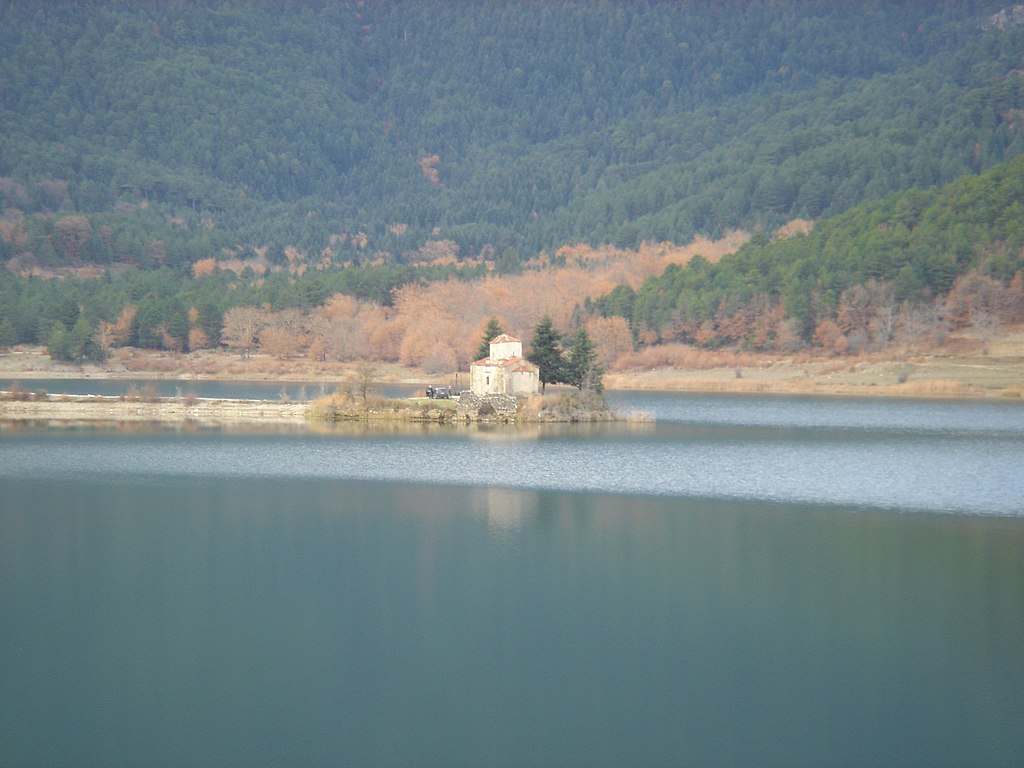
The church of Agios Fanourios at Lake Doxa in Greece
In the heart of the lake on a small peninsula, you will find the small church of Agios Fanourios. Saint George’s Monastery in Feneos was relocated to higher ground north of the lake.
The monastery, which was founded in the 14th century during the years of the Greek Revolution in 1821, was used as the headquarters of the Society of Friends, led by the abbot of the monastery Nathaniel and with the help of other abbots of the neighboring monasteries.
During the Ottoman occupation of Greece, the monastery served as a secret school (Greek: κρυφό σχολειό) that would teach the Greek language and history. Priests did the teaching. There would be about ten to fifteen students, gathered around a priest in the narthex of a church or in a monastery around a monk, who would be taught only the most elementary Greek.
The area was later used by Theodoros Kolokotronis—an iconic figure of the Greek War of Independence—to hold meetings with chieftains from Arcadia and Corinthia. In ancient times, it was considered part of the Arcadian region, and according to Herodotus—known as the “Father of History”—the river Styx originates near Feneos.
Feneos lies at the foot of Mount Cyllene, the mythical birthplace of Hermes. As a result, it served as an important cult center dedicated to the god, particularly during the annual Hermaea festival.
See all the latest news from Greece and the world at Greekreporter.com. Contact our newsroom to report an update or send your story, photos and videos. Follow GR on Google News and subscribe here to our daily email!

