



Credit: Greek Reporter Archive
As Greece experienced some of the most widespread demonstrations in its modern history on Friday over the deadly Tempi train crash, people have wondered whether there were demonstrations in Ancient Greece as well.
Ancient Greece often conjures up images of grand religious temples and complex philosophical ideas, but demonstrations played a crucial role in shaping the societies of many city-states. Citizens in ancient Greece—particularly in Athens—took to the streets to demand change, proving that collective action has always been a driving force, even in societies millennia ago.
The first big demonstrations of Ancient Greece
Democracy in Athens was developed based on demands that the society had asked through protests and demonstrations.
By the 7th century BC, Athens experienced significant social unrest due to an agrarian crisis and increasing inequality, which led to feelings of mistreatment and exclusion among the lower social classes within the city-state. The aristocratic ruling class endeavored to retain their power and privileges amidst these tensions. However, ordinary citizens grew increasingly discontented with their circumstances and the city-state’s public affairs. This unrest culminated in 508 BC with the Athenian Revolution, one of history’s most notable protests.
At the time, Isagoras, a Spartan-backed oligarch, sought to dissolve the democratic council of Athens and exile his opponents, which resembled a modern coup d’etat. But the people had had enough. Ordinary Athenians besieged Isagoras and his allies on the Acropolis for two days, forcing them, eventually, to flee the city. This dramatic protest paved the way for Cleisthenes‘ return and his groundbreaking democratic reforms that left their mark in ancient Greek history. This demonstration was a clear message: the people would no longer tolerate tyranny, clearing the path towards democracy.

In 632 BC, Athenians had protested again, this time opposing Cylon’s attempted coup. Slave revolts, such as the miners’ rebellion in Lavrio, also occurred in ancient Greece. According to Posidonius, as cited by Athenaeus, slaves working in the Lavrio mines of Attica around 100 BC successfully revolted, killing their guards and seizing control of the Acropolis of Sounion. From this fortified position, they launched destructive raids across the Attican countryside. These rebels held out “for a long time” (ἐπὶ πολὺν χρόνον), potentially lasting months or even years, before being ultimately subdued.
Demonstrations in Ancient Greece were a fight against oppression
Protests in ancient Greece weren’t limited to political upheavals; they were also a response of the people to systemic oppression or inequalities. Before the democratic reforms of Cleisthenes, many Athenians felt “enslaved” by the wealthy elite who controlled most of the land and resources of their city. These stark inequalities led to public demonstrations and protests demanding freedom and equality. Remarkably, these protests didn’t fall on deaf ears. Cleisthenes, though an aristocrat himself, recognized the demands of most of the people and implemented reforms that redistributed power more equitably in the city-state of Athens.
Interestingly, ancient Greek protests weren’t always chaotic or violent. Violent riots were not as common as they are today, but fierce debates and verbal altercations were the norm. Public spaces like the Agora and Pnyx were mainly platforms for citizens to express their concerns publicly and debate controversial or unpopular policies. Imagine standing in a crowd where fiery speeches were heard under the Athenian sun, with people discussing them vividly and passionately—a form of pure democracy that modern representative democracies lack.
Demonstrations were not inclusive
While opposing power, promoting demands, and bringing about change are the common goals of modern demonstrations and those in ancient Greece, their magnitude, inclusion, and structure are very different.
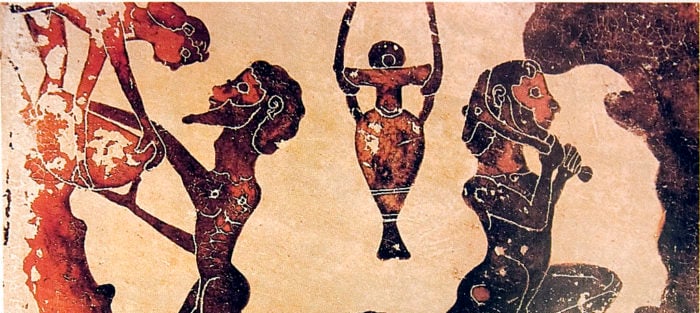
Women, slaves, and foreigners were excluded from political participation in ancient Greek society and therefore in any demonstrations or protests. These were mostly limited to free male citizens with the power to participate in democratic procedures. On the other hand, modern demonstrations are frequently inclusive and attract participants from a wide range of backgrounds, regardless of their gender, country, or social class.
On the contrary, the more marginalized a group is, the greater the chances are that they will protest in a modern, democratic society.
Modern movements utilize digital platforms and social media to rapidly mobilize support and disseminate their message. However, ancient protests depended on in-person discussions and meetings in public areas like the Agora or the city-state’s Acropolis.
In conclusion, demonstrations in ancient Greece were integral in shaping their city-states’ political and social landscape, particularly in Athens. These acts of collective expression against unpopular policies, authorities, oppression, and inequality brought about democratic reforms and showed people the power of public action in driving social change
See all the latest news from Greece and the world at Greekreporter.com. Contact our newsroom to report an update or send your story, photos and videos. Follow GR on Google News and subscribe here to our daily email!

