



Spanning 18 kilometers, the new Fehmarn Belt fixed link between Germany and Denmark will be the world’s longest and deepest underwater tunnel, combining road and rail.
Once completed, the tunnel promises to reduce travel time, strengthen ties between Scandinavia and Central Europe, form a greener traffic lane, and boost train transport. The ten billion euro price tag, therefore, promises to be worth it and has the stamp of approval from the European Commission’s Ten-T Programme.
The underwater fixed link tunnel will consist of two two-lane highways divided by a service passage and two separate railways.
“Today, if you were to take a train trip from Copenhagen to Hamburg, it would take you around four and a half hours,” says the technical director at Jens Ole Kaslund, Femern A/S, the state-owned Danish company in charge of the project. “When the tunnel will be completed, the same journey will take two and a half hours.”
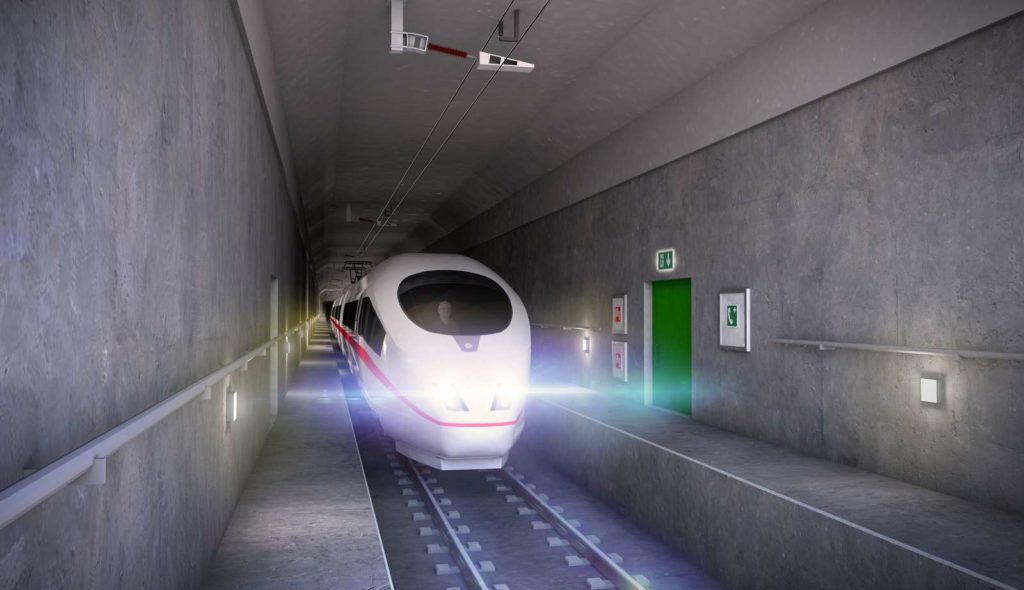
The Fehmarn Belt Fixed Link Project
Femern A/S laid the foundations for the fixed link concept back in 2008, but it took another twelve years before the first groundbreaking ceremony occurred in 2020 in Denmark and then in 2021 in Germany. Initial site preparation began at Rødbyhavn on Lolland and Puttgarden on the island of Fehmarn. In 2021, the company established new channels and access roads, as well.
The company also set out to create work harbors and dredge the Fehmarn Belt to establish new land areas. They have also built a new, so-called tunnel town to go with the “tunnel factory” so to say. There the necessary elements for the Fixed Link project may be constructed.
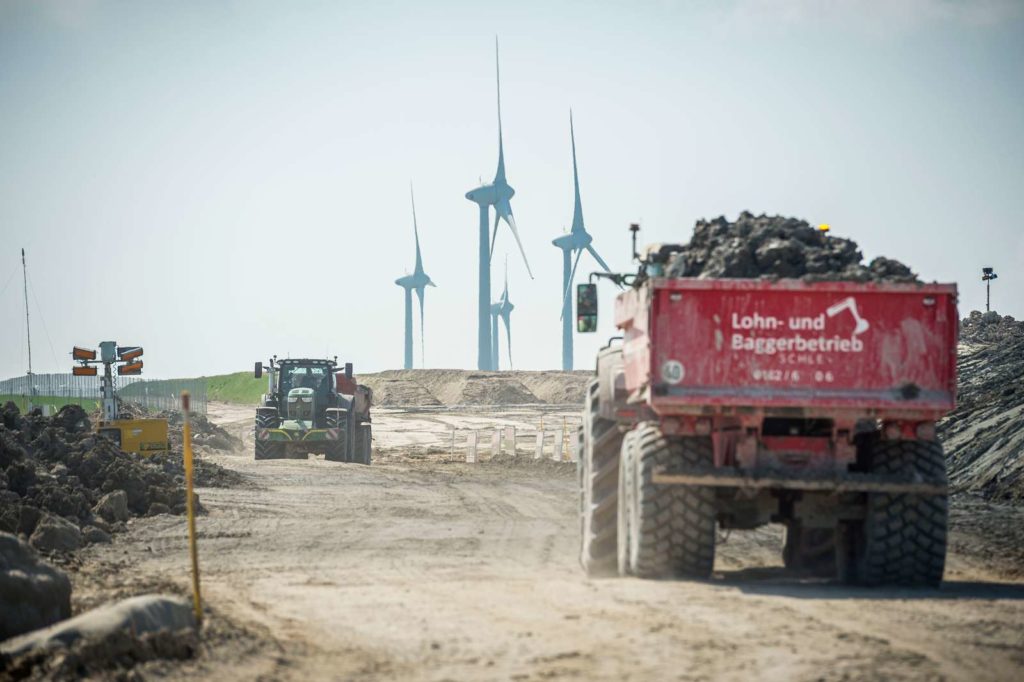
In 2022, Femern began setting up portal buildings on both sides, with completion anticipated by the close of 2024 on the Danish side and in 2025 on the German side. The portals link the tunnel’s railway and motorway to the upgraded and newly constructed roads and railways in the hinterland.
By the spring of 2024, a permanent dike was completed across the Danish tunnel portal, allowing the removal of the outer temporary dike that had been built to shield the sea. As a result, the coastline on the Danish side has been straightened.
The hope is to test and open in 2029. Safety and contingency procedures will also be tested and approved by the authorities before the Fehmarn belt tunnel opens to traffic.
The tunnel and the question of long-term sustainability
Sustainable construction has become a mantra for many enterprises looking to offset the effects of global warming. From companies in Sierra Nevada to environmental educational partnerships in Panama and green walls in Africa, the future is looking bright. The future is looking green.
The purpose of the project is to create a tunnel that is time-resistant, long-term, and sustainable. Yet, there are some critics who doubt that that is a possibility. Environmentalists, in particular, worry about the damage construction might do to the seabeds and the ocean. They wonder if it’s worth the tunnel’s alleged benefits.
Furthermore, as with all the best-laid plans of mice and men, green credentials do not always offset the ecological impact of projects involving large-scale construction. That is why some environmentalists, such as the German group NABU, have expressed worry over the potential destruction of the EU-protected Fehmarn Belt. Many also wonder if the tunnel will meet the EU’s green requirements for the future.

Yet, Femern A/S has expressed confidence on the subject, highlighting instead the “temporary” effect on the environment of building underwater.
According to Vincentsen in an interview with Euronews Next, “Vast areas of new nature will be established as a result of the project.” He also asserted that “on land, 300 hectares of coastal wetlands will be created, and at sea, we are establishing 42 hectares of new reefs.”
“New green corridors will be created at Rødbyhavn to cohere with nature. These will form the basis for robust insect populations and protected flora and fauna, such as amphibians and orchids,” Femern’s website mentions.
In April 2023, the planting of the climate forest started, where local school kids, partners and the Vice Mayor of Lolland Municipality took part.
In response to the effect on C02 levels and the EU’s green policy, Vencentsen underscored the project’s positive effect.
“The tunnel will increase capacity and relieve congestion on the rail and road networks in Denmark,” he argued “and create significant savings in time, energy, fuel, and CO2 emissions for transit traffic. This is why the European Commission has named the Fehmarn Belt Tunnel a priority project.”
See all the latest news from Greece and the world at Greekreporter.com. Contact our newsroom to report an update or send your story, photos and videos. Follow GR on Google News and subscribe here to our daily email!

