



Minoan roofs have long been depicted as flat, but archaeological discoveries across the Aegean suggest ancient builders also used sloping, pitched and cone-shaped designs. Evidence from clay building models, roofing materials and rainwater drainage systems points to a more diverse architectural tradition in Bronze Age Crete.
Among the most important examples is a clay house model discovered at Malia, one of Crete’s major Minoan settlements. Archaeologists Jan Driessen and Alexandre Farnoux reconstructed the square building with four sloping roof surfaces that meet at a flat central section topped by two chimneys.
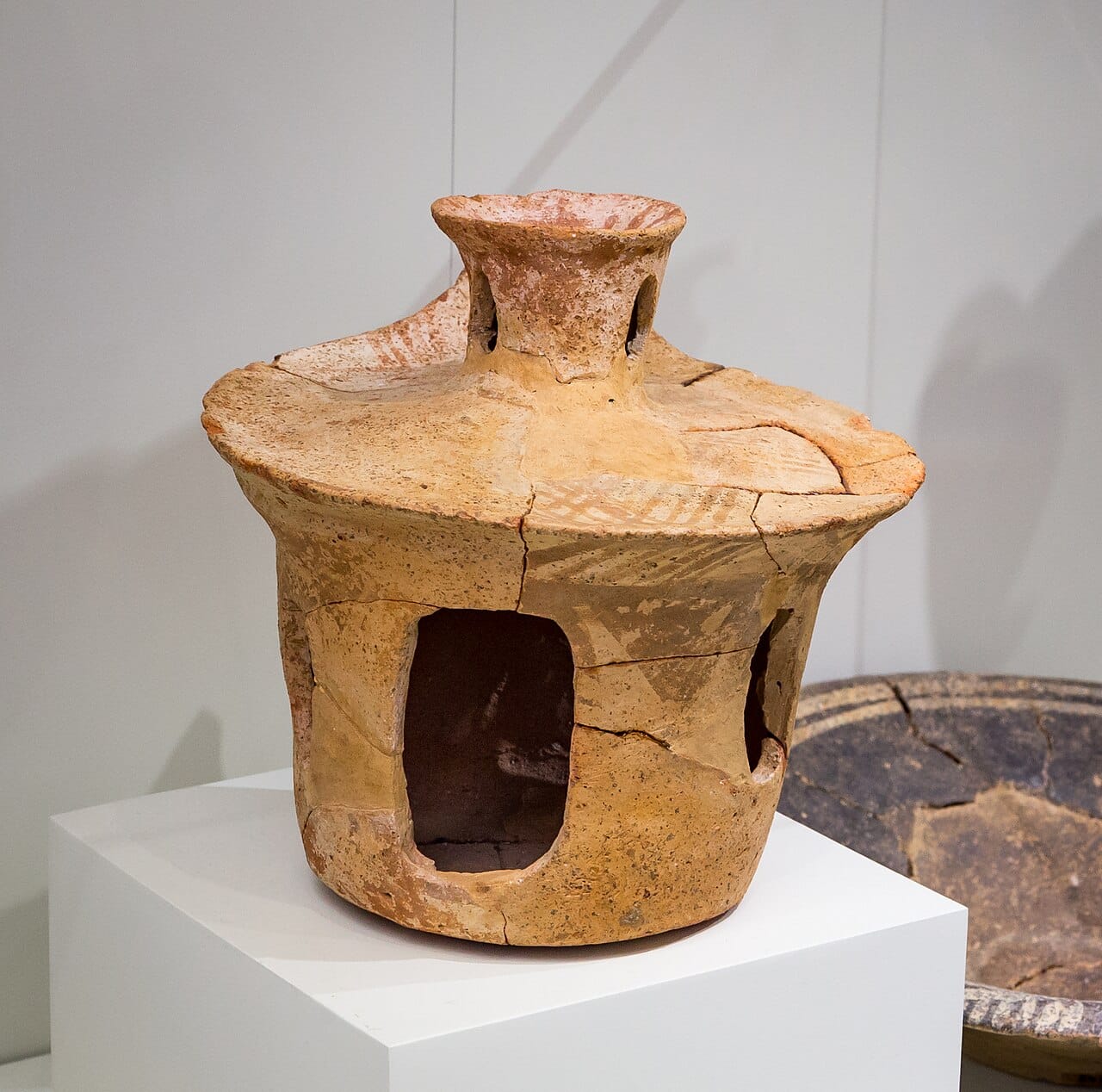
Evidence of curved and sloping roofs dates back even further. A clay model recovered from an Early Bronze Age tomb at Lebena in southern Crete depicts a circular building with windows, a doorway and a conical roof. Ancient engraved seals also portray round structures with pointed roofs, some surrounded by vegetation.
Archaeological clues suggest not all Minoan roofs were flat
At Akrotiri on the island of Thera, where architecture closely followed Minoan building traditions, archaeologists uncovered a partially preserved roof with a section sloping at 25 degrees. A clay spout positioned within an opening in a low protective wall allowed rainwater to drain from the roof.
Excavations at Palaikastro uncovered terracotta roof tiles and limestone slabs among the remains of a building destroyed by fire. Similar evidence emerged at the palace of Phaistos, where fragments of clay resemble roofing tiles found at Bronze Age sites on mainland Greece.
At Myrtos Phournou Koriphi, an early settlement in Crete, archaeologists discovered stone slabs and the remains of a structure that may have supported the center of a roof. Together, these features suggest the building could have had a pitched or conical covering.
How ancient builders protected buildings from rainwater
Minoan builders generally constructed roofs using wooden beams covered with earth, clay and plant material. Layers of waterproof clay helped protect buildings from rainfall. Similar construction techniques could have been applied to both horizontal and sloping surfaces.

Rainwater management was also an important part of Minoan architecture. Clay spouts directed water away from exterior walls, while vertical drains carried it into channels at ground level. At settlements such as Myrtos Pyrgos, water from rooftops was likely collected in cisterns for everyday use.
Flat roofs nevertheless remained a prominent feature of Minoan settlements. Wall paintings from Akrotiri depict residents watching a naval procession from rooftop terraces. Decorative plaques from the palace of Knossos also portray buildings with flat roofs.
Together, the architectural remains and ancient representations suggest that several roofing styles existed alongside one another throughout the Bronze Age.
See all the latest news from Greece and the world at Greekreporter.com. Contact our newsroom to report an update or send your story, photos and videos. Follow GR on Google News and subscribe here to our daily email!

