



Archaeologists have uncovered the remains of an ancient Roman monument just outside the northern walls of Abellinum in Atripalda, Italy. The structure, dating to the Roman imperial period, is believed to have served a commemorative or funerary purpose.
The discovery includes a rectangular foundation built from blocks of tuff, a type of volcanic rock, measuring about 11.5 by 16.4 feet (3.5 by 5 meters). It lies just a few meters beyond the northern section of the ancient city’s fortifications.
Remains of a stepped platform with decorative moldings indicate that the foundation once supported a more elaborate monument. Archaeologists also recovered columns, capitals, and fragments of the monument’s upper structure from collapsed debris in the surrounding area.
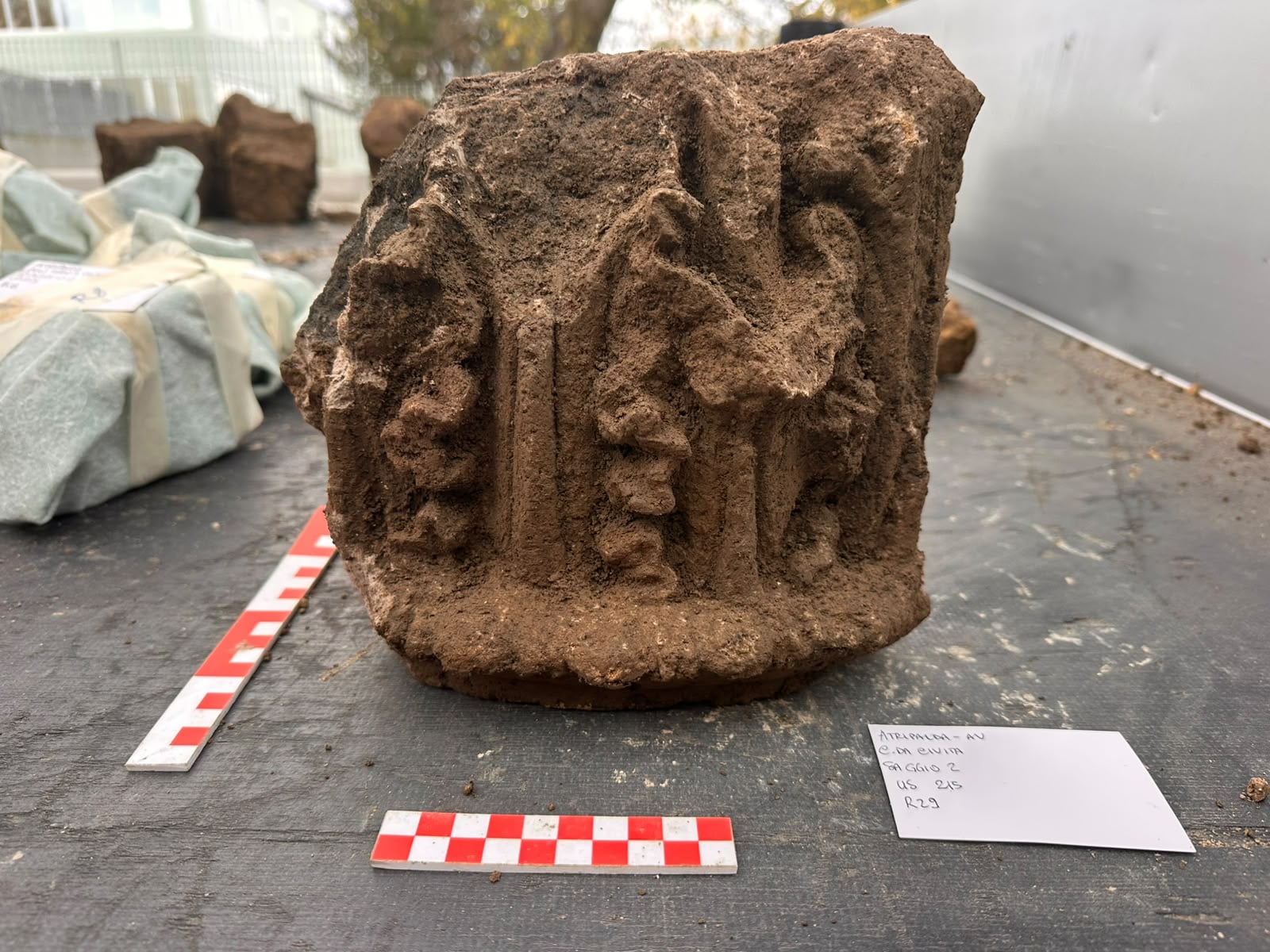
The architectural fragments, made of yellow and gray tuff, are being cataloged and studied. Archaeologists Cristina Cappelli and Stefania Canonico oversaw the excavations under the scientific coordination of Elena Russo, an archaeologist with the cultural heritage authority for Salerno and Avellino.
Ancient Roman monument in Italy may have served a funerary purpose
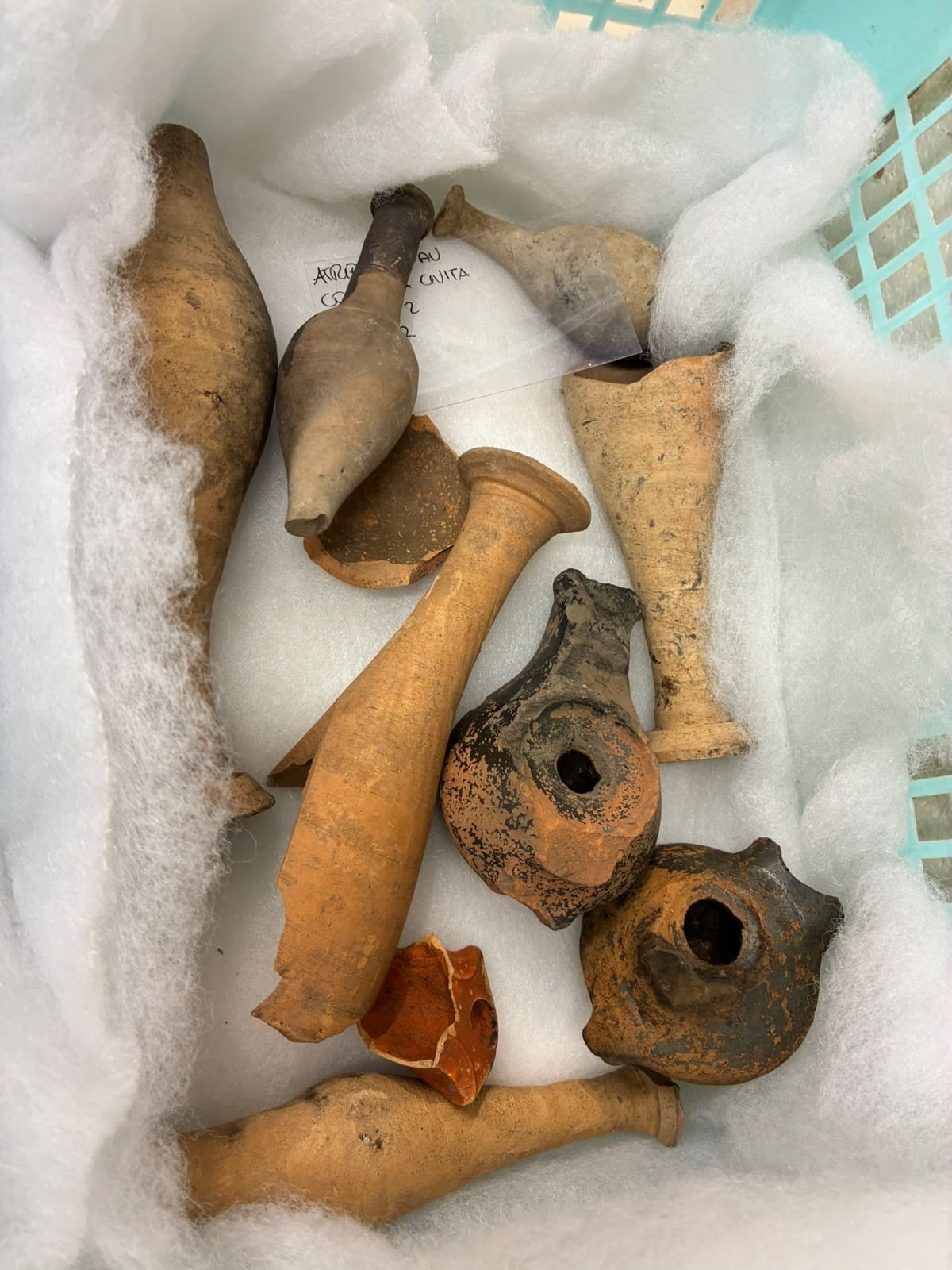
Preliminary analysis of soil layers and excavated materials has allowed researchers to establish the monument’s approximate age. The previous discovery of a burial ground from the same period nearby supports the interpretation of its possible function.
Researchers believe the monument likely stood along one of the main roads leading out of Abellinum. The city’s urban center occupied the Civita plateau in Atripalda and was surrounded by walls built using a netlike masonry pattern.
The monument had already collapsed when it was abandoned and buried in late antiquity, possibly as part of a broader reorganization of the area.
On Nov. 20, heritage superintendent Anna Onesti, Atripalda Mayor Paolo Spagnuolo and representatives of E-Distribuzione visited the site. Discussions are continuing among the parties involved to establish strategies for protecting the monument and conducting further archaeological investigations.
The discovery adds to evidence gathered through preventive archaeology, helping researchers reconstruct the landscape beyond the ancient city’s walls and make its history accessible to the wider community.
See all the latest news from Greece and the world at Greekreporter.com. Contact our newsroom to report an update or send your story, photos and videos. Follow GR on Google News and subscribe here to our daily email!

