



Ancient Greek sculptures depicting Olympic sports show the violence behind the athletic glory of the ancient world. A 2026 analysis of surviving artworks highlights injured boxers, tense wrestling matches and exhausted competitors, revealing how artists captured both the physical toll of combat and the honor attached to victory.
One of the clearest examples is the bronze “Boxer at Rest,” which the study dates to the first century B.C. The seated fighter has a broken nose, scars on his cheeks and forehead, a bruised right eye, and a swollen ear. His hands are wrapped in leather strips fastened with metal pins. His arms rest on his thighs, but his head turns sharply, and his expression looks grim.

Researchers V. Holokha and D. Batulin examined the works in a paper published in the journal “Martial Arts.” Their analysis traces changes in the portrayal of combat athletes from the Archaic period through the Hellenistic era.
Ancient Greek sculptures depict the strain of Olympic sports
Another striking example, “The Wrestlers,” shows two muscular competitors locked in a pankration bout. The Roman marble sculpture, produced in the first century A.D. from a lost Greek original, captures the force of their struggle.
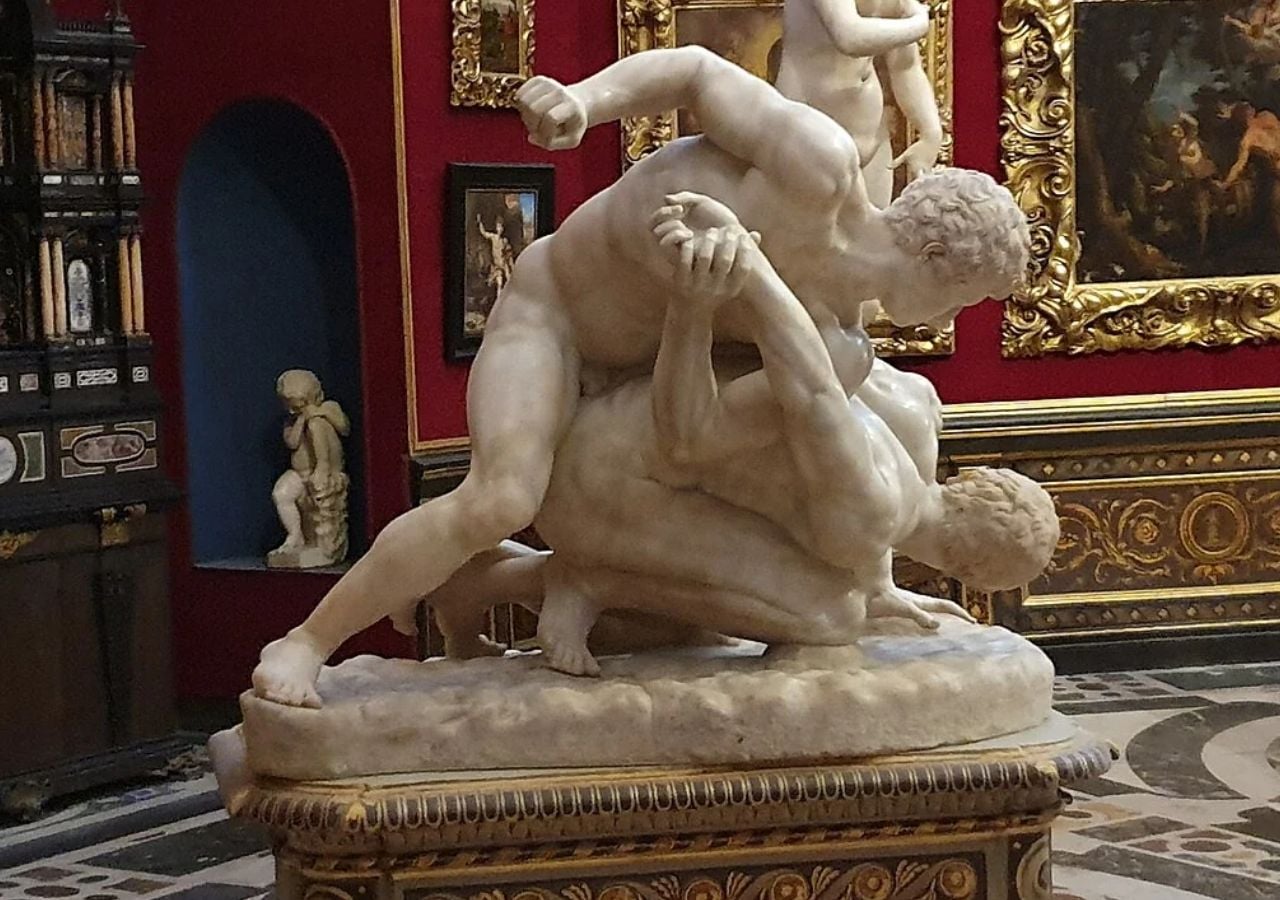
Yet the athletes’ faces remain composed, a contrast the researchers identify as part of the work’s appeal. Discovered in 1583 and now housed at the Uffizi Gallery in Florence, the sculpture inspired numerous later copies.
A separate marble statue discovered in Sorrento in 1888 depicts a boxer wearing a victor’s wreath. Rather than celebrating, the young athlete appears weary. The researchers suggest his expression may reflect exhaustion after a fight.
Such images also had a public purpose. Olympic winners were celebrated as heroes and honored with statues. For ancient Greeks, physical strength and moral excellence were closely connected, giving sporting victories a meaning beyond the competition itself.
From rigid athletic figures to lifelike fighters
Early sculptures known as kouroi showed young men standing stiffly, their arms at their sides and one leg forward. Classical artists later developed more convincing movement and body proportions. Myron’s “Discus Thrower” captured an athlete preparing to release a discus, while Polykleitos established standards of bodily harmony and created statues for Olympic boxing and wrestling champions.
Later, Lysippos portrayed an athlete scraping sweat and sand from his skin in “Apoxyomenos,” shifting attention from triumph to ordinary moments after exercise.
Because many Greek originals were lost, Roman copies now preserve important examples of this artistic evolution. The study concludes that these sculptures reflect not only athletic ability but also the values, physical demands, and emotions associated with ancient competition.
See all the latest news from Greece and the world at Greekreporter.com. Contact our newsroom to report an update or send your story, photos and videos. Follow GR on Google News and subscribe here to our daily email!

