



Bakers in ancient Pompeii placed shrines and protective symbols near their ovens to ward off danger and financial losses, according to a new study. The practice reflects religious traditions documented centuries earlier in ancient Greece, where potters and metalworkers sought divine protection for their kilns and furnaces.
The study by Abigail Joy Staub-Green examined 39 commercial bakeries in Pompeii. It identified several previously overlooked religious features, revealing how bakers turned to gods and protective objects to safeguard their livelihoods.
Religious protection in Pompeii’s bakeries
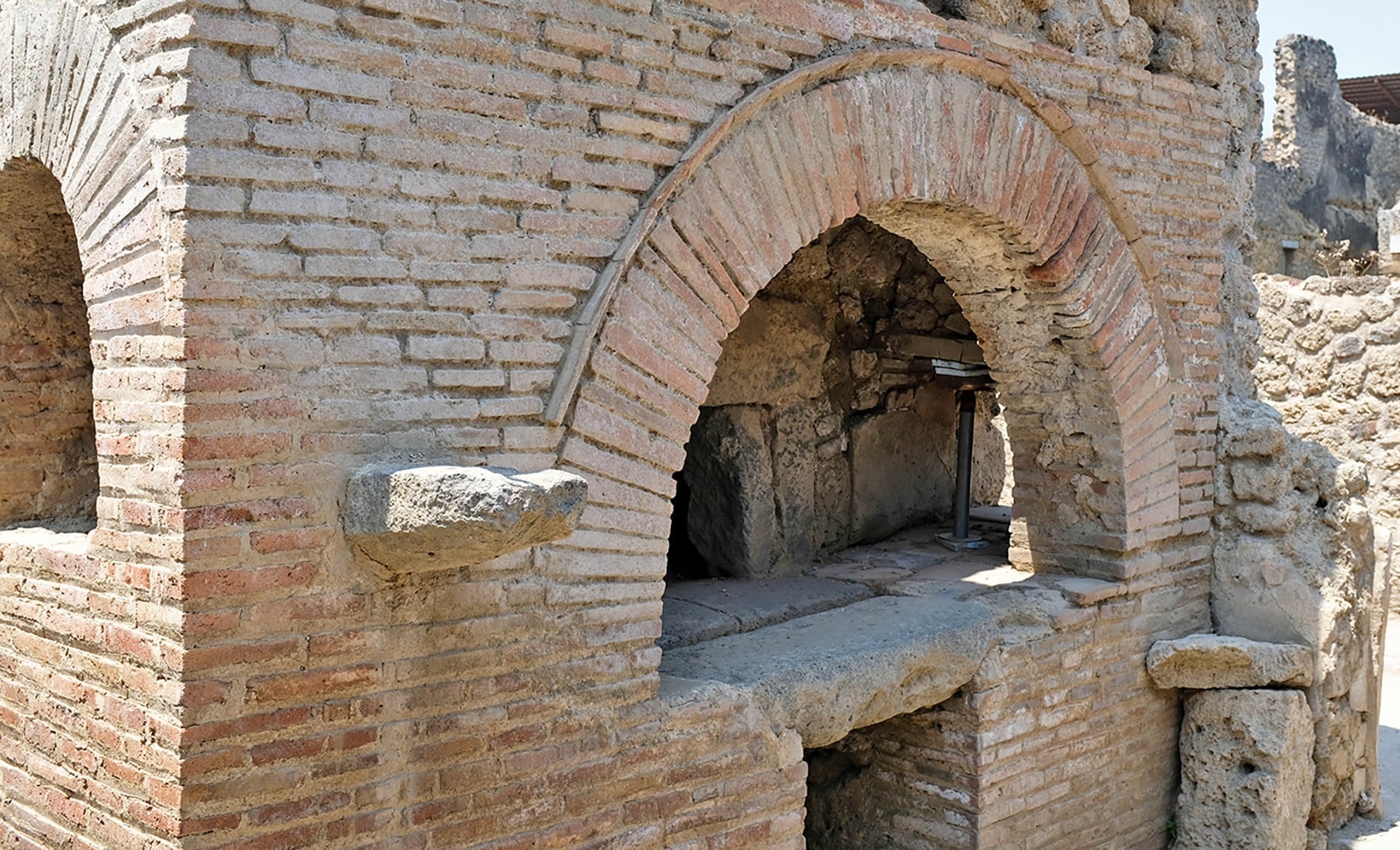
Of the 39 bakeries examined, 28, or about 72%, contained confirmed or possible religious features on ovens or within rooms housing them. Of those 28 bakeries, 15 had such features directly above or beside oven openings. When Staub-Green included possible shrines elsewhere on the properties, the proportion rose to roughly 90%.
The concentration of protective objects around ovens reflects the dangers associated with commercial baking. Sparks, flour dust, and animal waste increased the risk of fire, while excessive heat and smoke threatened workers’ health.
Poor temperature control could also destroy entire batches of bread. Archaeologists discovered 81 loaves inside a single Pompeian oven, illustrating the scale of commercial bread production. At the House of the Chaste Lovers, a shrine-shaped niche survives directly above the oven opening. Earlier archaeological records gave little attention to its possible religious function.
Pompeii’s bakers turned to Vesta for protection
Staub-Green identified eight depictions of Vesta, the Roman goddess of the hearth, across Pompeii’s commercial and industrial properties. All appeared in establishments with bread ovens rather than other food businesses. Seven of the eight depictions showed Vesta alongside her sacred donkey, an animal widely used to turn grain mills. This portrayal was uncommon elsewhere in Roman art.
The Roman poet Ovid linked the animal to a myth in which a donkey’s braying saved Vesta from an unwanted advance by Priapus. During an annual festival honoring the goddess, bakers suspended their work out of respect for her sacred animal.
Pompeian bakers also combined Vesta with other deities. One shrine depicted her holding a bundle of wheat alongside Mercury, the god associated with commerce. Another paired her with Vulcan, the god of fire. These combinations suggest that bakery owners sought divine oversight of different stages of bread production and sale.
Ancient Greek traditions offer earlier parallels
Evidence from ancient Greece shows that craftsmen sought similar protection centuries earlier. An ancient hymn asks Athena to protect a potter’s kiln and its products. Archaic Greek pottery also depicts a figure, likely Athena, extending her hand toward a metalworker’s furnace.
A sixth-century B.C. Greek water jar shows a kiln decorated with a large, bearded mask. Archaeological finds from Greek kiln sites at Pella and Metapontum also include phallic objects believed to ward off evil. Such traditions existed alongside the development of professional baking in ancient Greece.
Comparable protective symbols appeared in Pompeii. One bakery featured a sculpted head, possibly representing a lion, and a brickwork phallic symbol above its oven opening. Although the precise origins of the practice remain uncertain, Staub-Green argues that Pompeian bakers combined established Mediterranean protective traditions with local religious beliefs.
The findings challenge earlier approaches that treated commercial shrines as largely uniform religious spaces. Instead, they offer a deeper understanding of religious practices in Pompeii, revealing how business owners responded to the dangers and economic uncertainties of their trade.
See all the latest news from Greece and the world at Greekreporter.com. Contact our newsroom to report an update or send your story, photos and videos. Follow GR on Google News and subscribe here to our daily email!

