



Ancient tree rings are casting fresh doubt on a later date for Santorini’s devastating eruption, with new radiocarbon evidence favoring a date near 1600 BC rather than around 1500 BC, researchers report.
The explosion, known as the Minoan eruption of Thera, was one of the largest volcanic events of the past 11,700 years. It may have produced tsunamis that reached Crete and the coast of Anatolia. Yet its timing remains disputed. Archaeological comparisons linking Egypt, Greece and the Levant point toward 1500 BC, while most radiocarbon findings indicate a date roughly a century earlier.
In a study published in the journal “Radiocarbon,” Pınar Erdil of the University of Groningen and colleagues report 93 new measurements from oak samples in Northern Ireland and the Netherlands. Including previous results, their dataset spans 1660 to 1507 BC. Researchers compared them with international radiocarbon data and tested how differences might affect the eruption’s estimated date.
Ancient tree rings support an earlier date for Santorini’s eruption
The team found its new measurements largely agreed with IntCal20, the international reference used to convert radiocarbon results into calendar dates. Small differences emerged when the records were compared with bristlecone pine from California and juniper from Turkey.

Those differences could reflect where trees grew, when they absorbed carbon during the year, the species involved, or laboratory preparation methods. But adjusting for possible differences did not shift the strongest evidence toward 1500 BC.
Researchers also investigated unusual radiocarbon changes previously proposed for 1557 and 1528 BC. Scientists had considered whether they marked sudden increases in atmospheric radiocarbon associated with intense solar activity. Such spikes, called “Miyake events,” can help assign a precise calendar year to ancient material.
The new tests found no convincing sudden spike in either year. Instead, records from several laboratories showed a rise beginning around 1533 BC and peaking around 1530 to 1528 BC, followed by a decline.
A shared radiocarbon pattern offers another clue
The change unfolded over several years, unlike the abrupt surges that characterize confirmed Miyake events. Researchers found a similar pattern in records from Ireland, Germany, and California, suggesting it might eventually serve as a dating marker.
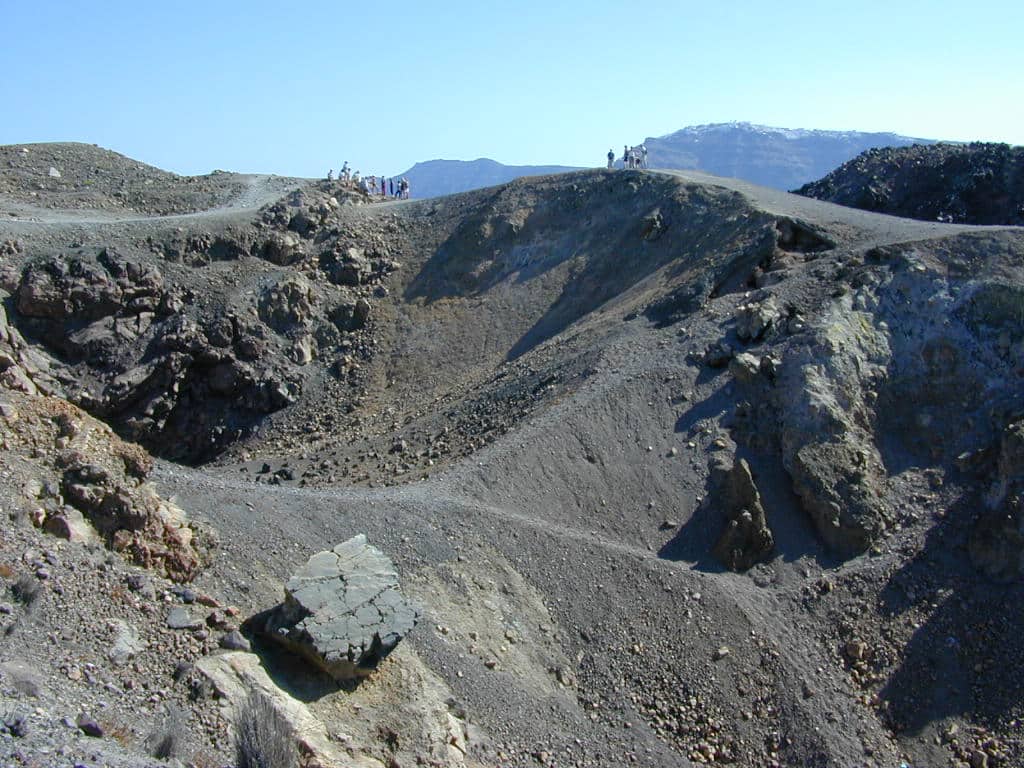
To assess the eruption directly, the researchers recalculated dates from 24 short-lived plant samples recovered from the volcanic destruction layer at Akrotiri. They also examined models incorporating olive wood and shrub records from Thera and nearby Therasia.
The strongest probabilities remained clustered around 1600 BC, even when the team tested alternative radiocarbon curves. The results did not support a date as late as 1500 BC.
The exact year remains unresolved. But the findings strengthen the earlier timeline, which matters for understanding the disaster’s impact on Bronze Age societies across the eastern Mediterranean.
See all the latest news from Greece and the world at Greekreporter.com. Contact our newsroom to report an update or send your story, photos and videos. Follow GR on Google News and subscribe here to our daily email!

