



Thirty-five years after his election as Ecumenical Patriarch, Bartholomew remains one of the most influential figures in contemporary Orthodox Christianity, having guided the Church through the collapse of communism, major disputes over ecclesiastical authority and expanding dialogue with other religions.
Elected on October 22, 1991, and enthroned on November 2 of that year, Bartholomew became the 270th Archbishop of Constantinople-New Rome and Ecumenical Patriarch, succeeding Demetrios I. At 86, he is the longest-serving Ecumenical Patriarch in the institution’s history.
Unlike the Roman Catholic Pope, the Ecumenical Patriarch does not exercise direct authority over all Orthodox Churches. He holds the position of first among equals among Orthodox primates, with responsibilities for coordinating cooperation and representing Orthodox Christianity internationally.
His patriarchate has been characterized by initiatives promoting Orthodox unity, environmental protection, interfaith dialogue and religious freedom, alongside controversies concerning relations with Moscow and the future organization of the Orthodox world.
From Imbros to Constantinople: The making of a patriarch
Born Demetrios Archontonis on February 29, 1940, in the village of Aghioi Theodoroi on Imbros, now Gökçeada, Turkey, Bartholomew grew up in a Greek Orthodox family during a period of increasing uncertainty for the country’s Greek minority.
His father operated a small café and barbershop, where the future Patriarch helped with everyday tasks while attending school. His early religious education was shaped by Metropolitan Meliton of Imbros and Tenedos, who encouraged him to pursue the priesthood.
After studying at the Theological School of Halki, he was ordained a deacon in 1961, receiving the name Bartholomew. He subsequently studied canon law in Rome and continued his education in Switzerland and Germany.
Ordained a priest in 1969, he served closely alongside Ecumenical Patriarch Demetrios, becoming Metropolitan of Philadelphia in 1973 and Metropolitan of Chalcedon in 1990. His election the following year coincided with the disintegration of the Soviet Union and the restoration of religious freedoms across Eastern Europe.
Bartholomew subsequently made strengthening cooperation among independent Orthodox Churches a central priority, organizing meetings of Orthodox primates and pursuing preparations for a major council intended to address common ecclesiastical challenges.
One of his most significant initiatives was the Holy and Great Council convened in Crete in June 2016, following decades of preparations. Ten Orthodox Churches participated, although the Patriarchates of Moscow, Antioch, Bulgaria and Georgia declined to attend because of disagreements over the council’s agenda and procedures.
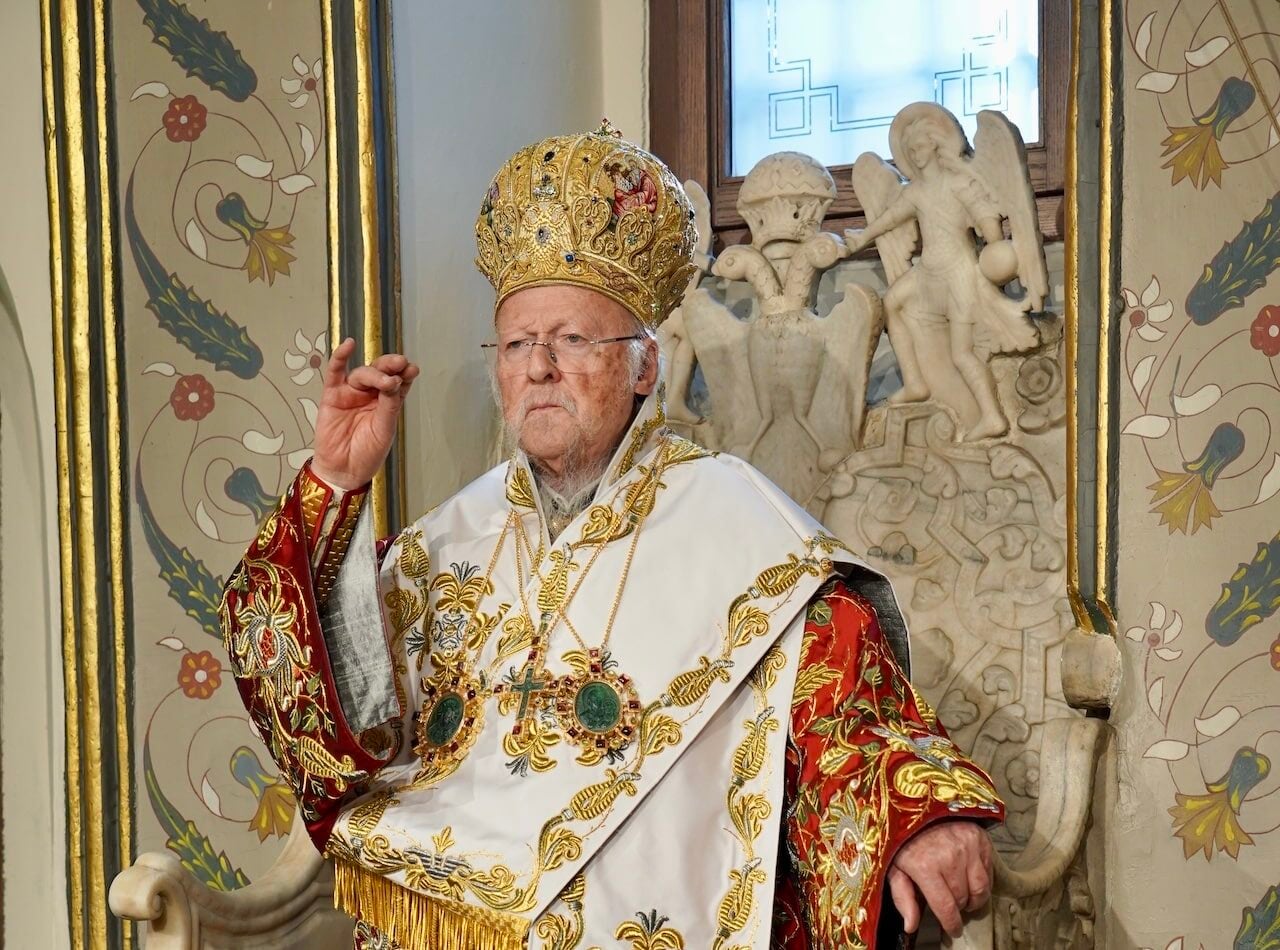
The gathering represented an important institutional achievement, but the absences exposed the limits of his efforts to establish a common Orthodox position.
Another milestone was the reopening of Greek minority schools on Imbros beginning in 2013, almost five decades after Turkish authorities had closed Greek-language educational institutions there. Bartholomew has repeatedly described the restoration of these schools as essential to preserving the island’s Greek Orthodox community, which experienced a dramatic population decline following discriminatory measures introduced during the 1960s.
However, another longstanding objective remains unfulfilled: the reopening of Halki Theological School, closed by Turkish authorities in 1971 despite decades of international appeals and repeated negotiations.
Ecumenical achievements, Ukraine dispute and criticism
Bartholomew’s international profile has been closely associated with environmental advocacy, earning him the widely used description of the “Green Patriarch.” Through conferences, theological initiatives and cooperation with scientists and international institutions, he has promoted the position that environmental protection constitutes a moral and spiritual responsibility.
His approach connects environmental degradation with social inequality, emphasizing that vulnerable populations frequently suffer the greatest consequences of ecological destruction.
Relations with the Roman Catholic Church have also advanced during his tenure. In 2013, he attended Pope Francis’ inaugural Mass, becoming the first Ecumenical Patriarch to attend a papal inauguration in centuries. Their cooperation helped advance dialogue on Christian unity, migration and environmental protection.
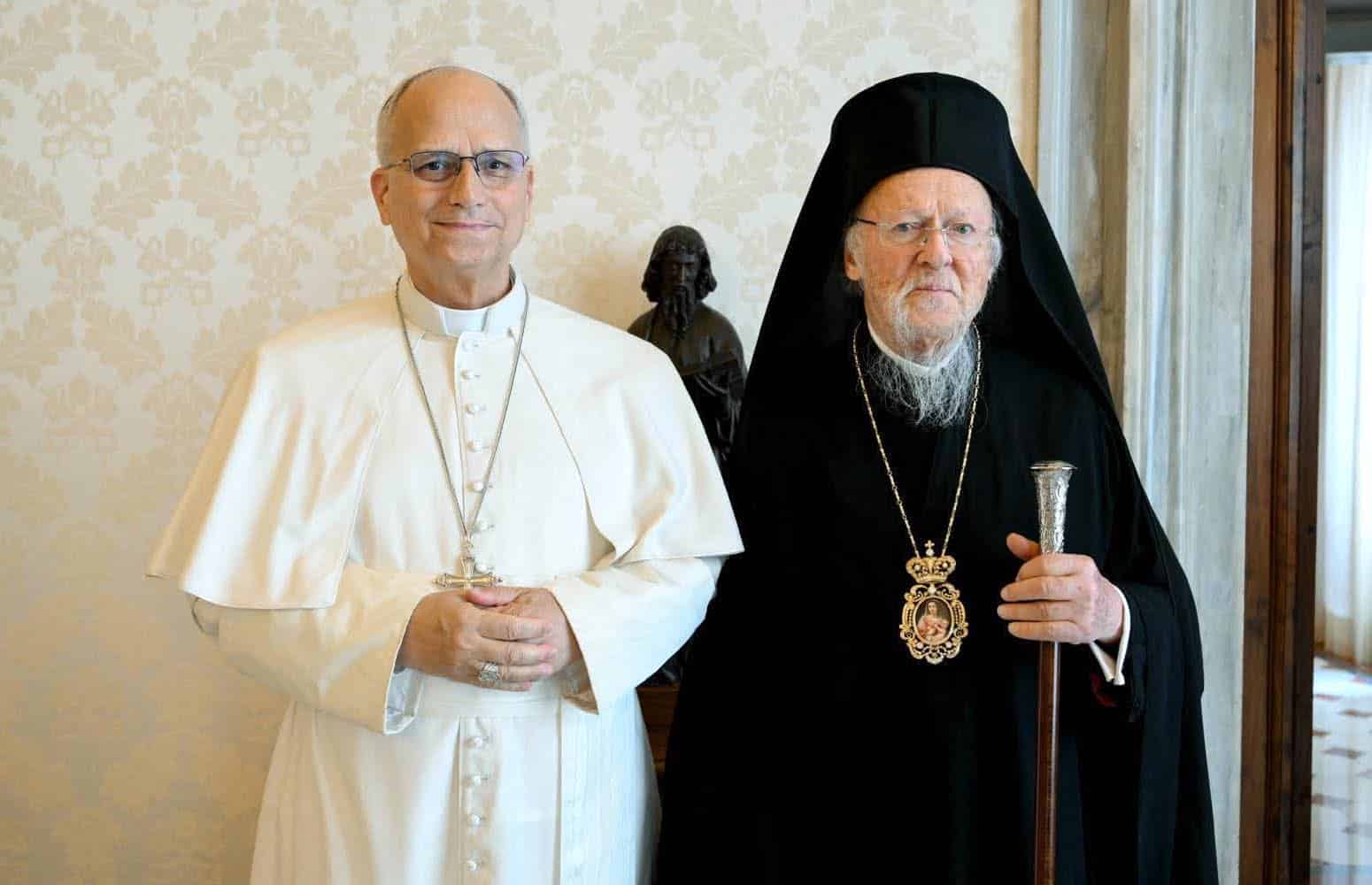
The relationship continued through subsequent meetings and initiatives, including commemorations of the First Council of Nicaea in 2025. Nevertheless, theological differences concerning papal authority, the Filioque and other doctrinal questions remain unresolved, while conservative Orthodox circles have criticized aspects of the dialogue, expressing concerns that closer relations with Catholicism could weaken traditional Orthodox teachings.
His most controversial decision came in January 2019, when he granted autocephaly, or ecclesiastical independence, to the Orthodox Church of Ukraine. The decision was welcomed by Ukrainian authorities and supporters of an independent national Church but fiercely opposed by the Russian Orthodox Church, which disputed Constantinople’s jurisdiction and broke communion with the Ecumenical Patriarchate.
Moscow accused Bartholomew of interfering in its ecclesiastical territory, while the Patriarch maintained that Constantinople possessed the canonical authority to recognize Ukraine’s independence. The dispute created one of the deepest divisions in modern Orthodox Christianity and remains unresolved.
Bartholomew has also strongly condemned Russia’s invasion of Ukraine and criticized Patriarch Kirill of Moscow for characterizing the conflict as a holy war. In the anniversary documentary, he rejected the religious justification of military aggression, arguing that war conducted in the name of religion fundamentally contradicts Christianity’s message of peace. His position has further strained relations with Moscow, while reinforcing his public support for Ukraine.
Beyond ecclesiastical disagreements, Bartholomew’s leadership has been constrained by the limited legal recognition of the Ecumenical Patriarchate in Turkey and the continuing difficulties facing Istanbul’s Greek Orthodox minority.
He has repeatedly emphasized the Patriarchate’s responsibility to preserve the community’s religious, cultural and historical presence while maintaining constructive relations with Turkish authorities.
Reflecting on his 35 years of service in the anniversary documentary, Bartholomew described the Church’s mission as bringing reconciliation and peace to a troubled world. He also spoke about his personal attachment to Imbros, his hopes for the reopening of Halki and his responsibility toward the remaining Greek Orthodox community of Constantinople.
His legacy encompasses significant achievements in international religious engagement, environmental advocacy and the preservation of Orthodox traditions, alongside persistent institutional challenges and divisions within Orthodoxy that remain unresolved.
See all the latest news from Greece and the world at Greekreporter.com. Contact our newsroom to report an update or send your story, photos and videos. Follow GR on Google News and subscribe here to our daily email!

