



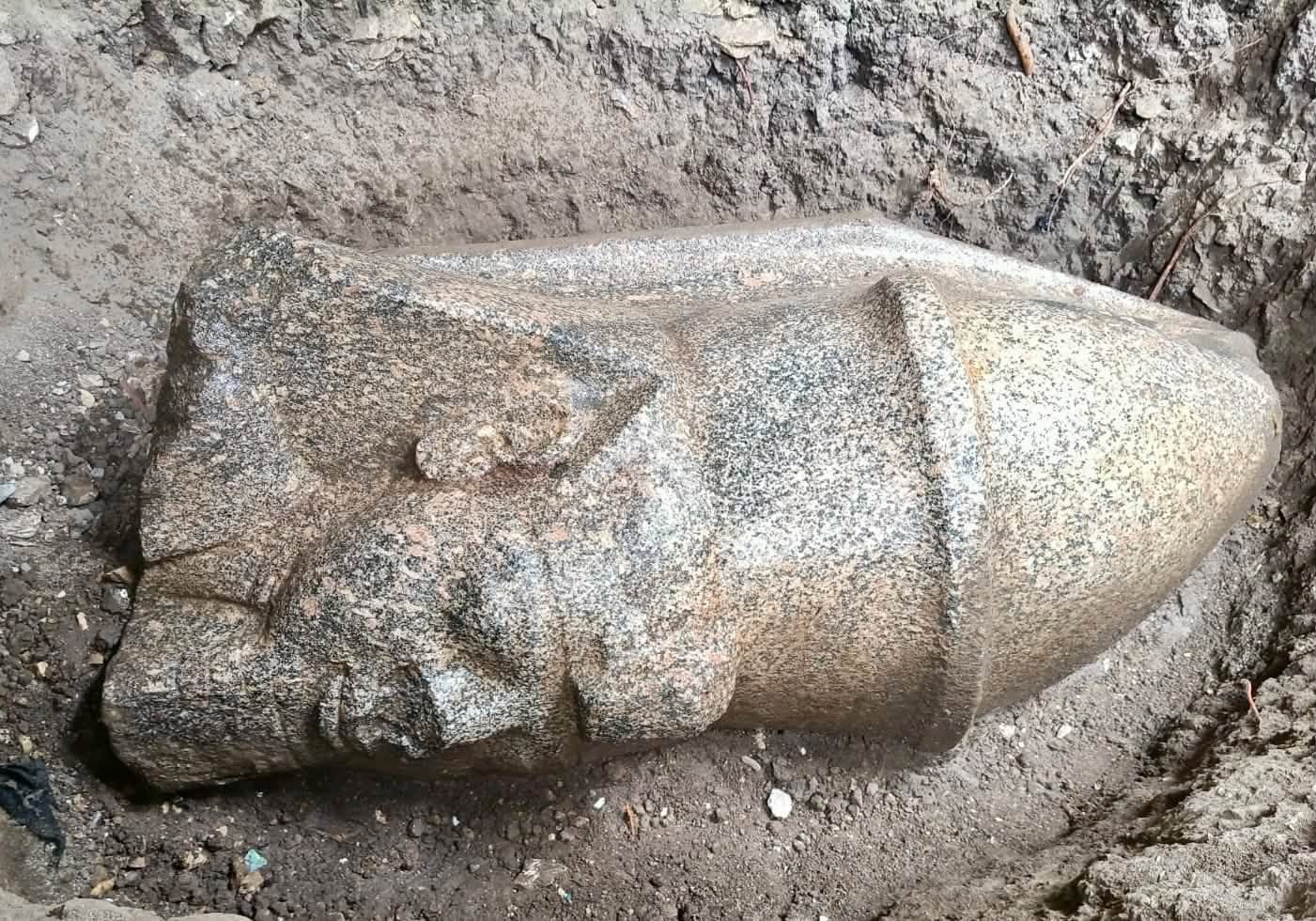
Archaeologists in Egypt have uncovered the remains of two colossal royal statues, including one identified as King Ramesses II, during rescue excavations in the village of Behebat al-Hijara in Gharbia Governorate. Researchers estimate that the first statue originally stood about 28 feet tall. They believe the second may also depict Ramesses II.
The Egyptian archaeological mission, working under the Supreme Council of Antiquities, also discovered a pink granite block bearing hieroglyphic inscriptions containing two royal titles associated with RamessesRamesses II.
Colossal statue of Ramesses II may have stood 28 feet tall
Hisham El-Lithi, secretary-general of the Supreme Council of Antiquities, said archaeologists recovered a massive head from a statue of Ramesses II, measuring approximately 1.6 meters (5.2 feet) tall. The statue depicts the pharaoh wearing the double crown, which symbolized the unification of Upper and Lower Egypt.
Researchers also uncovered the upper section of the statue’s back pillar, which bears an inscription containing Ramesses II’s Horus name, “Har Ka Nekht Mari Maat.” Based on the surviving fragments, archaeologists estimate the complete statue, including its base, may have reached 8.5 meters (28 feet) tall.
Ramesses II ruled Egypt during the 19th Dynasty in the 13th century B.C. His reign lasted about 66 years and was marked by extensive temple construction and monumental sculptures. In another discovery, archaeologists recently restored and re-erected a colossal statue of Ramesses II at the ancient site of El-Ashmunein.
Second royal statue and granite inscriptions uncovered

The second discovery includes a large section of a royal statue measuring approximately 2.4 meters (7.9 feet) long. It is missing its legs and base, while part of its traditional royal headdress, known as the “nemes,” is damaged. The statue’s head remains well preserved, with facial features resembling those of the first statue. Researchers believe it may also represent Ramesses II, although its identity remains unconfirmed.
About one meter (3.3 feet) north of the second statue, archaeologists found a pink granite block measuring 1.3 meters (4.3 feet) long. The block bears hieroglyphic inscriptions containing two royal titles associated with Ramesses II: “Nesu Bety,” meaning King of Upper and Lower Egypt, and “Sa Ra,” meaning Son of Ra. A separate archaeological investigation in Egypt also uncovered an inscription naming Ramesses II, offering possible evidence for the location of the ancient city of Mesen.
Excavations continue near ancient temple of Isis

The investigation began after a resident reported finding an inscribed stone block on land opposite his home. Archaeological authorities inspected the site and organized rescue excavations. Egypt’s Minister of Tourism and Antiquities, Sherif Fathi, praised the resident for reporting the discovery. El-Lithi said excavations are still underway to determine how the statues relate to one another and to the surrounding archaeological remains.
Behebat al-Hijara is known for the ruins of a large temple dedicated to the goddess Isis, whose worship also played an important role at other ancient Egyptian religious sites, including the Temple of Isis at Philae. Further research could clarify the statues’ original locations and the site’s architectural history.
See all the latest news from Greece and the world at Greekreporter.com. Contact our newsroom to report an update or send your story, photos and videos. Follow GR on Google News and subscribe here to our daily email!

