



A rare life-size petroglyph in northern Sudan may depict an ancient Nubian king, giving researchers an unusual clue to the history of a border region along the Nile. The carving is located at Miseeda in the Mahas region, where a medieval church was later built around the much older rock image.
The study, published in the journal Antiquity, examines the Miseeda area near the Third Nile Cataract, a zone that historically connected regions to the north and south. Researchers recorded nearly 300 archaeological sites while combining field surveys, rock-art research, local oral history, and spatial mapping.
Earlier studies suggested that the large human figure could date to the Kerma period or, more broadly, the Kushite era. The new research does not establish a precise date, but the team says the image may represent a Kushite ruler.
Petroglyph may depict an ancient Nubian king
Monumental carvings of this kind are rare. Researchers compared the Miseeda figure with a carving of the Meroitic king Sherkarer at Gebel Qeili. That image has been interpreted as a sign of Meroitic authority near the southern edge of the kingdom.
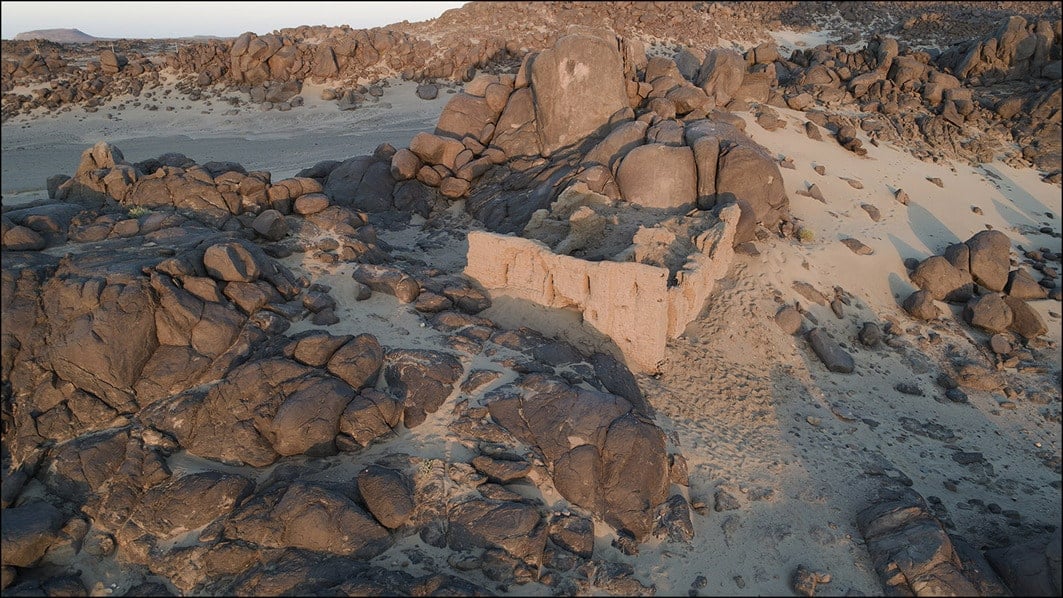
The comparison supports the possibility that the Miseeda carving also marked an important border area. However, its exact age and the identity of the person remain uncertain. The petroglyph may show an ancient Nubian king, but researchers say a more precise date still needs to be established.
The granite hill surrounding the site contains other large carvings, including a lion, a possible rhinoceros and an elephant, as well as smaller images of cattle. Surveys near the church also found Christian-era crosses and ships, human figures of uncertain age and more animal carvings thought to date to the Kerma period.
Rock art reveals Miseeda’s long history
Evidence from the wider area shows several major periods of human activity. Archaeological remains are particularly strong from the Mesolithic, about 12,000 to 8,200 years ago, and the Late Neolithic and Pre-Kerma period around 3000 to 2500 B.C. Activity was also significant during the Christian era, from roughly the sixth to the 15th centuries.
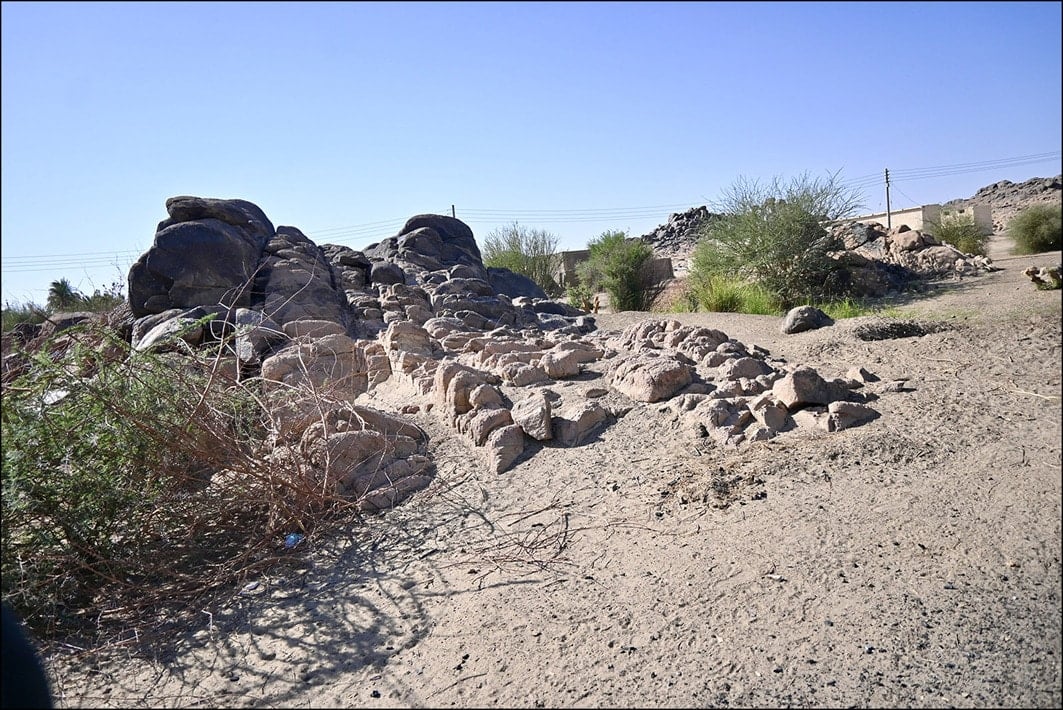
The church at Miseeda was built in the seventh century around the older carving, suggesting the location remained important long after the petroglyph was created. Pottery found there also reflects connections with the Nubian kingdoms of Nobadia and Makuria.
Modern oral traditions continue to connect the church, rock art, and nearby ruins with sacred stories, ritual offerings, spirits, and gold. Researchers say the evidence shows how Miseeda remained a meaningful place through thousands of years of cultural change.
See all the latest news from Greece and the world at Greekreporter.com. Contact our newsroom to report an update or send your story, photos and videos. Follow GR on Google News and subscribe here to our daily email!

