



Greece is advancing plans to bring the ancient theater of Maroneia in Thrace back into cultural use, with improvements designed to expand seating, manage rainwater and make the site safer for visitors. The Culture Ministry said the Central Archaeological Council unanimously supported studies covering the site’s presentation, stormwater management and lighting.
The project would increase capacity from about 350 people to approximately 750. A removable structure of wooden seats supported by a steel frame would extend the upper seating area, following the arrangement of the original stone rows. Workers also plan to raise the orchestra floor to the level of the arena used during the Roman period.
Culture Minister Lina Mendoni said the goal is to protect the theater while allowing it to serve as a venue for contemporary cultural activities. She said ancient theaters that remain suitable for use should support culture, education and sustainable development in surrounding communities.
Greece plans expanded seating at Thrace’s ancient theater of Maroneia
Built on the lower slopes of Mount Ismaros overlooking the sea, the theater retains three rows of stone seats, stairways, a covered drainage channel and parts of its stage building. Its oldest surviving features date to the Hellenistic period. During Roman rule, the performance area was enlarged and converted into an arena, while later Roman work brought repairs and alterations.
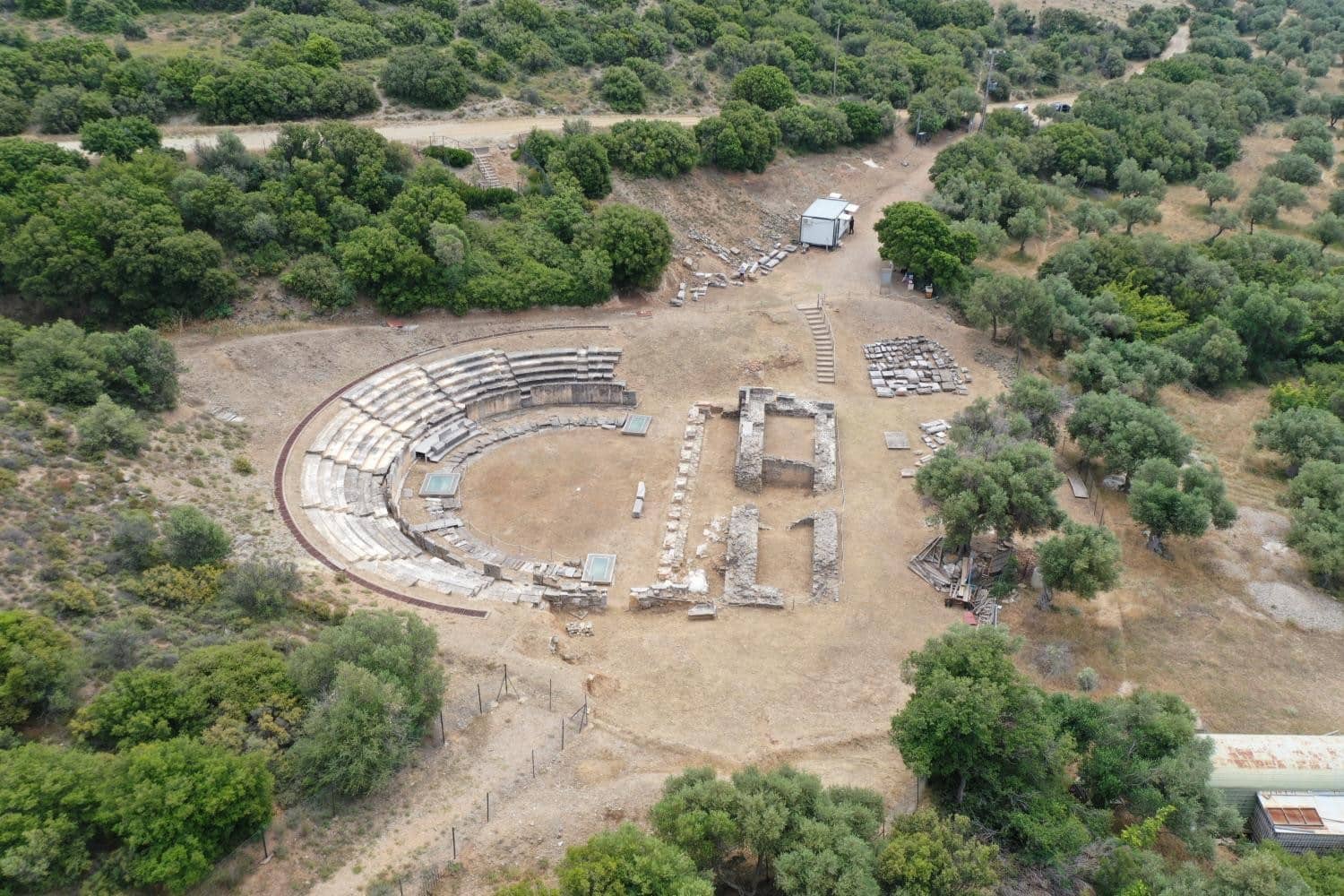
The site is generally in good condition, the ministry said, but changes to the hillside have complicated its presentation. A stream crossing the slope, earlier excavation trenches, and uneven ground have affected the seating area. The project also calls for arranging and displaying important architectural pieces recovered from the theater.
Flood protection is another priority. After excavations, the stream was redirected north of the theater using measures the ministry described as insufficient. New roadside drainage ditches are intended to steer runoff away from the monument.
Drainage, lighting and visitor access set for improvements
In ancient times, rainwater flowed through a central marble drain beneath the seats. The new work aims to address the continuing threat from surface water, while lighting improvements are intended to help visitors move safely and reduce energy use.
Restoration work took place between 2004 and 2009. New archaeological findings later prompted changes to the original design. In 2020, authorities approved plans for an entrance building with a guard post and restrooms, along with an accessible route to a viewing point and steps leading to the theater.
The ministry said the planned completion of the Maroneia-Petrota coastal road in 2026 would improve access and help protect the site from rainwater. Mendoni said bringing the theater back into use alongside other public infrastructure projects could strengthen the region’s cultural identity and local development.
See all the latest news from Greece and the world at Greekreporter.com. Contact our newsroom to report an update or send your story, photos and videos. Follow GR on Google News and subscribe here to our daily email!

