



It’s quite impressive to think that while most ancient societies, including that of ancient Greece, were focused on interpreting the wills of the gods, a small number of philosophers were already considering whether life might have developed naturally through evolution rather than originating from a divine force.
It is especially remarkable because these ideas would not gain mainstream attention for another two millennia, as humanity gradually explored explanations beyond simple creation myths.
The idea of evolution in ancient Greece
Anaximander is a great example of a thinker who refused to accept the established beliefs and truths of his time. Living around the 6th century BC, he proposed surprisingly modern-sounding ideas that would have been scandalous for his contemporaries. He suggested that the first living things emerged from moisture, enclosed in some protective coating (what we might now call primitive egg shells). He then reasoned through the logic of human development.
Anaximander argued that human babies are helpless for far too long, so humans could not have been the first creatures to exist. While this reasoning is logical, it was radical in a period when everything was considered human-centered. He therefore proposed that humans must have evolved from something more self-sufficient, such as fish.
This was indeed a hypothesis based on observation and reasoning rather than scientific experimentation. However, it is impressive considering he had no access to fossil records or DNA sequencing.
A century later, Empedocles conceived of an even bolder theory. He imagined the early Earth as a chaotic mixing bowl where random body parts—arms, legs, heads—floated freely and occasionally combined. Most of these Frankenstein-like combinations failed and died off quickly, but occasionally a functional combination survived.
Although it may sound like a fantasy tale, when the poetic language is stripped away, Empedocles was essentially describing a process similar to natural selection. The creatures that functioned well survived; those that didn’t went extinct. This concept forms the core principle of the theory of evolution widely accepted today.
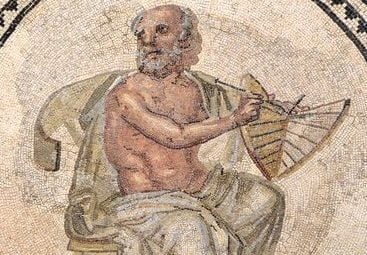
Why did evolution not become widespread in ancient Greece?
As we know, particularly when judging the course of the Middle Ages, the evolution-based theories of ancient Greece did not gain lasting traction. These early evolutionary thinkers were closer to reality than most of their contemporaries, but their ideas were completely overshadowed by prejudices and later philosophers. For example, Plato developed his theory of perfect, unchanging Forms, and Aristotle laid the foundation for the later “great chain of being,” a rigid hierarchy in which everything had its place and purpose. Neither came close to the concepts of natural selection or evolution.
Aristotle’s worldview was incredibly influential and endured for centuries. Everything was designed, everything had a reason, and nothing truly changed. This mindset aligned perfectly with Christian theology and dominated Western thought for roughly 1,500 years, until the Enlightenment.
What is most striking about Anaximander and Empedocles and their revolutionary yet ultimately overlooked ideas is their willingness to seek natural explanations at a time when superstition largely dictated human beliefs. In a world where it was far easier to say “the gods did it,” these thinkers sought to understand how things actually worked through observable processes rather than abstract, untested beliefs.
Obviously, they lacked the scientific method, and therefore could not conduct experiments or collect data as we do today, but they possessed something equally important: curiosity and the courage to ask uncomfortable questions that challenged mainstream ideas and narratives. They were willing to suggest that, perhaps, the natural world operated according to principles that could be understood rather than according to the designs and plans of deities on Mount Olympus.
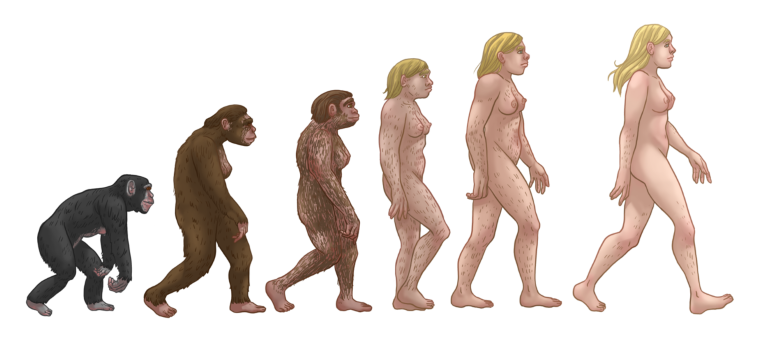
From Anaximander and Empedocles to Darwin
When Darwin finally published On the Origin of Species in 1859, he was not working in a complete vacuum, as many believe. Yes, he was a man of observation and evidence that the ancient Greeks could never have imagined, and he precisely worked out the mechanism of natural selection, but the fundamental insight that life changes over time through natural processes rather than divine intervention had already been contemplated in ancient Greece.
Sometimes, people think of scientific progress as a steady, unbroken march forward, but the reality is far more complicated and often messy. Good ideas can be lost, forgotten, or suppressed for centuries before being rediscovered and expanded upon. The Greeks planted seeds that took over two millennia to develop, and this delayed unfolding mirrors how evolution itself operates.
Progress begins with someone asking, “What if it isn’t so?” Though they missed many details, Anaximander and Empedocles recognized that nature follows discoverable patterns through careful observation and proactive reasoning.
That is the real legacy: trading superstition for scrutiny and dogma for doubt. Observe, imagine, test, revise—it is the same rhythm that science follows today. In the end, curiosity triumphs over certainty, and the courage to question what everyone else accepts is where discovery begins.
See all the latest news from Greece and the world at Greekreporter.com. Contact our newsroom to report an update or send your story, photos and videos. Follow GR on Google News and subscribe here to our daily email!

