



At first glance, Corfu and Rhodes seem to have plenty in common. Both are among Greece’s best-known islands. Both have dramatic coastlines, centuries of history, and UNESCO-recognized old towns. Both promise sunshine, turquoise water and the kind of Mediterranean escape that has drawn travelers for generations.
But spend time in each and the similarities quickly begin to fade. Corfu, in the far west of Greece, can practically feel as if you’re in Italy. Rhodes, far to the east in the Dodecanese, feels like a meeting point between Greece, the medieval West, and the Eastern Mediterranean. One is associated with Venetian alleys, neoclassical architecture, and a lush Ionian landscape. The other is defined by massive walls, Crusader castles, and layers of Byzantine, Ottoman and Italian history. They are both Greek islands, but they tell very different stories about what Greece is (or can be).
Corfu: Greece with an Ionian and Venetian accent
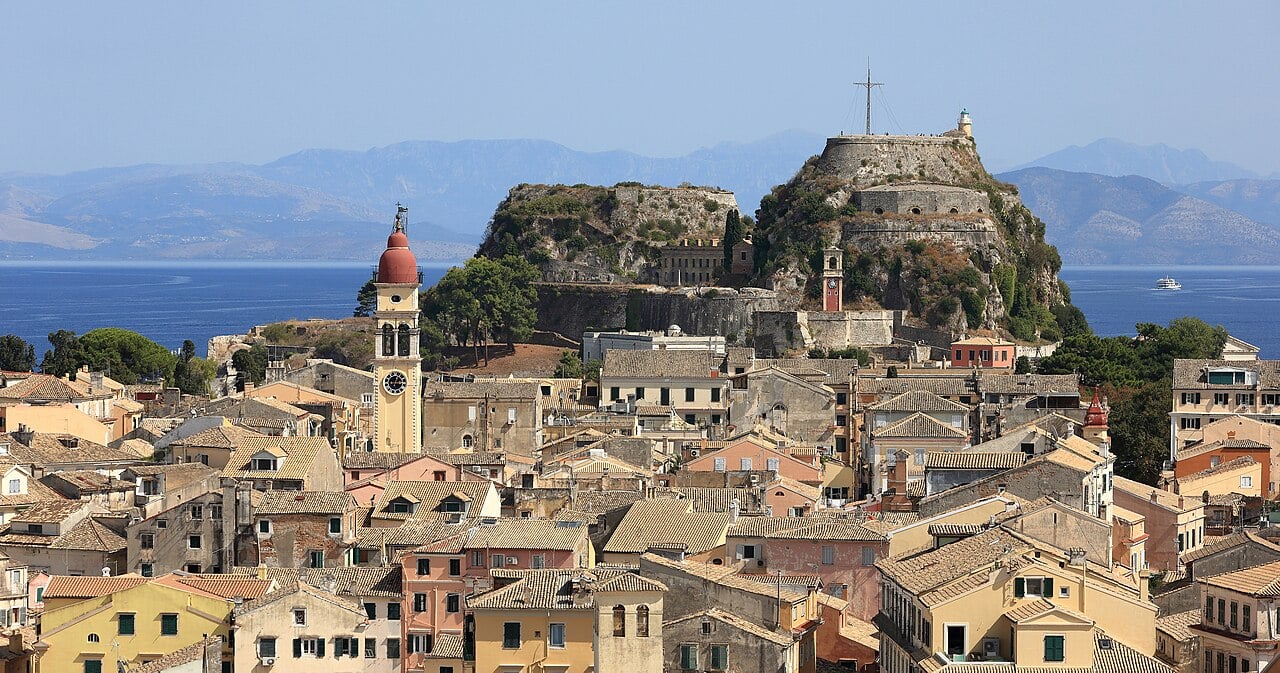
Corfu’s location at the entrance to the Adriatic helped shape its identity for centuries. Its Old Town has roots stretching back to antiquity, but the city as we know it today was profoundly influenced by nearly four centuries of Venetian rule, followed by French and British administrations before union with Greece.
That history is still written into the streets. The narrow kantounia, imposing fortresses and arcaded buildings, give Corfu Town an atmosphere that can feel closer to parts of Italy than to the whitewashed island image many visitors associate with Greece. UNESCO describes the Old Town as a fortified Mediterranean port whose distinctive character reflects its strategic position and the long influence of Venice and later European powers.
Even Corfu’s landscape contributes to the difference. It is green, mountainous, and deeply shaped by the wetter Ionian climate. Olive groves cover much of the island, while villages, wooded hillsides, and sheltered bays create a softer, more verdant version of the Greek island experience.
Then there are the cultural details. Cricket is famously played on the Spianada, a legacy associated with the British period, while the architecture of Corfu Town mixes Venetian, French, and British influences with Greek life. Corfu does not feel less Greek because of these influences. Instead, it reveals how many different historical worlds have contributed to Greek identity.
Rhodes: Where Greece meets the medieval Mediterranean
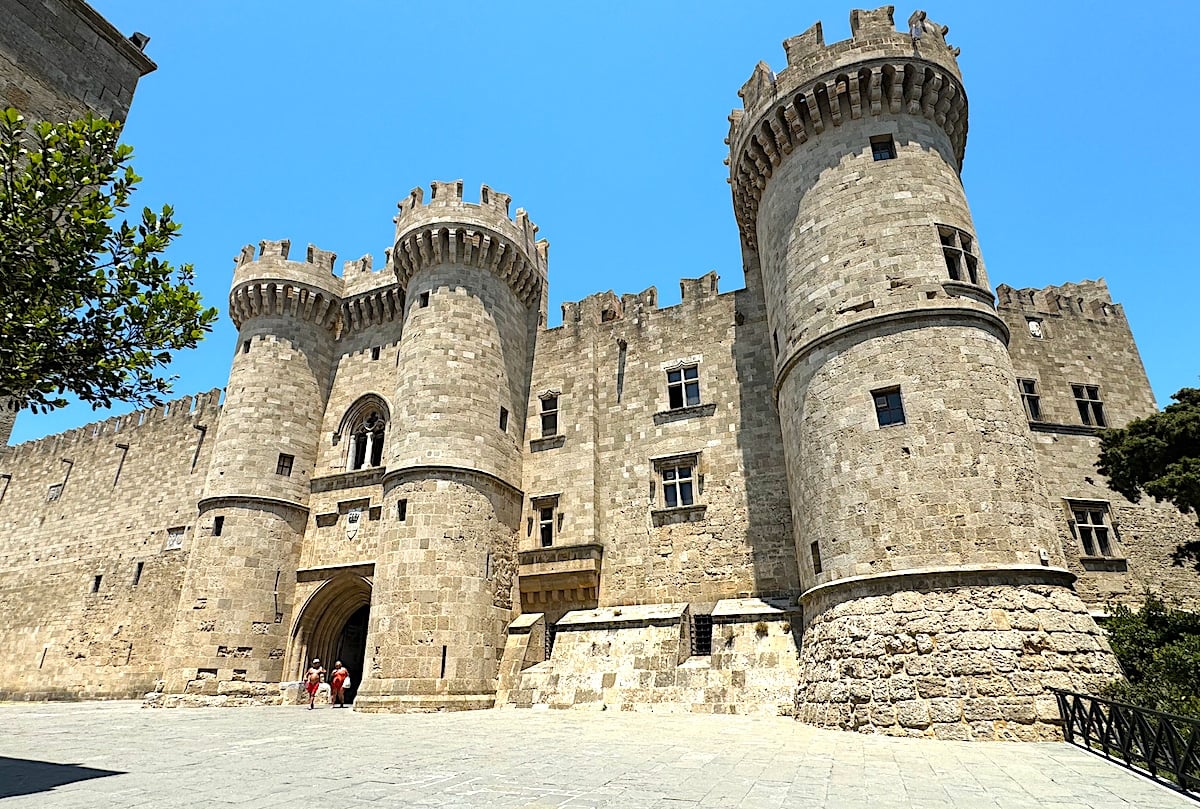
Rhodes offers an almost opposite experience. Its great symbol is not an elegant Venetian arcade but an enormous medieval city enclosed by fortifications. The Old Town of Rhodes is one of the most remarkable surviving urban ensembles of the medieval Mediterranean, shaped above all by the Knights of St. John, who occupied the island from 1309 until 1523.
They transformed the city into a powerful fortified stronghold. The Palace of the Grand Masters, the Street of the Knights, and the Great Hospital still evoke the world of Crusader states and medieval warfare. Nonetheless, Rhodes did not stop being shaped by history when the Knights departed.
After 1523, the island came under Ottoman rule, leaving mosques, baths, and other elements within the urban fabric. Italian rule beginning in the early 20th century added another layer. UNESCO notes that the medieval city is remarkable precisely because Gothic, Ottoman, and other historical influences coexist within one living city. Walking through Rhodes can therefore feel like moving across several centuries in a single afternoon.
Beyond the walls, the island’s setting reinforces its Eastern Mediterranean character: a generally drier landscape, long stretches of coastline, and a geographical position that historically placed Rhodes at the crossroads of Europe, Asia Minor, and the wider Mediterranean.
Corfu and Rhodes: Two islands shaped by geography—and history

The biggest difference between Corfu and Rhodes may be explained by where they located. Corfu looked westward, toward the Adriatic and Italy. Rhodes looked eastward, toward Asia Minor and the eastern Mediterranean. Both became strategically important, but they were absorbed into very different political and cultural networks.
Corfu’s long Venetian period helped create a cityscape unlike almost anywhere else in Greece. Rhodes became one of the Mediterranean’s great fortified cities, first under the Knights of St. John and later under Ottoman and Italian rule.
Both histories are visible rather than hidden. That is what makes the comparison so fascinating. A visitor could walk through Corfu Town and Rhodes Old Town on the same vacation and encounter two entirely different versions of the Mediterranean past.
So which island is “better”—Corfu or Rhodes?
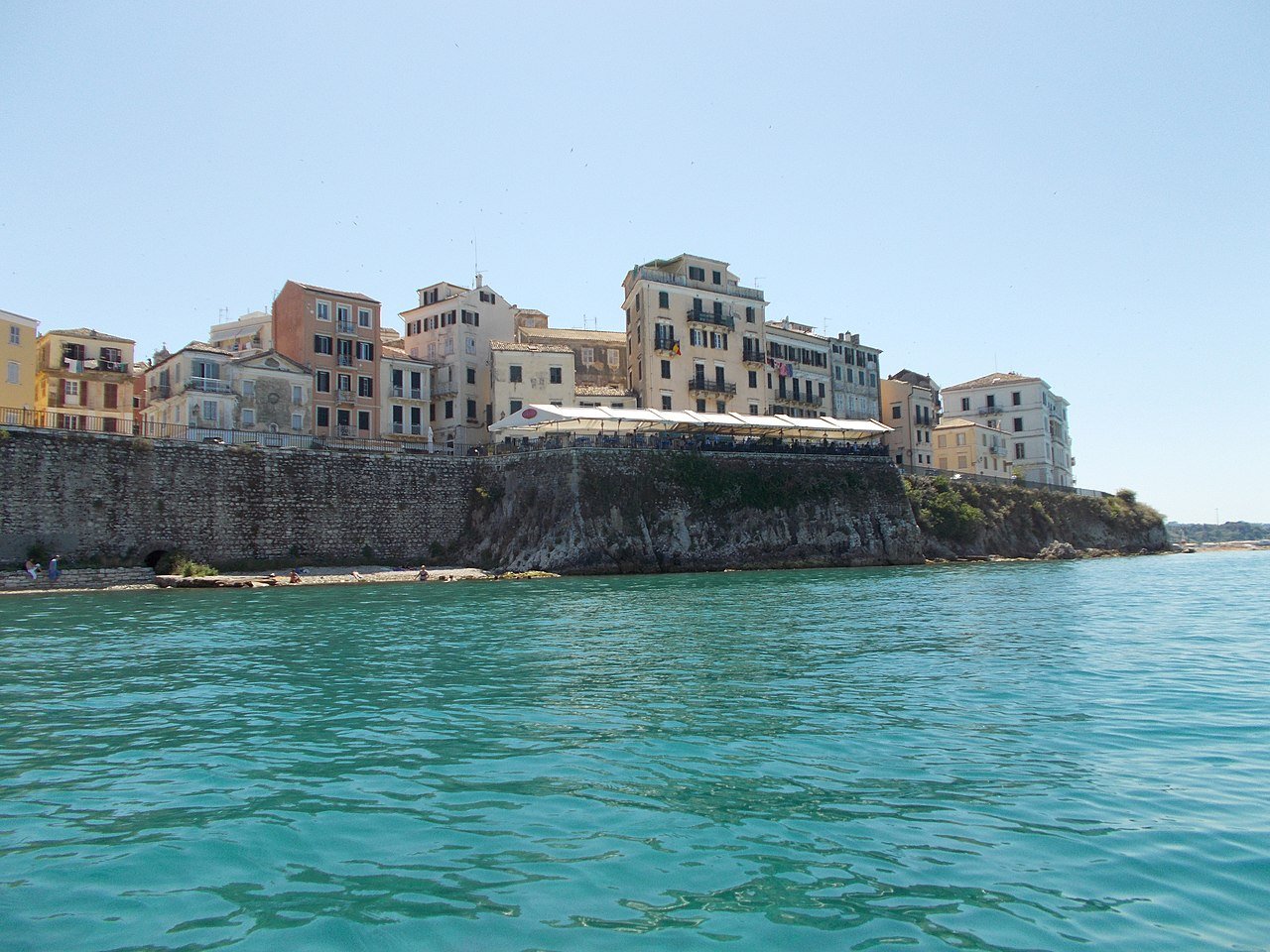
That may be the wrong question. Choose Corfu if the appeal is a greener landscape, Ionian scenery, elegant old-world streets, and an island culture strongly shaped by its connections with Venice and Western Europe. Choose Rhodes if the attraction is medieval walls, ancient and Crusader history, Eastern Mediterranean atmosphere, and the extraordinary experience of staying beside one of Europe’s best-preserved historic fortified cities.
Both islands are unmistakably Greek. Yet each challenges the idea that there is only one kind of Greek island. Perhaps that is the real reason to compare them. Corfu and Rhodes sit at different edges of Greece, looking historically toward different worlds, and after centuries of invasions, empires, trade, and cultural exchange, those different worlds are still visible today.
See all the latest news from Greece and the world at Greekreporter.com. Contact our newsroom to report an update or send your story, photos and videos. Follow GR on Google News and subscribe here to our daily email!

