



The small town of Paramythia in Epirus is gaining a new cultural identity, centered on the legacy of Sotirios Voulgaris, the visionary founder of the global jewelry house Bulgari.
An iconic stone building, originally a school commissioned by Voulgaris in 1937, is reopening its doors as a Multifunctional Cultural Center. The project aims to showcase the history of the region and the extraordinary journey of the family that conquered the world of luxury.
A legacy of gratitude
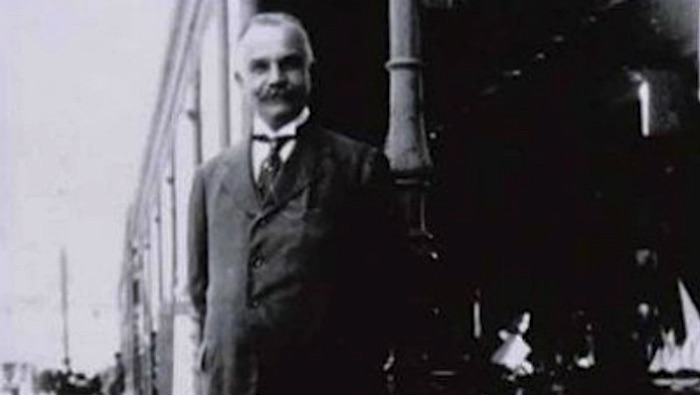
Despite reaching the pinnacle of international success, Sotirios Voulgaris never forgot his difficult childhood in Epirus. In 1932, his sons, Constantine and Giorgio, donated 1,075,000 drachmas to fulfill their father’s wish of building a school for his hometown. The building served as an educational institution until 2009. Today, with the support of the Voulgaris descendants, it has been reimagined as a modern museum:
- 1st floor: Dedicated to the Voulgaris family history
- 2nd floor: An exploration of local mythology, nature, and the notable figures of Paramythia
The space utilizes digital audiovisual applications and interactive displays to create an immersive narrative for visitors. At the 1974 unveiling of a bust in his honor, his granddaughter, Anna Voulgaris-Calissoni, captured the family sentiment: “We may live in a foreign country, but the voice of our Greek blood has never faded…we think and feel like Greeks, like people of Epirus.”

The extraordinary rise of the House of Bulgari
The family’s roots trace back to the village of Kalarrytes in the Tzoumerka Mountains. In the mid-19th century, Georgios Voulgaris and his son Constantine moved to Paramythia, where Sotirios was born in 1857.
The family’s first shop was a modest space in a narrow alleyway. However, after the shop was burned down during the volatile Ottoman occupation, Sotirios and his father fled, eventually settling on Corfu in 1877. It was there that Sotirios’ talent began to shine, creating silver bracelets and buckles that remain in the family collection today.

Bulgari’s journey to Rome
In 1880, Sotirios left for Italy. After a brief, unsuccessful stint in Naples, where his shop was burglarized, he arrived in Rome in 1881 with very little money but a profound belief in his craft.
Beginning as a traveling silver salesman, a Greek sponge merchant eventually offered him space to display his work in a shop window on Via Sistina. His silver jewelry became an instant hit. By 1894, he opened a shop at Via Condotti 28, strategically located on the pilgrimage route to St. Peter’s Basilica.
By 1905, the brand moved to Via Condotti 10, and the store was named “Old Curiosity Shop” after the Dickens novel to attract wealthy British and American tourists. Under the leadership of his sons, the brand underwent a “color revolution” in the 1950s and 1960s. During the La Dolce Vita era, the store became a magnet for Hollywood legends such as Elizabeth Taylor, Sophia Loren, and Gina Lollobrigida.
A new chapter
Today, with over three hundred stores worldwide and a portfolio spanning hotels, fragrances, and high fashion, the House of Bulgari continues to expand. However, this new cultural center in Paramythia serves as a permanent anchor to the humble Greek silver-smithing tradition that started it all.
The international communications director of Bulgari, Stephan Stenghen, reminded everybody of the luxury brand’s Greek heritage and the Greek legacy of its founder Sotirios Voulgaris, when he talked exclusively to Greek Reporter in 2017.
Related: Marina Bulgari, Granddaughter of the Greek Founder of Bulgari, Dies
See all the latest news from Greece and the world at Greekreporter.com. Contact our newsroom to report an update or send your story, photos and videos. Follow GR on Google News and subscribe here to our daily email!

