



If you are observant enough and have watched nighttime footage of modern fighter jets, you may have noticed a striking difference. American aircraft such as the super powerful F-35 often emit a bright orange or yellow flame behind them when their afterburners are engaged, whereas Russian fighters from the Sukhoi family frequently produce a vivid blue or violet exhaust. The difference is clear and once you notice it, it’s hard to unsee.
The question is why this is. Is it simply a case of American engines burning orange and Russian ones burning blue? The colors are largely the result of how fuel burns in the afterburner, the amount of soot produced, and the manner in which each engine mixes fuel with the hot exhaust gases leaving the turbine of the aircraft.
The mechanics behind the difference between American and Russian fighter jets
An afterburner gives a fighter plane a temporary increase in thrust by injecting additional fuel directly into the hot exhaust stream behind the engine’s turbine. NASA explains that this extra fuel burns in the exhaust section and produces additional thrust, although at the cost of considerably higher fuel consumption.
What pilots and spectators see behind the aircraft is a yellow or orange flame appearing when tiny carbon particles, or soot, become extremely hot and therefore glow. NASA combustion research notes that the familiar yellow color of some flames comes from the incandescence of hot soot particles. Blue light, by contrast, can be associated more strongly with light emitted directly by chemical reactions taking place during combustion.
This helps explain why the F-35‘s enormous afterburner plume can appear intensely orange, particularly during nighttime operations. The fighter is powered by Pratt & Whitney’s F135. This is an afterburning turbofan capable of producing almost 20,000 kilograms (44,092 pounds) of thrust. Certain fuel-injection patterns, local fuel-to-air ratios, and specific mixing conditions can result in regions where glowing particles produce particularly bright, orange exhaust.
On the other hand, Russian fighters such as the Su-27, Su-30, and Su-35 are frequently seen with much bluer afterburner plumes. The Su-35, for example, makes use of two 117S afterburning turbofan engines. Differences in the way the engine has been architectured, fuel injection, flame stabilization, and exhaust-nozzle design can change how combustion develops behind the aircraft, making blue or violet emissions more prominent under certain conditions.
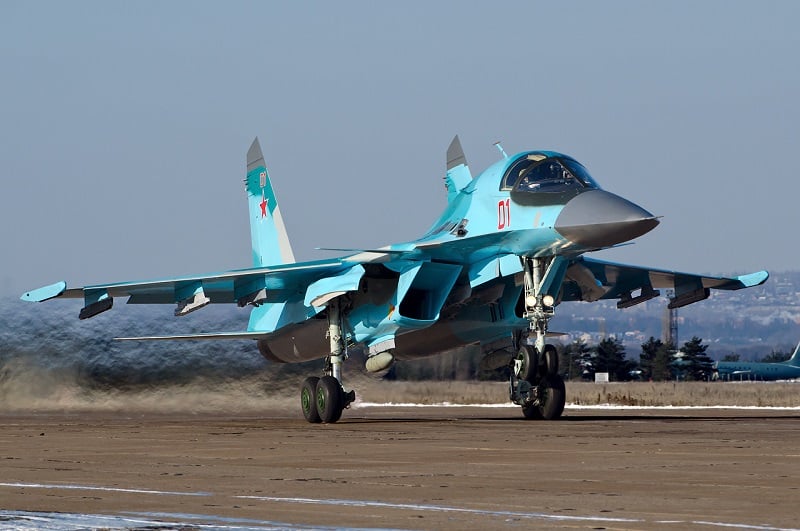
Is this always the case?
There is, however, no consistent national pattern to this. American fighters may display blue, violet, or nearly transparent afterburners, while Russian engines can also appear orange, yellow, or white depending on engine settings, altitude, and atmospheric conditions.
Camera settings further complicate the comparison. Exposure, white balance, and lighting can dramatically alter the appearance of an afterburner on video, and a blue exhaust does not automatically mean that a Russian engine is hotter or more efficient than an American one. Flame color alone cannot provide a meaningful comparison of fighter-engine temperature or performance. What looks like a dramatic visual distinction between rival aircraft is instead simply science.
@militarystrength01 Why Russian Fighter Jets Have Blue Afterburners But American Jets Burn Orange#army #shorts #fighterjet #usaarmy
See all the latest news from Greece and the world at Greekreporter.com. Contact our newsroom to report an update or send your story, photos and videos. Follow GR on Google News and subscribe here to our daily email!

