



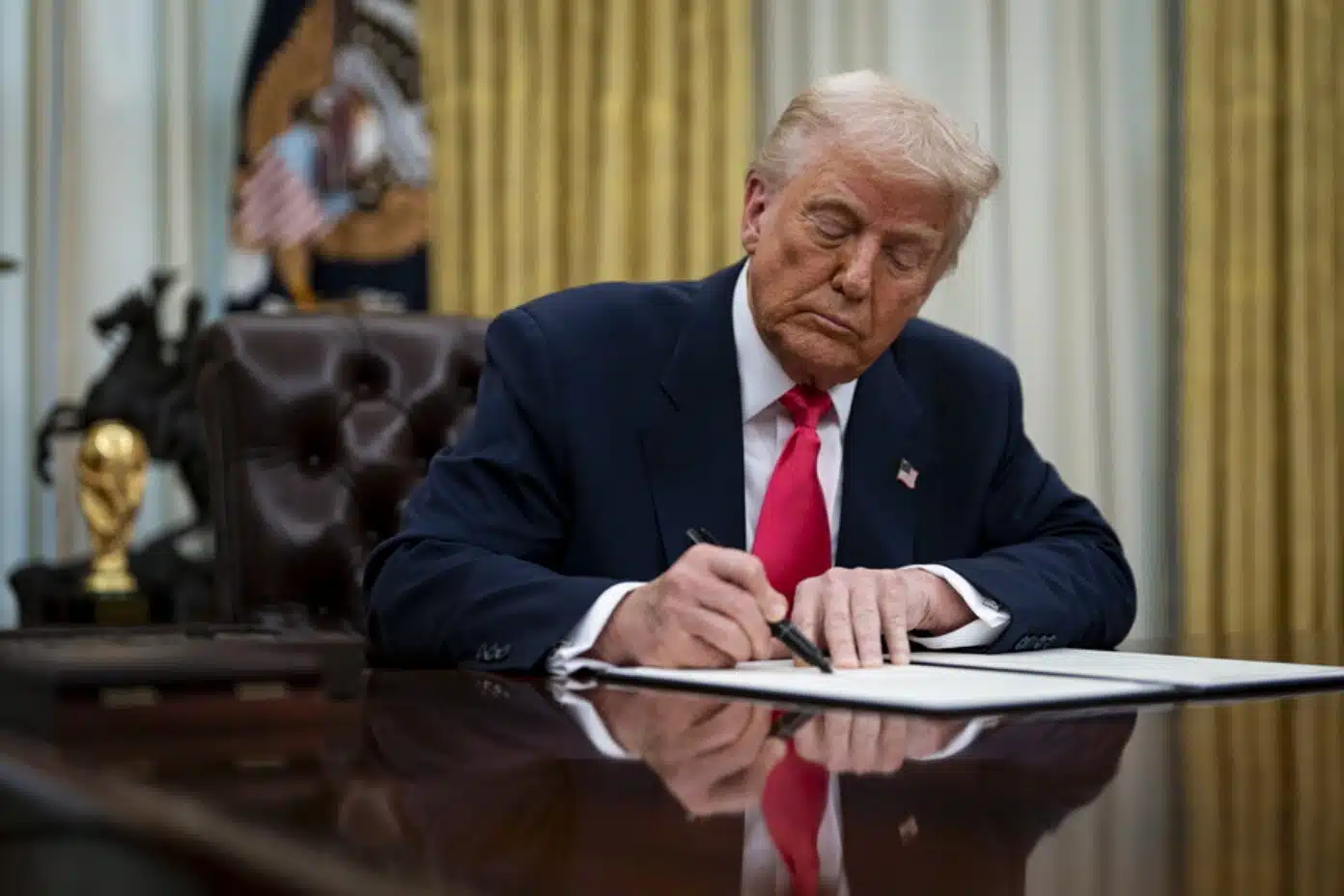
President Donald Trump signed two executive orders on Thursday aimed at defining the limits of birthright citizenship and stopping foreign nationals from traveling to the United States primarily to give birth, the White House announced.
The signing of the orders is the latest move by the Trump administration to reshape US citizenship and immigration policy following the Supreme Court’s June 30 decision in Trump v. Barbara.
The first executive order identifies categories of children born in the United States who, according to the administration, are not automatically entitled to citizenship under established historical exceptions to the Fourteenth Amendment.
The second delegates presidential authority to the secretaries of State and Homeland Security and directs them to take action against “birth tourism,” the practice of traveling to the United States primarily to give birth so that the child obtains American citizenship.
Trump responds to Supreme Court ruling
The new orders follow a major legal defeat for Trump’s earlier attempt to restrict birthright citizenship. In January 2025, Trump signed Executive Order 14160, which sought to deny automatic citizenship to children born in the United States when the mother was either unlawfully present or in the country temporarily and the father was neither a US citizen nor a lawful permanent resident.
The Supreme Court rejected that policy in Trump v. Barbara, ruling that children born in the United States to parents who are unlawfully or temporarily present remain US citizens under the Citizenship Clause of the Fourteenth Amendment. The Court held that Trump’s earlier order violated the Constitution. The ruling affirmed that those children are citizens at birth.
The decision means the administration cannot broadly deny citizenship to children simply because their parents are undocumented immigrants, tourists, students, or other temporary visitors.
Trump’s first new order instead appears designed to operate within narrower historical exceptions already recognized by the courts. These have traditionally included children born to accredited foreign diplomats and children of enemy forces occupying US territory.
The White House described the categories listed in the order as “non-exhaustive,” potentially setting up further legal disputes over whether the president can recognize additional exceptions without congressional action or another Supreme Court ruling.
New measures targeting birth tourism
The second order focuses on preventing birth tourism before a child is born rather than attempting to deny citizenship afterward.
It directs the State Department and Department of Homeland Security to use their existing powers over visas, admission to the United States and immigration enforcement to halt the practice. Visa regulations already prohibit birth tourism.
However, the administration could increase scrutiny of visa applications, question travelers believed to be entering primarily to give birth or penalize applicants who misrepresent the purpose of their visit. The precise enforcement measures will depend on guidance issued by the two departments.
The order could also affect a limited number of commercial surrogacy arrangements involving foreign intended parents if federal agencies determine that travel connected to a US birth constitutes birth tourism or visa misuse. However, the order is primarily an immigration and citizenship measure and not a general prohibition on surrogacy.
The White House said Trump considers American citizenship a “priceless and profound gift” carrying important rights, privileges, and responsibilities. The full effect of the two signed orders will become clearer once the State Department and Department of Homeland Security issue implementation rules.
Any attempt to expand the exceptions recognized by the Supreme Court is likely to face immediate legal challenges.
See all the latest news from Greece and the world at Greekreporter.com. Contact our newsroom to report an update or send your story, photos and videos. Follow GR on Google News and subscribe here to our daily email!

