



The Peloponnese is home to some of Greece’s most famous archaeological treasures. Millions of visitors make the journey each year to marvel at Mycenae, walk through the stadium at Ancient Olympia, or experience the remarkable acoustics of the theater at Epidaurus.
Yet beyond these iconic landmarks lies another Peloponnese—one filled with forgotten cities, remote sanctuaries, Bronze Age tombs, and ancient fortresses that remain largely untouched by mass tourism. Many are every bit as fascinating as their more popular counterparts, offering visitors the rare opportunity to wander through history in near solitude.
For travelers willing to venture a little farther off the beaten path, these ten archaeological sites reveal a quieter, often overlooked side of ancient Greece.
The hidden archaeological sites in the Peloponnese
1. Ancient Messene

Often described as one of the most well-preserved ancient cities in Greece, Ancient Messene remains surprisingly overlooked. Founded in 369 BC after the liberation of Messenia from Spartan rule, the city was built on an ambitious scale, complete with defensive walls stretching nearly nine kilometers (5.6 miles).
Visitors can explore an impressive theater, a vast stadium, temples, an agora, fountains, and public buildings, many of which are remarkably intact. Unlike more crowded archaeological parks, Ancient Messene allows visitors to imagine an entire Greek city rather than isolated monuments.
2. Peristeria Tholos Tombs
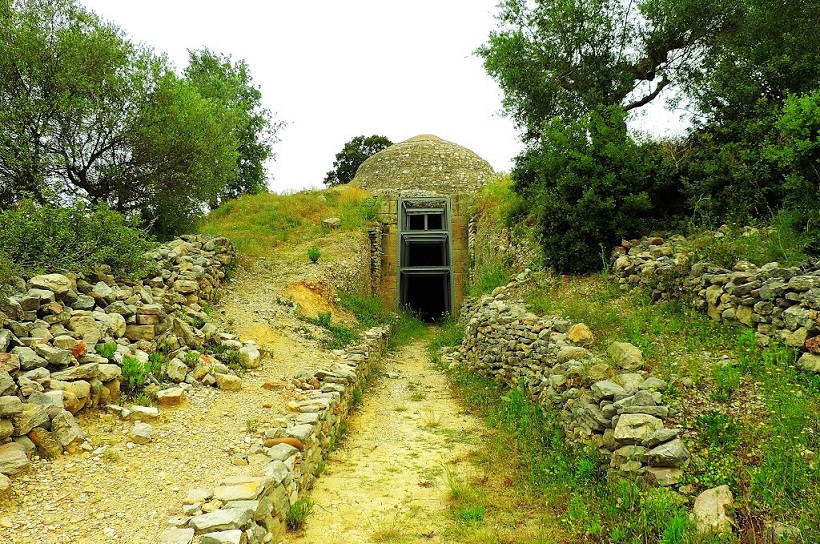
Near Kyparissia lie the royal tombs of Peristeria, one of the Peloponnese’s most important but least-known Bronze Age sites. Dating to around 1600 BC, the cemetery contains monumental tholos tombs similar to those found at Mycenae.
Archaeologists have uncovered rich grave goods here, demonstrating that Peristeria was once a powerful Mycenaean center controlling western Messenia. Despite its importance, the site rarely appears on mainstream travel itineraries.
3. Ancient Asine

Overlooking the Argolic Gulf near the seaside town of Tolo, Ancient Asine offers spectacular views alongside thousands of years of history. The settlement was occupied from prehistoric times through the Byzantine era.
Excavations have revealed Mycenaean remains, Classical fortifications, Roman buildings, and medieval structures, illustrating the site’s long and continuous history. Its coastal location makes it an ideal stop for visitors exploring Nafplio who want to escape the crowds.
4. Heraion of Argos

Long before Athens became the dominant power in Greece, the sanctuary dedicated to Hera near Argos attracted pilgrims from across the region.
Built on a hillside, the sanctuary consists of several terraces connected by monumental stairways. Although earthquakes and time have reduced many structures to ruins, visitors can still identify temple foundations, stoas, and ceremonial spaces while enjoying panoramic views across the Argive plain.
Its peaceful setting makes it easy to imagine the religious festivals once held in honor of Hera, the queen of the Olympian gods.
5. Ancient Mantinea

Located in the heart of Arcadia, Ancient Mantinea was once one of the Peloponnese’s leading city-states. Today, visitors can still trace much of its impressive polygonal city walls, which enclosed a thriving urban center during the Classical period.
The remains include a theater, agora, and sections of the ancient road network. Nearby stands the unusual Church of Saint Photini, whose eclectic architecture incorporates elements inspired by ancient Greek design, creating a fascinating dialogue between antiquity and Christianity.
6. Temple of Apollo Epicurius at Bassae
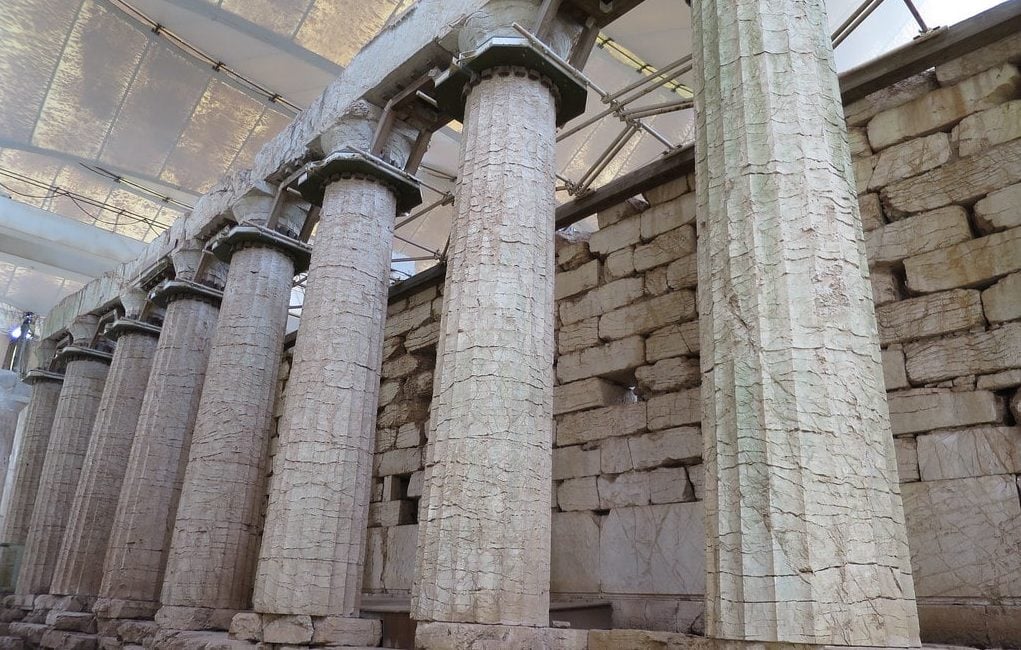
Although designated a UNESCO World Heritage Site, Bassae remains one of Greece’s least-visited major monuments because of its remote mountain location in Arcadia.
Built during the fifth century BC and traditionally attributed to Ictinus, one of the architects of the Parthenon, the temple is celebrated for its innovative design. It combines Doric, Ionic, and Corinthian architectural elements and contains what is widely considered the earliest known Corinthian capital.
Surrounded by rugged mountains, Bassae feels dramatically isolated, adding to its enduring mystery.
7. Ancient Tegea

Ancient Tegea was once among Arcadia’s most influential cities and a frequent rival of nearby Mantinea. Although much of the ancient settlement remains buried, visitors can explore sections of the city and the remains of the Sanctuary of Athena Alea, one of the most important religious centers in the Peloponnese.
The adjacent Archaeological Museum of Tegea displays sculptures, inscriptions, and everyday objects that help bring the ancient city to life.
8. Nichoria

Nichoria occupies a unique place in Greek archaeology because it helps explain what happened after the collapse of the Mycenaean palatial world around 1200 BC.
Excavations uncovered houses, storage buildings, and evidence of continuous occupation during the so-called Greek Dark Ages, a period once thought to have led to widespread decline. The discoveries have reshaped historians’ understanding of how communities adapted following the end of Mycenaean civilization.
For anyone interested in the transition between the Bronze Age and Classical Greece, Nichoria offers invaluable insights.
9. Ancient Asea
Nestled in central Arcadia, Ancient Asea is one of the Peloponnese’s quietest archaeological parks. The settlement was inhabited for centuries, from prehistoric times through the Roman period.
Visitors encounter temple foundations, sections of ancient roads, Roman baths, bridges, and traces of everyday life, all set amid a peaceful rural landscape. Unlike Greece’s larger archaeological sites, Asea offers a sense of discovery, where history unfolds without crowds or queues.
10. Ancient Phigaleia
Most travelers visiting southwestern Arcadia head directly to Bassae, unaware that nearby Ancient Phigaleia preserves the remains of another important ancient city.
Perched on a rocky hill overlooking the surrounding mountains, the site includes sections of defensive walls, an acropolis, and traces of public buildings. The dramatic setting highlights why ancient Greeks chose naturally defensible locations for their settlements.
11. Lykosoura

Often described by the ancient traveler Pausanias as the oldest city in the world, Lykosoura was the center of the mysterious cult of Despoina, a daughter of Demeter whose worship was largely secret.
Excavations have uncovered a temple, altar, theater, stoa, and impressive sculptural remains, making it one of Greece’s most intriguing religious sanctuaries. Its remote Arcadian location keeps visitor numbers very low.
12. Ancient Kleonai

Situated between Corinth and Nemea, Kleonai was once an important city controlling a strategic mountain pass. Visitors can explore its theater, city walls, and acropolis while enjoying sweeping views of the surrounding countryside.
The city also played a role in organizing the nearby Nemean Games. Most travelers head directly to Ancient Corinth or Nemea without stopping.
13. Lerna

Best known in mythology as the home of the Lernaean Hydra, Lerna is also one of Greece’s most important prehistoric archaeological sites.
Its famous House of the Tiles, dating to the Early Bronze Age (around 2500 BC), ranks among the earliest monumental buildings discovered on mainland Greece and has transformed archaeologists’ understanding of early urban development.
14. Ancient Gortys

Hidden in the Lousios Valley, Gortys flourished from the Classical through the Byzantine periods. Visitors can see the remains of temples, fortifications, baths, and the nearby Sanctuary of Asclepius, one of ancient Greece’s healing centers.
Its riverside setting makes it one of the Peloponnese’s most atmospheric archaeological sites.
15. Kakovatos
Kakovatos is home to a significant Mycenaean cemetery containing richly furnished tholos tombs dating to the Late Bronze Age. The discoveries suggest it was once a powerful regional center with connections to the wider Mycenaean world.
Although less well known than Mycenae or Pylos, the site provides valuable insight into western Greece during the Mycenaean period. Its isolation means visitors often have the ruins almost entirely to themselves.
Discovering a different Peloponnese
The Peloponnese has no shortage of world-famous archaeological attractions, but its quieter sites often provide a more intimate encounter with Greece’s past. Without the crowds of other more well-known destinations, visitors can take their time exploring ancient streets, sanctuaries, and fortifications while appreciating the landscapes that shaped Greek civilization.
These hidden archaeological gems reveal that history is not confined to famous monuments. Across the Peloponnese, forgotten cities and overlooked sanctuaries continue to preserve stories spanning thousands of years, rewarding those willing to venture beyond the standard tourist trail.
See all the latest news from Greece and the world at Greekreporter.com. Contact our newsroom to report an update or send your story, photos and videos. Follow GR on Google News and subscribe here to our daily email!

