



When democracy returned to Greece in July 1974 after seven years of military dictatorship, the country embarked on one of the most remarkable political and social transformations in modern Europe. Over the next five decades, Greece joined the European Community, adopted the euro, hosted the Olympic Games, endured financial collapse, survived devastating natural disasters, expanded civil rights, and gradually redefined what it means to be Greek.
Prime ministers and governments undoubtedly steered much of that journey. Yet many of the country’s most enduring changes were driven by people who never occupied the nation’s highest political offices.
Some commanded influence through newspapers, television, business, or the Church. Others emerged from science, sport, culture, or civil society. A few became reluctant public figures after personal tragedy. Together, they challenged institutions, reshaped public opinion, expanded freedoms, and forced Greece to confront challenging questions surrounding identity, accountability, and democracy itself.
The history of the Metapolitefsi—the period following the restoration of democracy—is therefore not only the story of elections and legislation. It is also the story of those who changed Greece from outside Parliament.
The power of public opinion in modern Greece
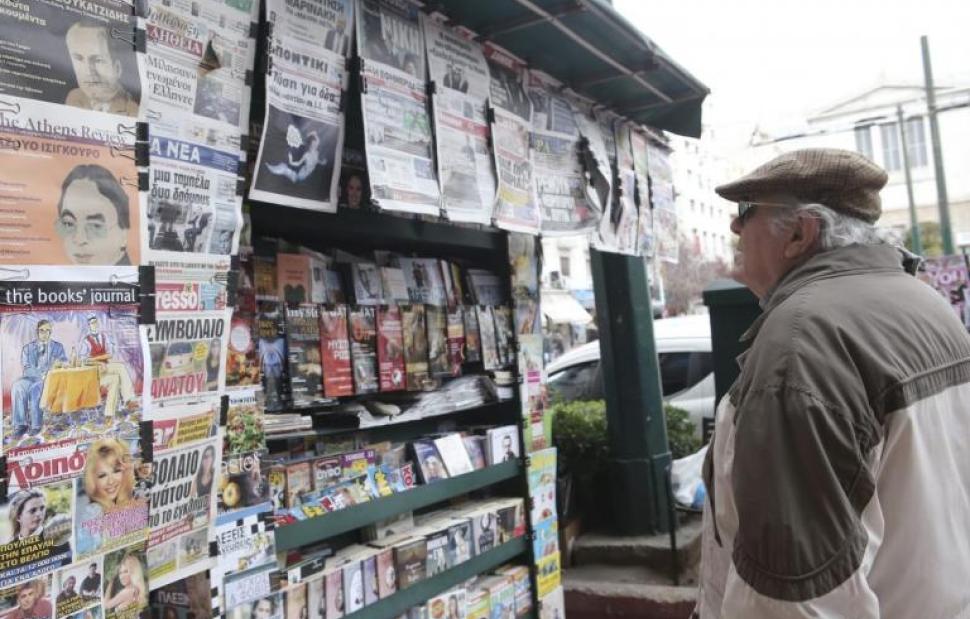
In the first decades after the dictatorship, no institution rivaled the press in shaping political life.
Christos Lambrakis, publisher of To Vima and Ta Nea, became synonymous with establishment influence. His newspapers helped define the national conversation while his patronage of the Athens Concert Hall reflected an ambition to position Greece as a modern European nation. Admirers viewed him as a guardian of serious journalism and culture; critics saw the embodiment of media power operating beyond electoral accountability.
If Lambrakis represented the establishment, Giorgos Kouris represented its disruption. Through the sensationalist tabloid Avriani, he revolutionized political journalism during the 1980s, replacing measured commentary with aggressive populism and personal attacks. “Avrianismos” entered the Greek political vocabulary as shorthand for a new era of media-driven polarization.
At the same time, Christos Tegopoulos’ Eleftherotypia championed investigative journalism and press freedom even when controversial editorial decisions sparked fierce public debate. Meanwhile, composer Manos Hadjidakis emerged as one of the era’s most eloquent critics of tabloid culture, warning that sensationalism threatened the quality of Greek democracy itself.
Together, these figures demonstrated that newspapers could shape governments almost as effectively as political parties.
Faith, memory, and competing visions of Greece

As Greece entered the 1990s with growing confidence and closer European integration, another source of influence emerged.
Archbishop Christodoulos transformed the Church of Greece into a powerful public voice. Charismatic and media-savvy, he connected with younger generations while defending Orthodoxy as a cornerstone of national identity. His campaign against the removal of religious affiliation from national identity cards mobilized hundreds of thousands of supporters and demonstrated that the Church remained one of the country’s most influential institutions, even when it failed to reverse government policy.
A generation later, Yiannis Boutaris offered a very different vision of Greek identity.
As businessman, winemaker, and, later on, mayor of Thessaloniki, Boutaris championed the city’s multicultural heritage, promoted Holocaust remembrance, encouraged dialogue with neighboring countries, and challenged long-held nationalist narratives. His outspoken positions often attracted criticism, yet they broadened the national conversation on history and identity.
Together, Christodoulos and Boutaris represented two competing visions of modern Greece—one rooted primarily in religious and national continuity, the other embracing historical complexity and cultural openness.
The promise—and peril—of prosperity in modern Greece
The optimism of the late 1990s brought unprecedented economic confidence. It also produced new forms of influence. The Athens Stock Exchange became a national obsession as hundreds of thousands of Greeks invested their savings in soaring shares. Television commentators, brokers, and financial analysts became household names almost overnight.
When the bubble burst in 1999, many families lost significant savings. Although the crash did not cause the debt crisis that followed a decade later, it permanently altered public attitudes toward financial institutions and speculative wealth, but the decade also produced remarkable achievements.
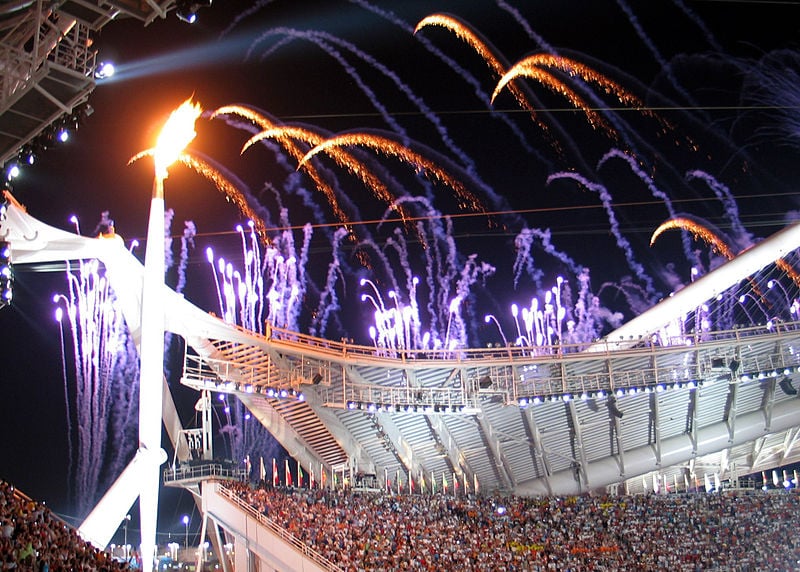
Gianna Angelopoulos-Daskalaki led Greece’s successful bid to stage the 2004 Olympic Games and oversaw an event that transformed the country’s international image. Together with artistic director Dimitris Papaioannou’s unforgettable opening ceremony, Athens presented a confident, creative Greece to billions of viewers around the world.
Yet beneath that optimism, scandals involving defense procurement, Siemens, and political corruption exposed weaknesses within the institutions underpinning the country’s prosperity.
Crisis gives rise to new voices

The sovereign debt crisis transformed not only Greece’s economy but also its public life. Traditional institutions lost credibility. In their place emerged new voices. Andreas Georgiou, head of the Hellenic Statistical Authority, became one of the country’s most controversial technocrats after revising deficit figures according to European statistical standards. While international organizations defended his work, he became a lightning rod for public anger over austerity.
The publication of the Lagarde List by journalist Kostas Vaxevanis fueled demands for transparency and accountability, reflecting a society increasingly skeptical of political and economic elites. But perhaps the most significant moral figure to emerge from this period was Magda Fyssa.
Following the murder of her son, anti-fascist musician Pavlos Fyssas, by a member of Golden Dawn in 2013, she became the unwavering public face of a seven-year legal battle that culminated in the neo-Nazi organization’s conviction as a criminal organization. Her quiet determination transformed personal grief into a broader defense of democracy itself.
The fatal police shooting of fifteen-year-old Alexandros Grigoropoulos in Athens on December 6, 2008, became one of the defining moments of the Metapolitefsi. His death sparked weeks of nationwide protests and riots, exposing profound frustration among young Greeks over police conduct, social inequality, and political alienation. Grigoropoulos remains a powerful symbol of demands for police accountability and civil liberties.
When tragedy altered the national conversation

Some of the most influential figures of recent years never sought public attention. The catastrophic wildfires of 2007 and the Mati wildfire of 2018 exposed weaknesses in emergency planning and state preparedness. They also intensified public demands for institutional reform.
Nothing, however, reshaped public trust quite like the Tempi rail disaster of 2023. The deaths of 57 people ignited one of the largest waves of public protest since the restoration of democracy. At the center of that movement stood Maria Karystianou, whose daughter Martha was among those killed.
Karystianou emerged as a powerful advocate for accountability and transparency. Her persistence transformed her from a grieving mother into one of the country’s most respected civic voices, demonstrating that moral authority can sometimes carry greater weight than political office.
A more inclusive and modern Greece

The Metapolitefsi is also the story of expanding freedoms. Olympic sailing champion Sofia Bekatorou helped launch Greece’s #MeToo movement in 2021 after publicly revealing that she had been sexually assaulted years earlier by a senior sports official. Her decision encouraged dozens of women—and later men—to speak openly about abuse across sport, theater, academia, and the workplace, forcing institutions to confront behavior that had long remained hidden.
At the same time, decades of advocacy by LGBTQ+ organizations, lawyers, artists, and civil society groups gradually transformed public attitudes toward equality. Their efforts contributed to landmark reforms including civil partnerships and, ultimately, the legalization of same-sex marriage in 2024, one of the most significant expansions of civil rights since the restoration of democracy.
These changes reflected a broader evolution in Greek society, where questions of equality increasingly became part of mainstream public debate.
Redefining Greek identity

Few unelected figures have influenced Greece’s image at home and abroad more than Giannis Antetokounmpo. Born in Athens to Nigerian parents, he spent much of his childhood without Greek citizenship under the country’s former nationality laws. His extraordinary journey from selling goods on the streets of Sepolia to becoming one of the world’s greatest basketball players transformed him into much more than a sporting icon.
For many Greeks, Antetokounmpo came to symbolize a more inclusive understanding of national identity—one based not solely on ancestry but on shared experience, contribution, and belonging. Internationally, he became one of Greece’s most recognizable ambassadors, projecting an image of a country increasingly comfortable with its diversity.
His influence was not political. It was cultural. Yet few public figures have done more to reshape perceptions of what it means to be Greek in the twenty-first century.
The other story of the Metapolitefsi

More than fifty years after the restoration of democracy, Greece’s greatest achievement may not be the longevity of its political institutions alone, but the evolution of its society.
The country’s modern history has been shaped not only by governments, but also by publishers who influenced public opinion, church leaders who mobilized millions, entrepreneurs who embodied both ambition and excess, scientists who earned public trust, athletes who challenged old definitions of identity, activists who expanded civil rights, and ordinary citizens who transformed personal tragedy into national movements.
Some strengthened democracy. Others exposed its weaknesses. Still others forced Greece to confront uncomfortable truths. Together, they remind us that nations are rarely shaped solely by those who govern. They are also transformed by those who change how society thinks, remembers, argues, and aspires.
In that sense, the true legacy of the Metapolitefsi is not only the governments that came and went but the emergence of a vibrant civil society capable of challenging power, expanding rights, and continually redefining what modern Greece can become.
See all the latest news from Greece and the world at Greekreporter.com. Contact our newsroom to report an update or send your story, photos and videos. Follow GR on Google News and subscribe here to our daily email!

