



Around 3,600 years ago, one of the most powerful volcanic eruptions in Mediterranean history buried the settlement of Akrotiri on the island of Thera, modern-day Santorini, beneath layers of ash.
The inhabitants had already escaped, leaving behind homes, tools, storage rooms, and kitchens frozen in time. What the eruption destroyed, it also preserved: a rare glimpse into the everyday life, food, and habits of a sophisticated Bronze Age society.
Today, visitors walking through the archaeological site of Akrotiri do not see only ancient walls and pottery. They see the remains of a community that stored food, prepared meals, traded goods, and lived with a level of organization that continues to impress archaeologists.
The food hidden inside Akrotiri’s homes
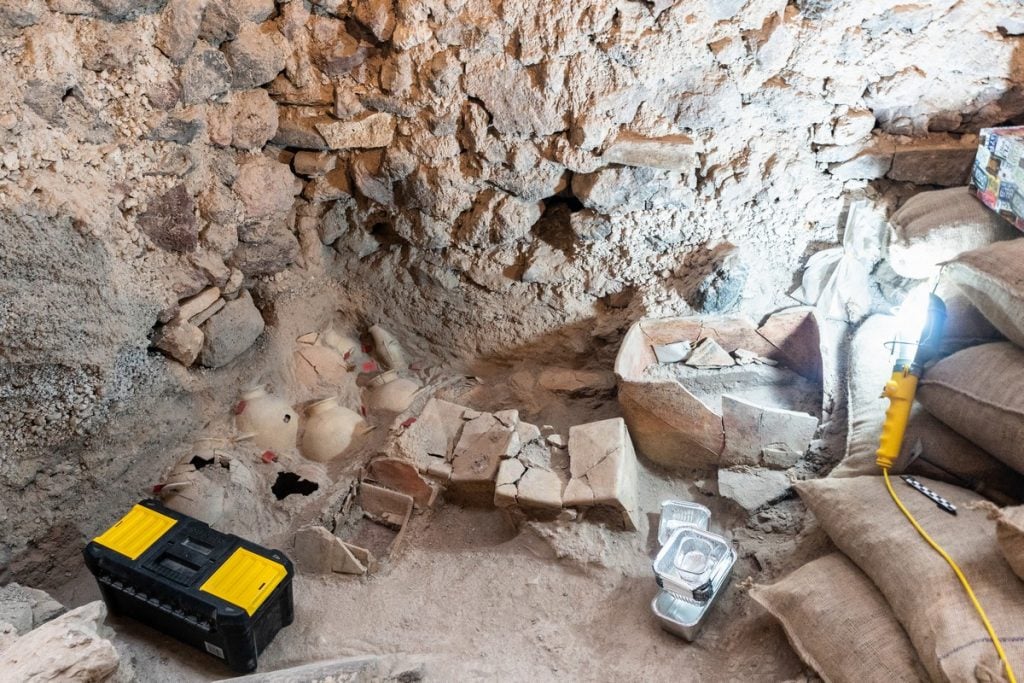
Excavations at Akrotiri have revealed storage areas containing evidence of a rich agricultural economy.
Archaeologists discovered remains of:
- barley and wheat,
- lentils and beans,
- chickpeas,
- figs,
- grapes,
- olives,
- almonds,
- sesame.
Large storage jars, known as pithoi, contained traces of products such as olive oil, wine, legumes, and dried fruits.
These discoveries show that the people of Akrotiri were not simply storing food for survival. They had developed systems for agriculture, preservation, and distribution that supported a complex urban society.
Kitchens preserved by volcanic ash

Inside the houses of Akrotiri, archaeologists found evidence of Bronze Age kitchens, including:
- clay cooking hearths,
- cooking pots,
- frying pans,
- stone mills,
- mortars,
- grinding tools.
Many objects remained where their owners had left them before abandoning the city.
The result is an extraordinary archaeological snapshot of daily life—showing how people prepared food nearly four millennia ago.
A Mediterranean diet thousands of years old
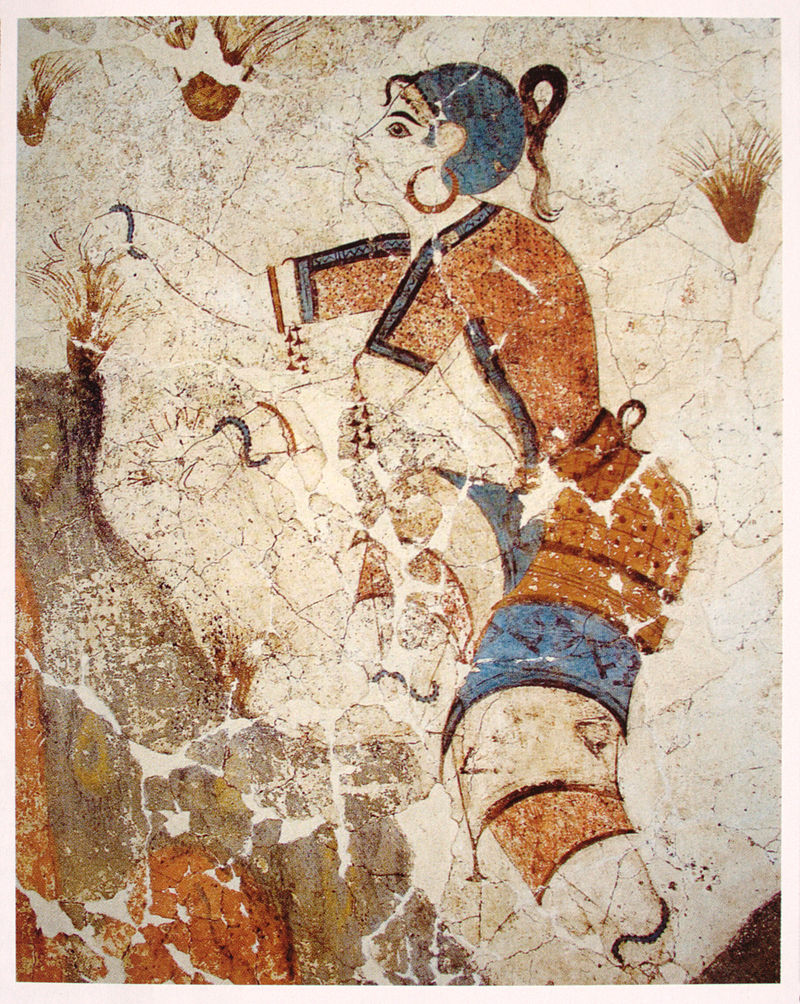
The diet of Akrotiri’s inhabitants closely resembles many elements of the Mediterranean diet known today.
Their meals were based on:
- grains,
- legumes,
- olive oil,
- fish and seafood,
- wine,
- wild greens,
- aromatic herbs.
Meat appears to have been consumed less frequently, likely reserved for special occasions, ceremonies, or religious offerings.
The combination of plant-based foods, seafood, olive oil, and wine reflects a food culture deeply connected to the landscape and resources of the Aegean.
The sea at the center of life
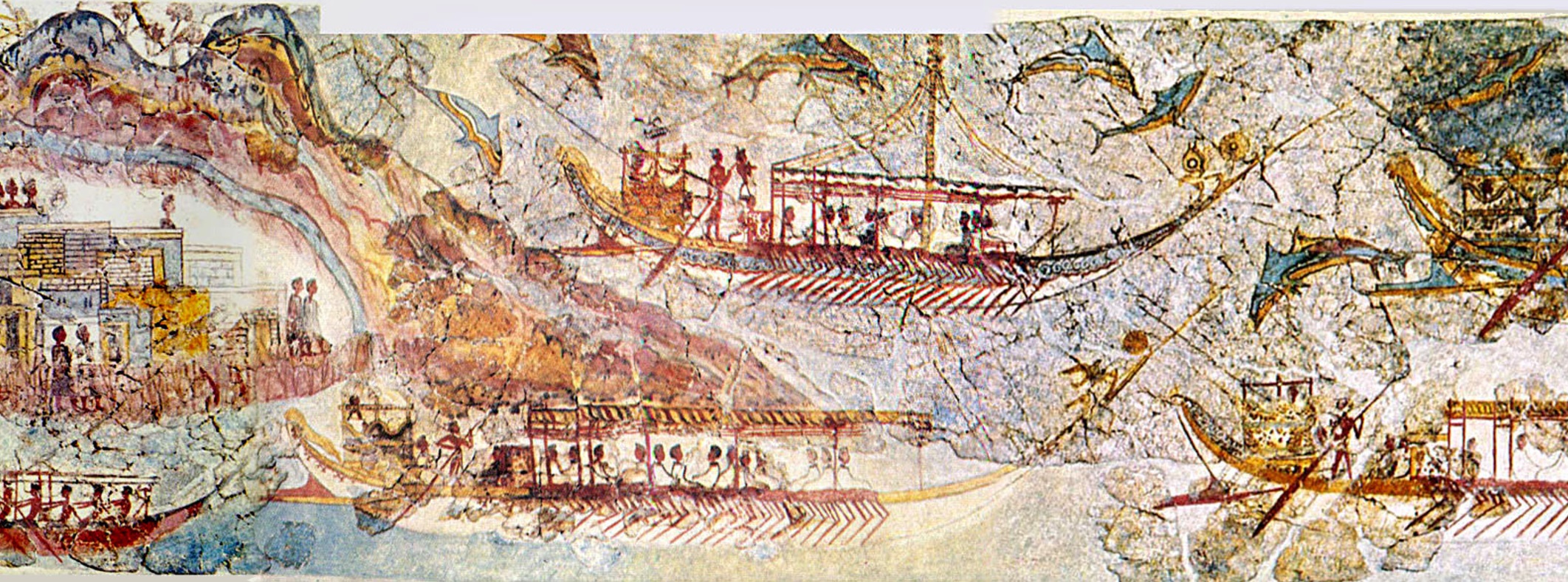
The famous wall paintings of Akrotiri depict fishermen, dolphins, ships, and marine scenes.
These frescoes were not merely decorative. They reflect a society closely connected with the sea, where fishing, maritime travel, and trade were central parts of daily life.
The archaeological evidence suggests that Akrotiri was an important trading center in the Aegean world, maintaining connections with other islands and regions of the eastern Mediterranean.
A sophisticated Bronze Age food culture
The more archaeologists study Akrotiri, the clearer it becomes that the settlement was far more than a simple prehistoric village.
Its inhabitants:
- managed agricultural production,
- stored large quantities of food,
- used specialized tools for cooking and processing,
- traded goods across the Aegean,
- incorporated local plants and seafood into their diet.
While it would be difficult to call Akrotiri the “first organized gastronomy” of Europe, the settlement provides one of the earliest and best-preserved examples of an advanced food culture in the Mediterranean.
A meal preserved through time

The volcanic ash that covered Akrotiri ended the life of a thriving city, but it also protected an extraordinary record of human activity.
The archaeological remains tell a story not only of buildings and art, but of ordinary moments: grinding grain, preparing food, storing wine, and gathering around the table.
The history of a civilization is often written through its rulers and monuments. But at Akrotiri, it is also found in the kitchens, storage jars, and cooking tools left behind by ordinary people.
More than three millennia later, the remains of their daily meals continue to reveal the human side of one of the Aegean’s most remarkable ancient societies.
Related: Ancient Santorini Fresco Suggests Bronze Age Links Between Greece and India
See all the latest news from Greece and the world at Greekreporter.com. Contact our newsroom to report an update or send your story, photos and videos. Follow GR on Google News and subscribe here to our daily email!

