


Ancient Egyptian princesses buried more than 4,000 years ago at the royal necropolis of Dahshur did not just carry weapons into the afterlife for show, according to new research. Skeletal evidence suggests these royal women actually used bows, daggers, and other arms once thought to belong strictly to men.
The findings come from a new examination of six sets of royal remains, including King Hor and five princesses, first unearthed by French archaeologist Jacques de Morgan between 1894 and 1895.
The study was led by Zeinab Hashesh of the Department of Archaeology at the University of Beni-Suef in Egypt and appears in the journal Frontiers in Environmental Archaeology.
For more than a century, most of these remains sat largely unstudied in the basement of the Egyptian Museum in Cairo. Only King Hor and Princess Noub-Hotep received any anthropological review, carried out in 1895 by physician Daniel Marie Fouquet.
Ancient Egyptian princesses show bone evidence of weapons use
The rest, including Princesses Ita, Khenmet, and Itaweret, were rediscovered and reexamined starting in 2020 through the Bioarchaeological Remains Curation Project.
Researchers looked closely at the bones where muscles once attached, searching for signs of repeated physical strain. They found clear patterns matching the weapons buried alongside each woman.
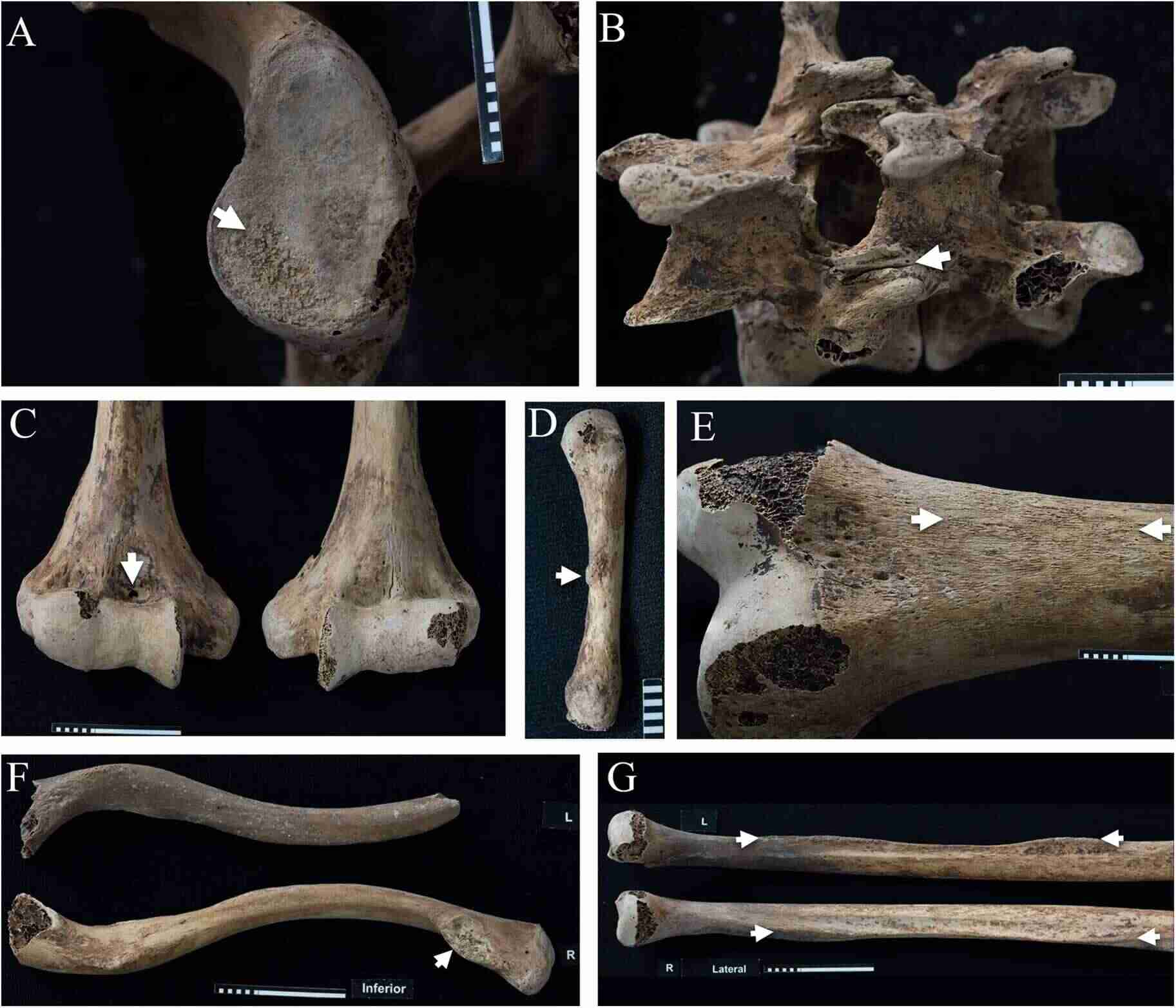
Princess Noub-Hotep’s hand bones show a slight bowing shape and strong muscle markings consistent with drawing a bow, and her tomb contained a set of arrows.
Princess Ita’s forearm bones carry heavy wear at points linked to a firm, repeated grip, matching the bronze dagger found in her burial. Princesses Khenmet and Itaweret both show bone buildup at spots tied to drawing a bow as well.
The study explains that these physical markers point to real, repeated use of the weapons during life rather than symbolic burial items placed for ritual purposes alone.
Findings challenge assumptions about gender and combat roles in Egypt
Researchers noted that this evidence pushes back against the idea that physically demanding roles belonged only to men in ancient Egyptian society, suggesting elite status may have opened the door to activities that crossed typical gender lines.
The team also used X-ray imaging and a chemical technique called Fourier transform infrared spectroscopy to study leftover embalming material on the bones.
Tests showed the royals were treated with a mixture of frankincense and juniper resin, materials that would have been brought in through long-distance trade routes connecting Egypt to Nubia and the region known as Punt.
Beyond the weapons, the skeletons revealed healed fractures, spinal quirks shared across several individuals, and signs of illness in childhood, even among this privileged family.
Researchers said that shared anomalies in the spine point to close family ties among the group, supporting the idea of an intermarried royal line.
See all the latest news from Greece and the world at Greekreporter.com. Contact our newsroom to report an update or send your story, photos and videos. Follow GR on Google News and subscribe here to our daily email!

