



There are a million different theories about why great empires fall, and the real reasons are painstakingly multifaceted, but one theory that has been less promulgated is the Marxist one.
Marx wrote about the contradictions of capitalism, resulting from the inability of producers in a society to buy their own products and the consequent cycle of economic depression and decline that inevitably follows.
These contradictions apply to all historical societies where the ruling classes, or elite, take more than a reasonable share of the available resources. If the elite takes too much, the general populace is unable to consume the products of its own industry.
This theory aptly describes how—albeit very gradually in some cases—the great empires of the past fell into disarray and crumbled under the might not of external conquerors, at least to begin with, but under their own exploitative practices. These led to internal malaise, depression, rebellion, and then possibly external conquest.
The key to the formation, survival, and decline of all historical societies is their use of surplus income and resources. Without extraction of product surplus to immediate requirements—in the form of food, arms, luxuries, and other goods and services produced by farmers, craftsmen, traders, and servants—by the elite, no society would be able to afford the protection, law and order, administration, defense, spiritual advice, personal services, cultural production, and other assets essential to its existence.
There are three main ways by which surplus income and resources are extracted. The political/military, economic/commercial, and the socio-cultural. Thus, there are three different sorts of elite. Under the political/military heading, there are warriors, conquerors, and home-grown mafia. In the commercial bracket are merchants, industrialists, and capitalists. Charismatics, priests, bureaucrats, and lawyers fall under the socio-cultural camp.
Which of these succeeds in dominating any given society and establishing the right to priority extraction depends on the specific history of the society and what the elite have to offer in exchange. This would be internal protection and external defense, a share in increased wealth and income, or religious, personal, or administrative services.
Eventually, all elites are met with the temptation to turn extraction into exploitation. Once a system of extraction has been established, the elite is tempted to take more and more and to think that unlimited power, wealth, and comfort are theirs by right.
Concentrations of wealth begin to appear far beyond the actual needs of the elite and more than the society can reasonably afford. These concentrations may be royal palaces, aristocratic houses full of servants, private transport, and bodyguards.
Here is a look at the heights of exploitation reached by a handful of great empires. Exploitation may have in fact been a contributing factor to their eventual fall.
The fall of the Late Western Roman Empire
As early as the rule of Nero (54-68 AD), there was evidence that demand for revenue led to the debasement of the coinage. Money was needed to cover the increasing costs of defense and a growing bureaucracy. However, instead of raising taxes, Nero and the emperors that followed opted to debase the currency by reducing the precious metal content of coins. This was in fact a form of taxation: a tax on cash balances.
Throughout most of the empire, the basic units of Roman coinage were the gold aureus, silver denarius, and copper or bronze sesterce. The aureus did not circulate widely. Thus, debasement was mostly limited to the denarius.
Nero reduced the silver content of the denarius to 90 percent and slightly reduced the size of the aureus to maintain the 25 to 1 ratio. Trajan (98-117 AD) reduced the silver content to 85 percent but was able to maintain the ration because of a large influx of gold.
Debasement continued under Marcus Aurelius (161-180 AD), who reduced the silver content of the denarius to 75 percent, and it was reduced even further by Septimius Severus to 50 percent. By the middle of the third century AD, the denarius had a silver content of just five percent.
This continual debasement did not improve the empire’s monetary position. Instead, people just hoarded older, high silver-content coins and paid their taxes with those comprised of the least silver. The government’s and thus the empire’s real revenues may actually have declined.
To begin with, the government was able to raise additional funds from the sale of state property, but later, more corrupt emperors such as Domitian (81-96 AD) invented charges to confiscate the assets of the wealthy. They also made up excuses to demand tribute from the provinces and the wealthy.
Although taxes on ordinary Romans were not raised, citizenship was expanded to bring more people into the tax net. Taxes on the rich, however, were sharply raised, particularly those on inheritances and manumissions (freeing of slaves).
Most emperors continued the policies of debasement and increasingly heavy taxes, levied mainly on the rich. As the private wealth of the empire was slowly confiscated or taxed away, economic growth slowed to a virtual standstill. Once the rich were no longer able to pay the state’s bills, the burden then fell onto the lower classes so that average people suffered as well from deteriorating economic conditions.
At this point, in the third century AD, the monetary economy completely broke down, but the military demands of the state remained high. Rome’s borders were under continual pressure from Germanic tribes in the north and from the Persians in the east.
With the collapse of the monetary economy, the normal system of taxation also ceased to work. This forced the state to directly appropriate whatever resources it needed wherever they could be found. Food and cattle, for example, were taken directly from farmers. Other producers were similarly liable for whatever the army may have required.
It was this increased taxation and exploitation of the Roman populace that made them indifferent to the survival of the state, and defense was left to German mercenaries who eventually overran the government and usurped the emperor’s power.
Athenian imperialism and exploitation of Delian League
The Delian League, also known as the Athenian Empire, was founded after the Persian War in 478 BC as a military alliance between Greek city-states. It was led by Athens, which defended all members unable to protect themselves with its massive and powerful navy.
The members of the Delian League were obligated to swear an oath of loyalty to the league and contributed mostly monetarily but in some instances donated ships or other forces. It was also the case that many democratic members of the League owed their freedom from oligarchic or tyrannical rule to Athens.
Such was the city’s influence that, by 454 BC, Pericles had moved the treasury of the Delian League from the island of Delos to the Parthenon atop the Acropolis in Athens, allegedly to protect it from Persia. However, Plutarch relays that several of Pericles’ rivals saw the transfer to Athens as usurping monetary resources to fund elaborate building projects.
Athens also changed its policy on the donation of ships, men, and weapons from league members and instead accepted solely money.
With the great influx of cash afforded to Athens by exploiting the 150 to 330 members of the league, the city did indeed use the money to reinforce its own naval prowess and put the remainder of the money to work on the city’s art and architecture. In order to maintain its position, Athens began using its huge military force to enforce membership in the League. City-states, such as Mytilene and Melos, that wished to leave the alliance were punished by force.
Excessive exploitation of the lower classes—in this case, the less wealthy city-states—will lead to rebellion. And that’s what happened. The first member of the league to attempt to secede was the island of Naxos around 471 BC. After its defeat, Naxos is believed (based on similar, later revolts) to have been forced to tear down its walls as well as lose its fleet and vote in the league.

Another rebellion was staged by Thasos, which saw Athens’ founding of the colony of Amphipolis on the Struma River as a threat to its interests in the mines of Mount Pangaion. As such, Thasos, a member of the Delian League, defected to Persia. The city-state then called to Sparta for assistance but was denied because Sparta was up against the largest helot revolt it had ever seen.
More than two years of siege took place before Thasos was forced to surrender to the Athenian leader Aristides and was brought back into the league. The fortification walls of Thasos were torn down, and the city-state had to pay yearly tributes and fines. On top of this, their land, naval fleet, and the mines of Thasos were confiscated by Athens. The siege of Thasos marks the turn of the Delian League from an alliance into what Thucydides called a hegemony.
The new treasury in Athens was used for several purposes, not all related to the defense of members of the league. It was using tribute paid from members into the treasury that Pericles relied on to begin building the Parthenon on the Acropolis and replace an older temple alongside many other extravagant, non-defense related expenditures.
The Mughal Empire
The Mughals built one of the greatest empires of their time and had a lasting influence on Indian history and culture. The dynasty is noteworthy for its more than two centuries of effective rule over huge parts of India, for the skillfulness of its rulers, and for its administrative organization.
The Mughal emperors promoted art and learning, and Mughal architecture in particular was renowned for its harmony and beauty. However, in the Marxist view, it was the palaces and mosques of these emperors, Muslim symbols of oppression over the Hindu population, along with excessive exploitation of the peasantry by the rich, which stripped away the will and means to support the regime. This ultimately led to the dynasty’s demise.
Mughal emperors were originally known for leveling with the peoples they conquered and including them in their government and military, but in the later decades of the empire, the emperors leaned towards autocracy and intolerance. Hindus and other groups were treated as inferior, excluded from the Mughal court, and heavily taxed.
Religious intolerance led to persecution, which took the form of destroying Hindu and Sikh temples and schools. These actions created widespread resentment and rebellion against the Mughals, fragmented their kingdom, and greatly weakened their rule.
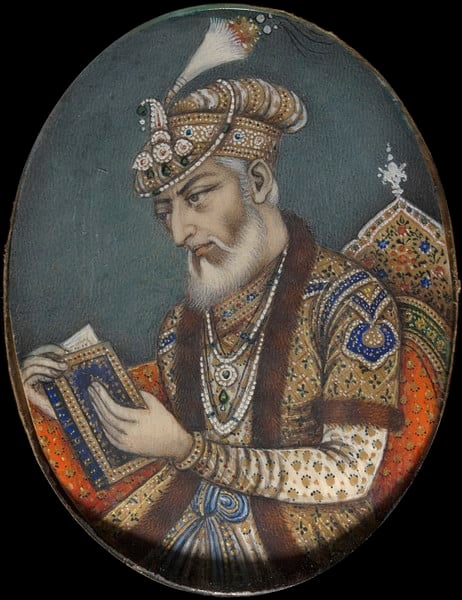
During the rule of Aurangzeb (1658-1707 AD), the economy of the Mughal Empire started to decline. The heavy taxation levied brought the farming population to its knees, and at the same time, there was a gradual but steady decay in the quality of the Mughal government.
Later emperors showed little will to govern or invest their money in agriculture, technology, or the military. Some emperors even discouraged economic prosperity, scared that the rich might raise their own armies. Eventually, local leaders rebelled and declared themselves independent from the central government. This sped up the empire’s decline and eventual fall.
Fall of the Ottoman Empire
After a series of factional struggles during the 1500s and 1600s for power between the grand viziers, the harem-formed “Sultanate of the Women,” and the chief Janissary officers, the agas, it seemed that regardless of who controlled the apparatus of government, it made no difference. There was a growing paralysis of administration throughout the empire, increasing anarchy and misrule, and the fracture of society into discrete and increasingly hostile communities.
Amid the turmoil, conditions made it inevitable that the Ottoman government could not meet the growing problem that plagued the empire. Economic challenges started to sprout in the late 16th century when the Dutch and British cut off the old international trade routes through the Middle East. As a result, the wealth of the Middle Eastern provinces went into decline.
The Ottoman economy was rocked by inflation, brought on by the influx of precious metals into Europe from the Americas, and by a growing imbalance of trade between East and West.
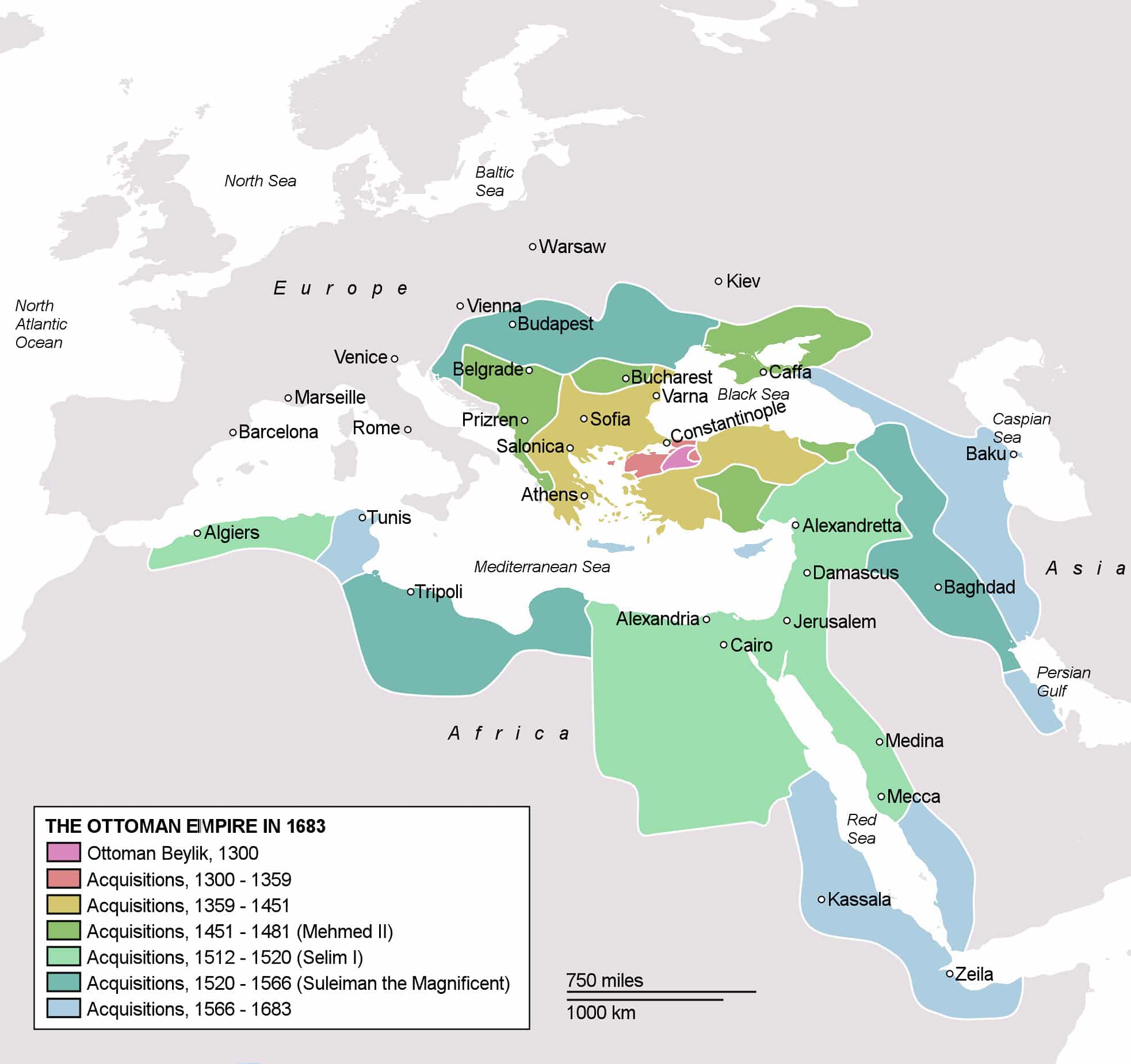
As the treasury lost its revenues, it began to meet its obligations—as the Roman Empire did—by debasing the coinage, sharply increasing taxes, and resorting to confiscations. All of this worsened the situation.
People depending on salaries found themselves underpaid, resulting in further theft, over-taxation, and corruption. Holders of the timars and tax farms began using them as sources of revenue to be exploited as fast as possible rather than as long-term holdings that would eventually provide for the future.
Political influence and corruption also allowed them to transform those holdings into private property, either as life holdings or religious endowments, without any further obligations to the state.
Inflation wreaked havoc on traditional industries and trades. Operating under strict price regulations, the guilds were unable to provide quality goods at prices low enough to compete with cheap European-manufactured goods that had entered the empire without restriction because of various capitulation agreements.
As a result, the traditional Ottoman Empire’s industries fell into rapid decline. Christian subjects combined with foreign diplomats and merchants, who were protected by the capitulations, largely to drive the sultan’s Muslim and Jewish subjects out of industry and commerce and into poverty and despair.
Other examples of exploitation and accumulation of wealth that led to decline
Even on such a basic level as a statue, exploitation can have its consequences. The enigmatic stone gods of Easter Island represent an extraction of labor from a servile population that ended, judging from the archaeological evidence, in revolt and the overthrow of the ruling elites.
The Persian and Egyptian temples and palaces were a tempting invitation to Alexander the Great’s Macedonians, and later the Romans, Mamluks, Arabs, and Turks. The servile populace did not too eagerly defend these.
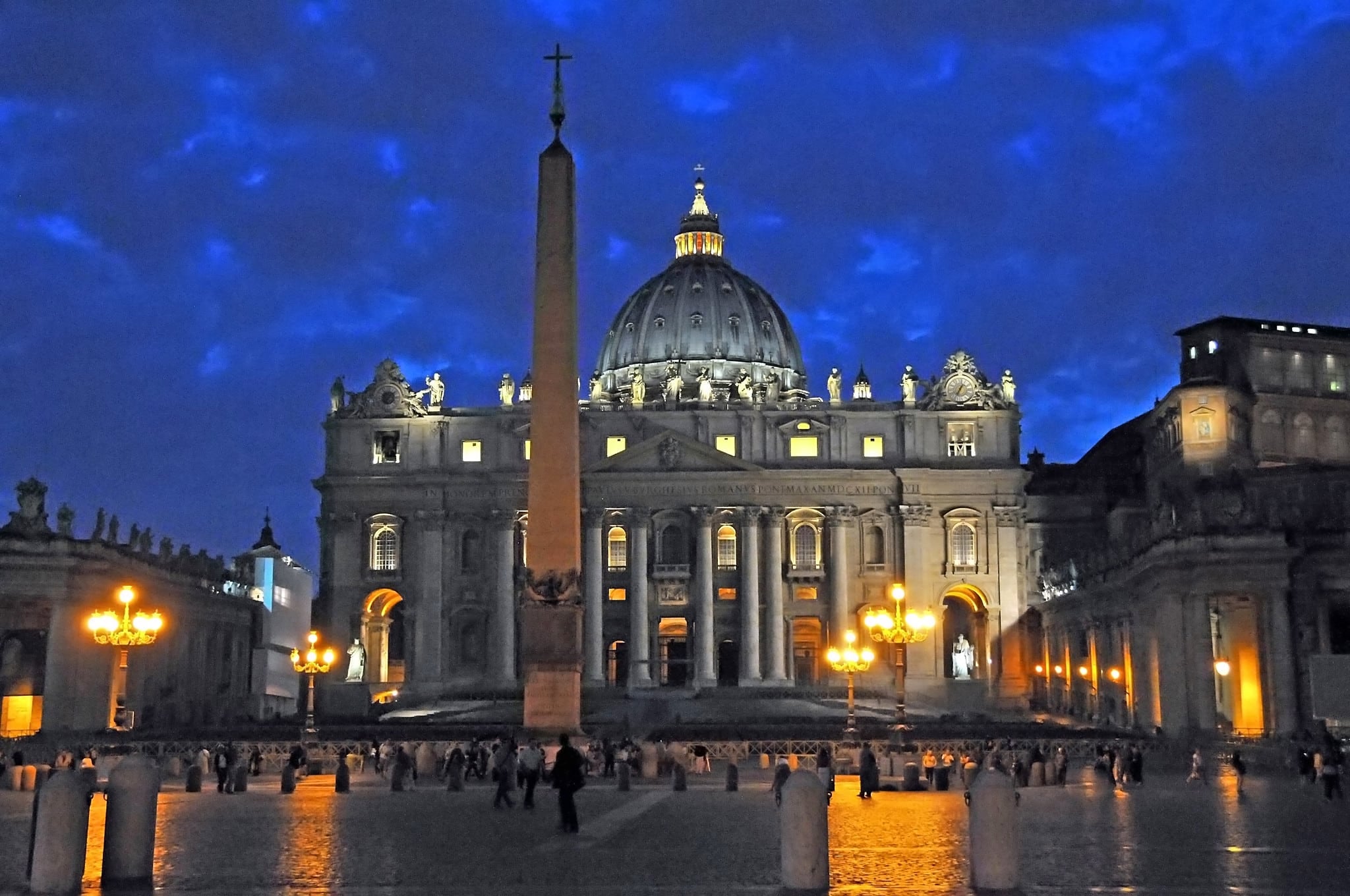
The construction of St. Peter’s in Rome and its accompanying artworks were, through the selling of indulgences to pay for them and the Papacy’s lavish lifestyle, the immediate cause of the Reformation.
See all the latest news from Greece and the world at Greekreporter.com. Contact our newsroom to report an update or send your story, photos and videos. Follow GR on Google News and subscribe here to our daily email!

