



Ancient obsidian tools unearthed in Peru have revealed new clues about trade routes that extended far beyond the borders of the powerful Wari Empire. Researchers recovered two large obsidian tools at Cerro de Oro, a coastal site in the Cañete Valley, and traced the stone back to the highland source of Quispisisa.
The find shows that prized volcanic glass moved well beyond areas under direct Wari control during the Middle Horizon period, roughly between 600 and 1000 AD. The study, led by Francesco Fernandini at the Pontifical Catholic University of Peru in Lima, appears in the journal Latin American Antiquity.
How ancient obsidian tools reached a burial site in Peru
Workers found the two stone tools, known as bifaces, within a storage room at a residential compound. The room also held two other stone items made from local materials. Researchers say the grouping points to a deliberate, organized burial rather than random discarding.
The site had been ritually closed off, a practice that involved placing valued objects, and in some cases human remains, inside rooms before sealing them.
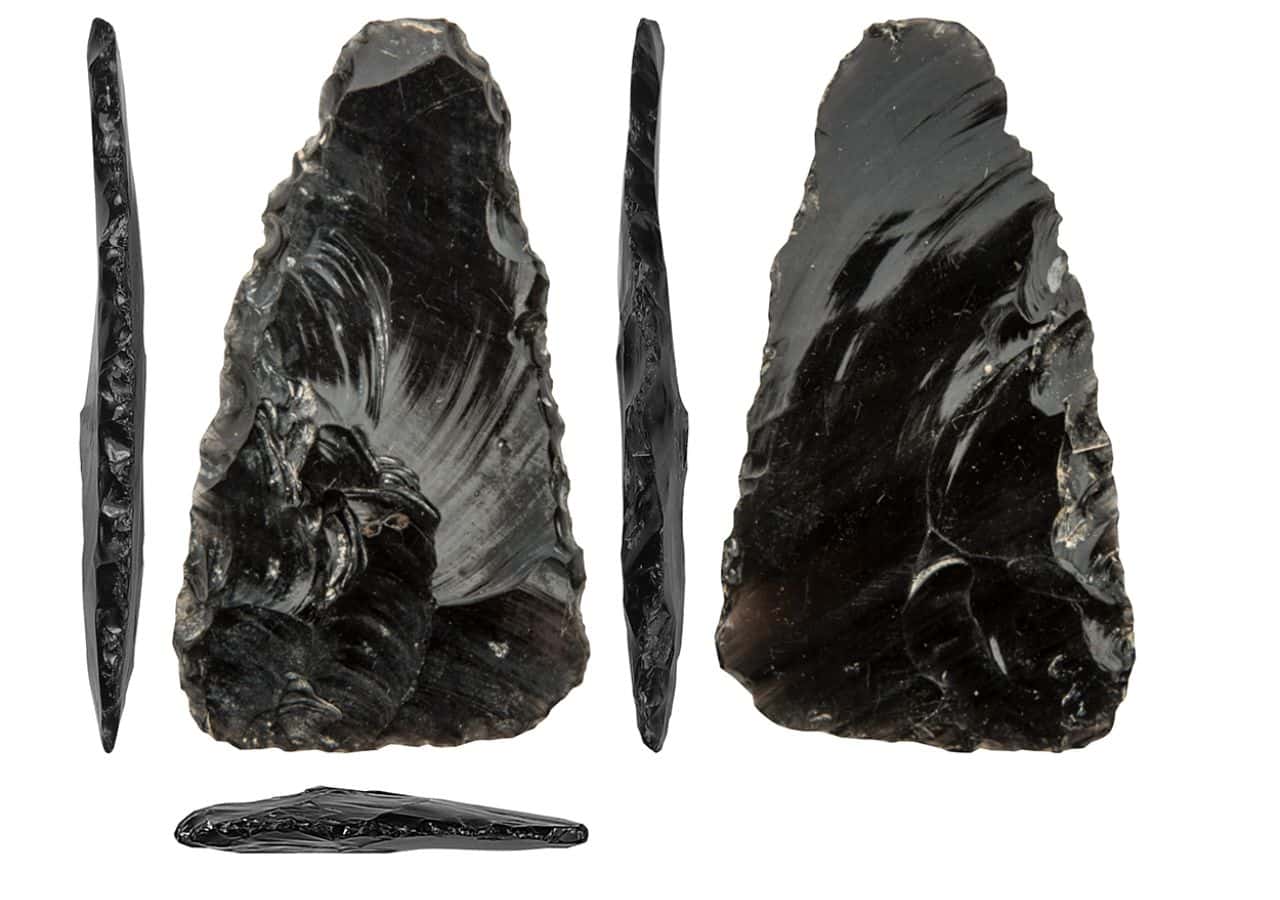
Scientists used a portable X-ray device to test the chemical makeup of the obsidian. The results matched Quispisisa, a known source located in the Ayacucho region of the Peruvian highlands.
That source supplied much of the obsidian used by the Wari, a dominant Andean civilization at the time. Yet Cerro de Oro is situated far from any known Wari settlement, suggesting local communities obtained the material on their own.
One tool used, one untouched: Signs of deliberate pairing
The two tools appear to have different histories. One appears unused with no signs of wear, while the other shows signs of scratches and chipping consistent with cutting wood, possibly as part of an axe or similar tool.
According to researchers, the contrast may reflect a deliberate choice, pairing a worn, functional object with an unused one prior to being buried.

Findings suggest that access to obsidian was not limited to elites or state officials. Instead, ordinary families appear to have acquired the material through their own networks and used it in private rituals.
Researchers noted that similar patterns have been documented in other regions, where local groups picked and chose which Wari-style goods to adopt rather than following imposed traditions.
Evidence points to thriving era of local exchange
The study adds to growing evidence that the Middle Horizon was a period of active, informal exchange across the Andes. Goods linked to several different cultural styles, including Wari, Nasca, and Lima traditions, turned up at the same site.
The discovery is said to highlight how communities outside major political centers shaped their own trade connections and attributed new meaning to objects that originated from distant lands.
See all the latest news from Greece and the world at Greekreporter.com. Contact our newsroom to report an update or send your story, photos and videos. Follow GR on Google News and subscribe here to our daily email!

