



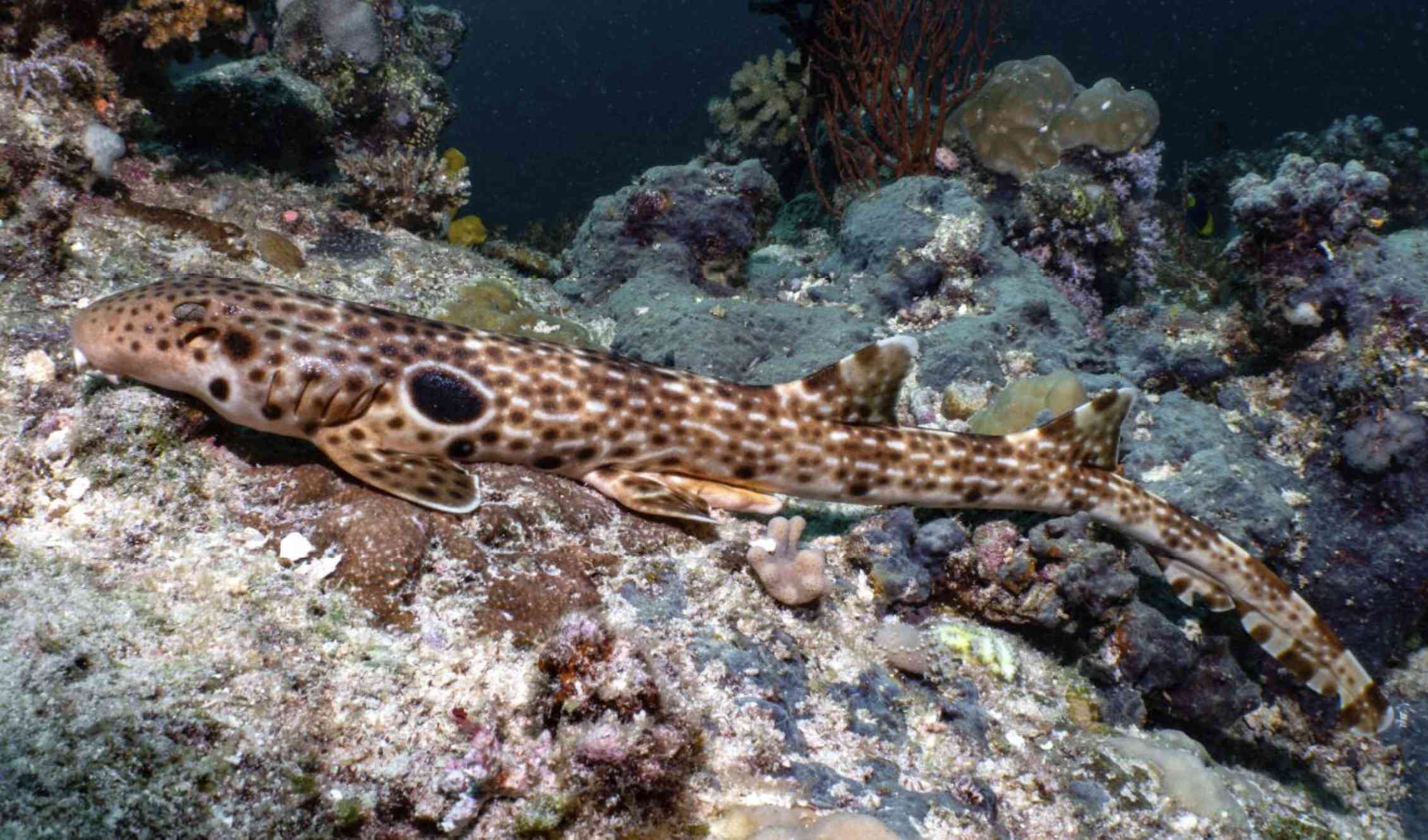
Researchers have identified a new species of walking shark in the shallow reefs of southeastern Papua New Guinea, a discovery that highlights how much marine life remains undocumented in tropical waters.
The newly identified species, Hemiscyllium dudgeonae, belongs to a rare group of small carpet sharks known for using their fins to “walk” across the seafloor. The species has been named Dudgeon’s walking shark in honor of Christine Dudgeon, a senior research fellow at the University of the Sunshine Coast in Australia, who has spent two decades studying the Hemiscyllium genus.
The discovery was described on June 15 in the Journal of the Ocean Science Foundation. It brings the number of known walking shark species to 10.
A chance encounter on the reef
The shark was discovered during a reef survey when researchers were searching for Michael’s walking shark (Hemiscyllium michaeli). Divers spotted a small brown-spotted shark moving across the reef, but its markings immediately stood out.
Dudgeon collected the specimen and brought it back to the research vessel. There, lead study author Jess Blakeway, a doctoral student, noticed that its body pattern differed from any known walking shark species.
“Michael’s walking shark has leopard prints and Dudgeon’s walking shark has small white dashes and brown dots all over its body,” Dudgeon said.
Distinct markings reveal a new species
At first, researchers could not determine whether the unusual markings represented a new species or an uncommon variation. They continued surveying nearby reefs and soon found 11 more sharks with the same distinctive pattern across three separate locations.
The specimens included males and females, as well as juveniles and adults. The consistent markings suggested the sharks belonged to an undescribed species.
DNA analysis confirms the discovery
Researchers later confirmed that conclusion through genetic analysis in Australia. DNA comparisons showed the population was genetically distinct from the other nine known walking shark species.
Dudgeon said the discovery is especially notable because most newly identified fish species, particularly sharks and rays, are typically found in deep water. By contrast, Dudgeon’s walking shark was discovered in water less than 3 feet (1 meter) deep.
She said the findings highlight how much remains unknown about biodiversity in shallow reef ecosystems.
Why walking sharks are different
Walking sharks are among the most unusual sharks in the world. Unlike larger species that roam the open ocean, they spend their lives on and around coral reefs. Their pectoral and pelvic fins allow them to move across rocks, coral, and reef flats, especially during low tide when shallow pools become isolated from deeper water.
Researchers have discovered a new walking shark species in Papua New Guinea. Named Dudgeon's walking shark, the reef-dwelling species uses its fins to walk across the seafloor and brings the total number of known walking shark species to 10. pic.twitter.com/BNh6YGBgHH
— Tom Marvolo Riddle (@tom_riddle2025) June 24, 2026
Researchers believe this adaptation evolved to help the sharks survive in challenging reef environments where oxygen levels can fluctuate dramatically. Previous studies have shown that some walking shark species can tolerate low-oxygen conditions for several hours, although scientists are still investigating the biological mechanisms behind that ability.
Conservation concerns emerge
The discovery may also carry conservation implications. Dudgeon’s walking shark has so far been documented at only three locations in Papua New Guinea.
Walking sharks tend to remain close to the reefs where they hatch, limiting their ability to recolonize damaged habitats. Species with restricted geographic ranges are often more vulnerable to environmental threats because local disturbances can affect a large portion of the population.
If future surveys confirm that Dudgeon’s walking shark occupies only a small area, the species could face risks from habitat degradation, climate change, and overfishing.
A reminder of hidden marine diversity
Researchers plan to continue surveying reefs in Papua New Guinea to learn more about the species, its distribution, and its ecology.
Dudgeon said discoveries like this reveal how much remains unknown about sharks and their relatives, including rays, skates, and chimaeras.
“Very few species are dangerous to humans,” she said. “They are a wonderfully broad and eclectic group of animals. They continue to surprise and fascinate us.”
See all the latest news from Greece and the world at Greekreporter.com. Contact our newsroom to report an update or send your story, photos and videos. Follow GR on Google News and subscribe here to our daily email!

