



Scientists have produced the most detailed 3D images yet of the clitoris, mapping its complex nerve network in unprecedented detail and shedding new light on one of the least-studied organs in the human body.
The study used advanced X-ray imaging powered by a synchrotron, an extremely bright light source capable of capturing microscopic structures at very high resolution. Scientists said the technology allowed them to trace the clitoris’ nerves in three dimensions for the first time.
The findings build on earlier research led by Dr. Blair Peters, whose team reported in 2022 that the human clitoris contains more than 10,000 nerve fibers.
Imaging reveals hidden nerve branches
The latest study was led by Dr. Ju Young Lee, a postdoctoral researcher at Amsterdam University Medical Centers. Researchers examined two donated human pelvises as part of the Human Organ Atlas project, which aims to create detailed maps of human organs. The findings were published March 20 on the preprint server bioRxiv and have not yet undergone peer review.
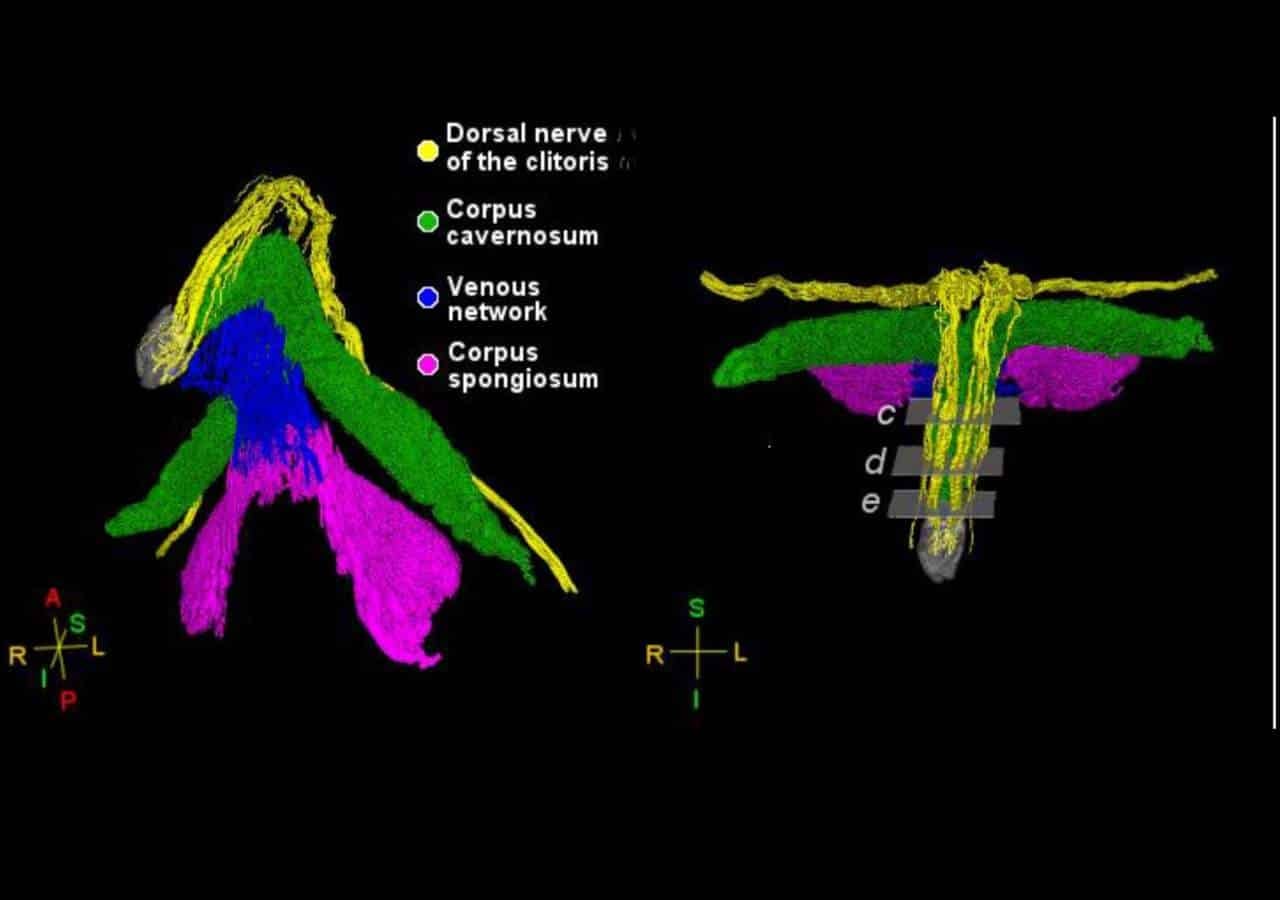
Using CT imaging, researchers traced the dorsal nerve of the clitoris, the organ’s main sensory nerve, from a larger pelvic nerve network. Earlier studies suggested the nerve narrowed near the clitoral glans, the external part of the organ.
However, the new scans showed the nerve branching extensively into the glans, clitoral hood, and mons pubis. Lee said the research revealed structures that had never before been visualized in such detail.
Findings may improve pelvic surgery
Researchers said the new nerve maps could help surgeons avoid accidental nerve damage during gynecological, reconstructive, and gender-affirming procedures.
The findings may also support reconstructive surgery for survivors of female genital mutilation, or FGM. According to the World Health Organization, FGM involves the partial or total removal of external female genitalia for non-medical reasons and is considered a violation of human rights.
Peters, who was not involved in the new study, said the genital region remains poorly understood compared with other parts of the body.
“We have peripheral nerve treatments for everything else from head to toe, but the genital region is like a black box that’s been unexplored,” Peters explained.
Researchers said the work marks an important step toward closing long-standing gaps in women’s health research. Lee said future studies will examine a broader range of tissue samples to better understand how clitoral anatomy changes across different stages of life.
See all the latest news from Greece and the world at Greekreporter.com. Contact our newsroom to report an update or send your story, photos and videos. Follow GR on Google News and subscribe here to our daily email!

