



Olympus is widely recognized today as the mountain home of the ancient Greek gods—a majestic, cloud-topped peak reigning over the mortal world. But is this modern conception how ancient Greeks themselves envisioned the divine dwelling place? Did they believe a mountain to be the abode of the gods, or something else?
Olympus in early Greek literature
This may come as a surprise to modern readers but no ancient Greek writer before the Hellenistic period would ever associate the place of the gods with mountains. Contrary to popular belief, early Greek writers such as Homer and Hesiod never explicitly described Olympus as a physical mountain. Instead, their references suggest a far more mystical and metaphysical interpretation of the gods’ celestial abode.
Neither Homer in his epics, nor Hesiod in Theogony and Works and Days, equates Olympus with a geographical mountain. In reality, Olympus is a radiant, divine realm beyond mortal reach. It is a plane of eternal light, tranquility and immortality. Many claim that the name ”Olympus” itself literally translates as ”all-shining”. In the Iliad, Homer describes Olympus as a place unshaken by wind, untouched by rain, and free of snow. There, the gods dwell in everlasting serenity and splendor:
“Neither shaken by winds, nor ever drenched by rain, nor does snow approach it,
but a clear and cloudless sky stretches above, and a brilliant radiance spreads everywhere.”
This portrayal aligns more closely with a metaphysical plane of existence than with a specific physical location.
Homer places Olympus in the sky
Homer also references the giants Otus and Ephialtes, two formidable figures in Greek mythology. They attempted to reach Olympus by piling mountains upon each other. This myth, found in the Odyssey, underscores the idea that Olympus was not a mountain itself. Instead it was a transcendent realm beyond physical access, connected with the sky. The futility of their endeavor suggests that Olympus was not a tangible place. It was a divine domain inaccessible to mortals or even the mightiest of giants.
Hesiod’s Theogony reinforces this interpretation, presenting Olympus as the dwelling place of the gods, characterized by eternal light and harmony. The gods’ unchanging and immortal nature mirrored the cosmic stability attributed to Olympus. This suggests a symbolic representation of divine order rather than a physical mountain.

Archaic and classical poetry
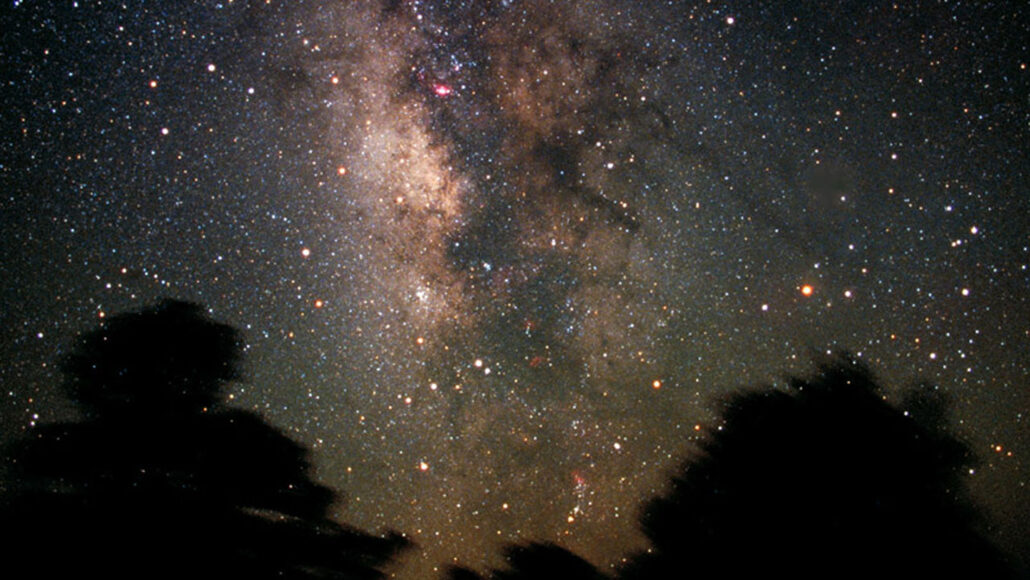
The Roman poet Ovid, writing in the Metamorphoses, provides a strikingly cosmic view of the gods’ abode. He describes a celestial highway, the Milky Way, as the path leading to the gods’ dwelling:
“The Milky Way, which shines with its white radiance high in the heavens,
is the road to the palace of the great Thunderer.”
Ovid’s imagery situates Olympus firmly within the celestial realm. He associates it with the stars and heavens, emphasizing the cosmic rather than terrestrial nature of the divine abode. This poetic vision aligns with earlier Greek notions of Olympus as a metaphysical plane.
The tragedians Aeschylus, Sophocles and Euripides also depicted Olympus as a realm beyond the physical world. In Aeschylus’ Prometheus Bound, the Titan speaks of Zeus ruling from “Olympus’ high and shining halls,” evoking a luminous, ethereal space untouched by earthly concerns. Sophocles, in Oedipus Rex, refers to Olympus as the “unshaken seat of heaven,” emphasizing its eternal and incorruptible nature. Euripides, in Hippolytus, describes the gods as dwelling in “the heavenly aether.” He aligns Olympus with the divine upper spheres rather than a terrestrial location.
The symbolism of Olympus in classical thought
Other classical writers also emphasized the symbolic and metaphysical dimensions of Olympus. The philosopher Proclus, in his commentaries on Plato, interpreted Olympus as a metaphor for the highest level of reality—a divine realm of pure intellect and light. Similarly, Pindar, the ancient lyric poet, often referred to Olympus in the context of divine harmony and eternal glory, reinforcing its transcendental qualities.
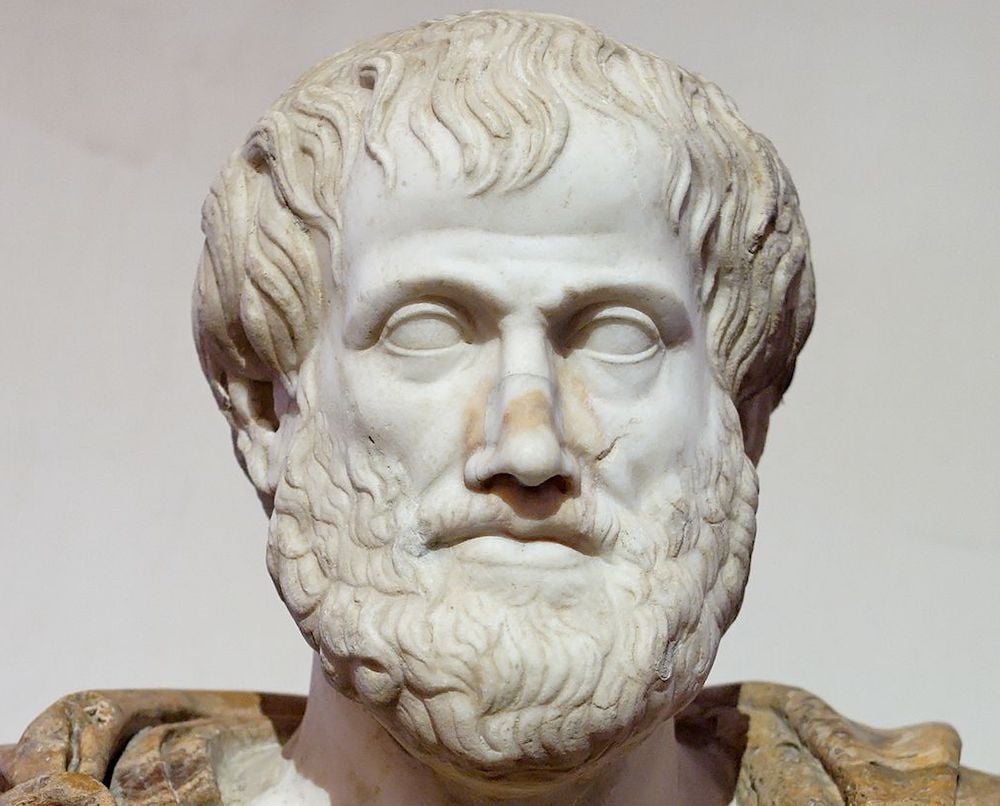
Aristotle, the great philosopher of the classical period, offers a profound insight into the metaphysical nature of Olympus. In his cosmological writings, Aristotle describes the aether as the divine substance that composes the heavens. The aether, being eternal, unchanging and incorruptible, was considered the essence of the celestial realm, distinct from the mutable and perishable elements of the terrestrial world.
Aristotle’s association of Olympus with the heavens emerges from this connection. He places the dwelling of the gods not on a physical mountain but in the highest regions of the cosmos. In these regions, the aether resides. In his work De Caelo (On the Heavens), Aristotle writes about the perfect and unchanging nature of the celestial sphere which he openly associates with the seat of all that is divine.
Archaeological evidence of ancient worship on Mount Olympus
Excavations by the archeologists Christos Tsountas and Greece’s Ephorate of Antiquities around Mount Olympus have uncovered artifacts and evidence of ritual activity dating back to the Mycenaean era (circa 1600–1100 BCE).
According to the philosopher Plutarch as well, even during his time, there was worship of the gods at the top of Olympus. This alone is enough to debunk the myth that the ancient Greeks were afraid of reaching Mount Olympus. Pottery fragments, votive offerings and other relics discovered in the area indicate that ancient peoples ascended the mountain. Their motive was to perform religious rites, perhaps to commune with the divine or seek favor. That’s because even though a mountain would not be the literal abode of the gods, it would nonetheless be the earthly manifestation of heaven upon the earth.
During the Archaic and Classical periods, Mount Olympus continued to hold religious significance. Archeologists have uncovered sanctuaries and altars on the lower slopes and near the summit, particularly on the peak known as Mytikas, the highest point of the mountain. These sites likely served as places for sacrifices and ceremonies dedicated to deities.

The evolution of Olympus in later traditions
The association of Olympus with Mount Olympus, the highest peak in Greece, likely emerged during the Hellenistic period. During this time, Greek culture became increasingly systematized and localized. Aristarchus of Samothrace acknowledges the immaterial nature of the Gods. However, he is the only one who seems to interpret the place of the gods in the Homeric epics as Mount Olympus. As myths were adapted for a broader audience, they were integrated into more structured narratives. This led to the abstract concept of Olympus being anchored to a tangible, earthly location. Mount Olympus, with its imposing height and perpetual cloud cover, was a natural choice to symbolize the gods’ exalted domain.
By tying the realm of the gods to a specific mountain, later interpretations simplified the complex theological and philosophical ideas embedded in early Greek thought. However, even during this period, this interpretation was not universally accepted.
By weaving together the insights of poets, tragedians and philosophers, we uncover a unified vision of Olympus as a space of divine light, harmony and immortality. This is a far cry from the purely geographical interpretation that gained popularity in later periods. This understanding deepens our appreciation of ancient Greek cosmology. In this, mythology served as a bridge between the earthly and the transcendent.
See all the latest news from Greece and the world at Greekreporter.com. Contact our newsroom to report an update or send your story, photos and videos. Follow GR on Google News and subscribe here to our daily email!

