



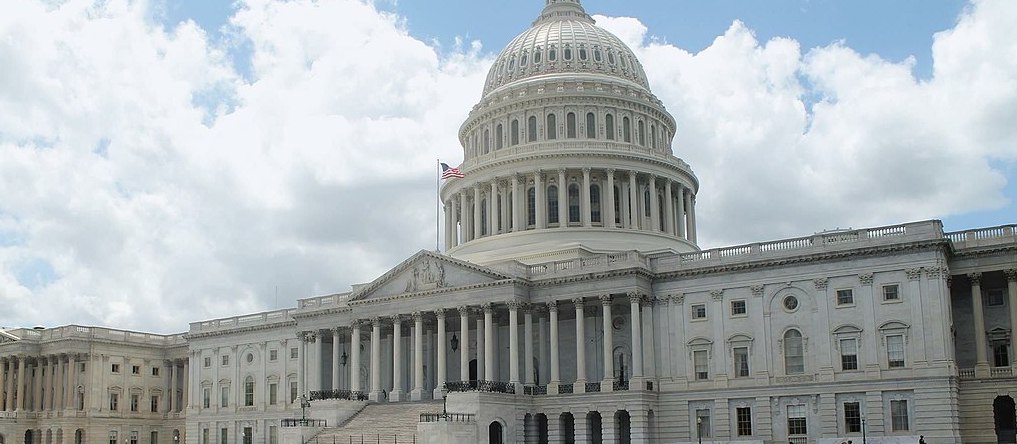
Turkey’s activities in the Eastern Mediterranean are once again under the spotlight in Washington, with amendments in the US Congress targeting Ankara’s conduct in the region. These amendments—addressing Ankara’s military presence in Cyprus and its ties with Hamas—have been introduced in the House Armed Services Committee as part of deliberations on the National Defense Authorization Act (NDAA), the annual US defense budget bill.
Submitted by Representatives Dan Goldman (D-NY) and Josh Gottheimer (D-NJ), they underscore a growing bipartisan concern over Turkey’s actions and its impact on US security interests, NATO stability, and regional partners such as Greece, Cyprus, and Israel.
Greek-American organizations, including the American Hellenic Institute (AHI) and the Hellenic American Leadership Council (HALC), played an active role in advancing these proposals. Their lobbying reflects the broader diaspora’s effort to influence US policy in the Eastern Mediterranean.
The NDAA: A critical legislative vehicle
The NDAA is one of the most significant pieces of legislation Congress passes each year. Beyond authorizing defense spending, it defines policies governing military operations, weapons procurement, personnel management, and national security programs.
Traditionally, lawmakers have attempted to insert foreign policy-related measures into the NDAA. However, this year the leadership of the Armed Services Committee has signaled stricter adherence to rules requiring amendments to be defense-related.
This means that only provisions with a direct national security focus are expected to remain in the final text, while broader foreign policy measures may be shifted to the State Department Reauthorization Bill.
Still, the amendments concerning Turkey fall squarely within defense and security considerations, making their inclusion in the NDAA both relevant and potentially impactful.
Amendment: Assessing Security Risks from Turkey’s Occupation of Cyprus
Representative Dan Goldman, working closely with AHI, introduced an amendment requiring the Department of Defense to prepare a detailed report on security threats stemming from Turkey’s ongoing occupation of northern Cyprus.
Within 180 days of the bill’s passage, the Secretary of Defense—collaborating with the Secretary of Homeland Security and the Director of National Intelligence—would be required to deliver a comprehensive assessment to Congress.
The report would analyze:
- Security risks for the US and allies: including Israel, the United Kingdom, Greece, and the Republic of Cyprus.
- Terrorist activity in occupied areas: focusing on groups such as Hamas, Hezbollah, and Iran’s Islamic Revolutionary Guard Corps.
- Historical record of terrorist incidents: including attacks in Cyprus or against British bases in Akrotiri and Dhekelia, with attention to any role played by occupied territories.
- Threats to US personnel and assets: particularly in Cyprus and surrounding bases.
- Turkey’s complicity or tolerance of terrorism: whether through logistical support, financial channels, or direct collaboration.
- Use of US weapons by Turkey: in connection with the occupation or related terrorist activity.
- Measures taken by Turkey, if any: to prevent or mitigate terrorist threats.
The amendment requires the report to be submitted in unclassified form, ensuring transparency for both Congress and the public, with classified annexes permitted where necessary.
This proposal aligns with growing concern in Washington over Turkey’s regional behavior, particularly as Israel has intensified its own lobbying in the US capital about Ankara’s ties with extremist organizations. The amendment also reflects the increasing strategic importance Congress assigns to Cyprus, seen as a critical hub for Eastern Mediterranean security, shipping, and energy corridors.
Second Amendment: Restricting U.S. Arms Transfers to Turkey
Representative Josh Gottheimer introduced a separate amendment aimed at conditioning US arms sales and defense services to Turkey. Under this proposal, no transfers would proceed until the US government certifies that Ankara has ceased violations of sovereignty against Greece, the Republic of Cyprus, and other American allies.
The amendment lays out a series of requirements:
- Halting violations of sovereignty: including Greek and Cypriot airspace and maritime zones, as well as the territory of other NATO and non-NATO partners.
- Ceasing support for terrorist groups: ensuring Ankara does not aid organizations designated as terrorist entities by the US government.
- Avoiding defense cooperation with US adversaries: preventing a repeat of incidents like Turkey’s acquisition of the Russian S-400 missile defense system.
- Preventing misuse of US weapons: ensuring American-made arms are not deployed in Cyprus to sustain the occupation.
- Documenting existing weapons stockpiles: providing a full accounting of US systems currently in Turkish-controlled areas.
- Protecting US military personnel: requiring an assessment of threats to American forces or families stationed in the region.
Before any arms transfer to Turkey could move forward, the Secretary of State would be obligated to brief Congress on Ankara’s compliance with these conditions. The restrictions would remain in place for five years unless the US President certifies that Turkey has ended its repeated sovereignty violations.
This measure directly links the future of US-Turkey defense cooperation with Ankara’s behavior in the Eastern Mediterranean, particularly regarding Greece and Cyprus.
The Role of Greek-American Advocacy
The push for these amendments highlights the influence of the Greek-American community in shaping US policy. Organizations such as AHI and HALC have long campaigned against unchecked US arms sales to Turkey, citing security risks for Greece and Cyprus.
By working with lawmakers like Goldman and Gottheimer, these groups have ensured that Eastern Mediterranean issues remain visible in Washington. Their advocacy reflects concerns that Ankara’s policies—ranging from aggressive overflights of Greek islands to maritime disputes and its military presence in Cyprus—undermine NATO unity and threaten regional stability.
Broader Implications for US Policy
The proposed amendments reflect a shift in Congressional attitudes toward Turkey, once seen as a key strategic ally but increasingly regarded with suspicion. Turkey’s deepening ties with Russia, its confrontational policies in the Eastern Mediterranean, and its links to extremist groups have fueled bipartisan unease.
At the same time, US support for Greece, Cyprus, and Israel has grown, underlining the strategic importance of the Eastern Mediterranean in energy security, counterterrorism, and regional stability.
While the amendments’ final inclusion in the NDAA remains uncertain, their introduction alone signals that Congress is prepared to hold Ankara accountable for actions seen as incompatible with American and allied security interests.
A Turning Point in US -Turkey Relations?
The NDAA deliberations come at a pivotal moment in US -Turkey relations. If adopted, the amendments would send a clear message that American defense cooperation is no longer unconditional and that Turkey’s behavior in Cyprus and the Eastern Mediterranean carries direct consequences.
For Greece and Cyprus, these moves represent a diplomatic victory, underscoring their growing weight in Washington’s strategic calculus. For Turkey, they mark a warning that its policies risk eroding what remains of its defense relationship with the United States.
As Congress continues debate on the NDAA, the outcome of these amendments could define the next phase of American engagement in the Eastern Mediterranean—where security, energy, and alliances converge at the heart of US national interests.
See all the latest news from Greece and the world at Greekreporter.com. Contact our newsroom to report an update or send your story, photos and videos. Follow GR on Google News and subscribe here to our daily email!

