



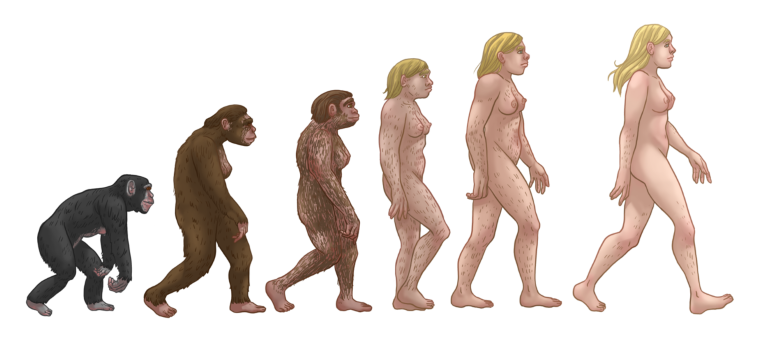
A new study has uncovered the long-sought biological changes that allowed humans to begin walking upright—one of the most important milestones in human evolution. Researchers say two ancient genetic developments helped reshape the pelvis during early development, making upright walking not only possible but energy-efficient.
The ability to walk on two legs set humans apart from other primates. While chimpanzees occasionally rise on two feet, they rely primarily on four-limbed movement.
In contrast, humans evolved a specialized form of bipedalism that allowed for long-distance travel, freeing the hands for tasks like tool use, carrying objects, and caring for infants.
The research, published Wednesday in the journal Nature, focused on how changes in early embryonic development shaped the human pelvis. Scientists analyzed preserved embryonic tissue from both humans and other primates to identify what made upright walking possible.
Two genetic shifts behind upright mobility
The team, led by Harvard evolutionary biologist Terence Capellini, found two major shifts. The first involved a rotation in cartilage growth that made the upper pelvic bone—the ilium—shorter, wider, and more curved.
This allowed the body to stay stable as weight shifted from one leg to the other. The second change delayed the hardening of pelvic bones during development, helping preserve this new shape while making room for the birth of babies with larger brains.
The upper part of the human pelvis, known as the ilium, underwent two major structural innovations during evolution that enabled humans to walk on two legs, according to a paper in @Nature. https://t.co/qHoOH8xuJQ pic.twitter.com/aaMxnqIloO
— Nature Portfolio (@NaturePortfolio) August 27, 2025
Capellini emphasized that without these changes, efficient walking and the evolution of bigger brains would have been far less likely. He explained that this form of locomotion helped early humans spread across the globe by covering large distances with minimal energy use.
Gayani Senevirathne, the study’s lead author and a postdoctoral fellow at Harvard, described the development as a key step in becoming human. She said the genetic changes didn’t stem from a single gene but from a network of regulatory DNA elements—small switches that control how genes behave.
Gene network and fossil record support
The research team identified more than 300 genes linked to pelvic development, with three playing an especially large role in these innovations.
Fossil evidence supports the findings. Pelvic remains from Ardipithecus ramidus, dating back 4.4 million years, show early signs of upright walking. Later fossils, such as “Lucy” from Australopithecus afarensis, revealed even more human-like pelvic traits.
The pelvis forms when cartilage structures called growth plates harden into bone—a process known as ossification. The first innovation rotated the growth plate, while the second delayed ossification. Capellini noted that by around 1.6 million years ago, these changes allowed for both upright movement and the birth of large-brained offspring.
The study provides new insight into how walking upright became a defining feature of humans.
See all the latest news from Greece and the world at Greekreporter.com. Contact our newsroom to report an update or send your story, photos and videos. Follow GR on Google News and subscribe here to our daily email!

