



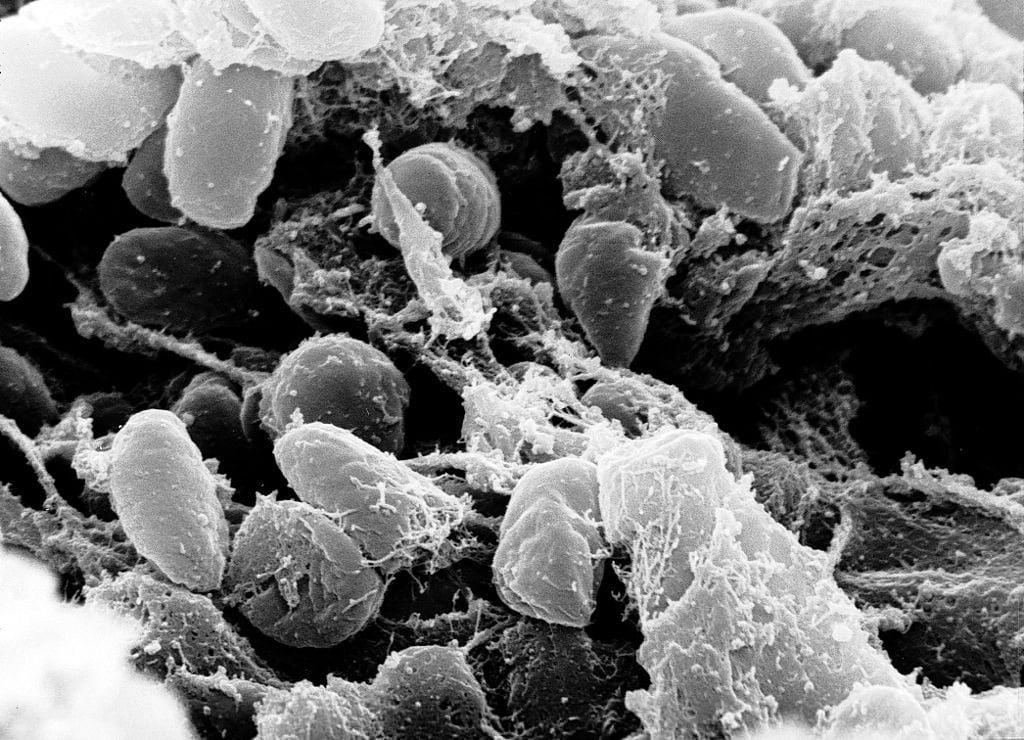
For the first time, scientists have confirmed through ancient DNA that the Plague of Justinian—the world’s first recorded pandemic—was caused by the bacterium Yersinia pestis. The discovery traces back to the Eastern Mediterranean, where the outbreak was first documented nearly 1,500 years ago.
An international team led by the University of South Florida and Florida Atlantic University, with collaborators in India and Australia, recovered Y. pestis DNA from a mass grave in the ancient city of Jerash, Jordan.
The findings, published in Genes, offer the first direct genetic evidence of the pathogen at the epicenter of the pandemic, which struck the Byzantine Empire between AD 541 and 750.
Longstanding debate resolved
The Justinian Plague killed tens of millions of people, crippled the Byzantine Empire, and altered the course of Western civilization. For centuries, historians debated what drove the catastrophic outbreak.
Written records described a deadly illness, but physical proof of the culprit microbe had remained elusive. Traces of plague had previously been found in western European villages, far from the empire’s center, but no evidence surfaced near the heart of the outbreak—until now.
“This discovery provides the long-sought definitive proof of Y. pestis at the epicenter of the Plague of Justinian,” said Rays H. Y. Jiang, Ph.D., lead investigator and associate professor at USF’s College of Public Health. “For centuries, we’ve relied on written accounts describing a devastating disease, but lacked any hard biological evidence of plague’s presence.”
Ancient DNA from Jerash
The breakthrough came from genetic material extracted from eight human teeth buried beneath the former Roman hippodrome in Jerash. The arena, once a hub of civic life, was transformed into a mass grave during the mid-sixth to early seventh century, when records described sudden waves of mortality.
Genomic sequencing revealed nearly identical strains of Y. pestis among the victims, evidence of a fast-moving and lethal outbreak. “The Jerash site offers a rare glimpse of how ancient societies responded to public health disaster,” Jiang said. “A venue once built for entertainment and civic pride became a mass cemetery in a time of emergency.”
A broader evolutionary story
A companion study, published in Pathogens, expanded the findings to a wider evolutionary timeline. By analyzing hundreds of ancient and modern plague genomes, including those from Jerash, researchers showed that Y. pestis circulated among humans for thousands of years before the Justinian pandemic.
The work also revealed that later pandemics, including the Black Death of the 14th century, did not descend from a single ancestral strain. Instead, plague re-emerged multiple times from long-standing animal reservoirs. That repeated cycle stands in contrast to COVID-19, which began with a single spillover event and spread primarily through human transmission.
Modern reminder
Though rare, plague has not disappeared. In July, a northern Arizona resident died of pneumonic plague, the deadliest form of the infection, marking the first US fatality since 2007. Just last week, California health officials reported another case.
“We’ve been wrestling with plague for a few thousand years and people still die from it today,” Jiang said. “Like COVID, it continues to evolve, and containment measures evidently can’t get rid of it.”
Next steps in Venice
Building on the Jerash breakthrough, the team is now turning its focus to Venice, Italy, and Lazaretto Vecchio, a quarantine island that served as one of the world’s largest plague burial sites. More than 1,200 remains from the Black Death era are now housed at USF, offering scientists a rare chance to study how early public health measures intersected with disease evolution and urban vulnerability.
See all the latest news from Greece and the world at Greekreporter.com. Contact our newsroom to report an update or send your story, photos and videos. Follow GR on Google News and subscribe here to our daily email!

