



Europe’s forest regeneration mechanisms in Greece and the Mediterranean are perversely incentivizing destruction over protection, following devastating wildfires.
By Mary Vourakes
Right now, across Europe’s most protected natural areas, a hidden crisis is destroying the very ecosystems the EU has promised to save. While European leaders speak of ambitious climate goals and green transitions, a shocking pattern has emerged: our own environmental policies are being systematically gamed to reward forest destruction rather than protection.
This isn’t a story about climate denial or corporate greed. This is about how well-intentioned environmental policies can be twisted to produce exactly the opposite of their intended results—and how bureaucratic delays are turning Europe’s most precious forests into deserts. While following the letter of the law, officials disregard its intended spirit and continue counting carbon credit profits.
Greece’s forests devastated by wildfires
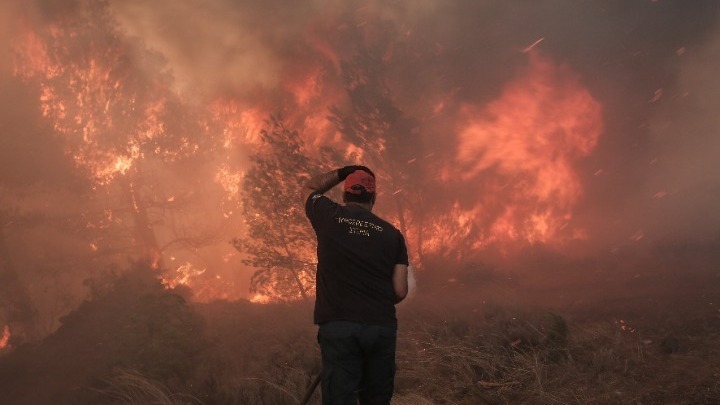
In August 2021, catastrophic wildfires devastated Greece’s second-largest island, Evia, destroying 520,000 acres of pristine forest. The European Union immediately sprang into action, providing millions of euros in funding for restoration planning and technical support.
Four years later, the limited forest restoration has been “essentially achieved by the regeneration of nature itself alone”—meaning virtually nothing has been done. Meanwhile major wildfires continue to ravage through Evia, most recently in March, June and July of 2025.
But here’s where it gets alarming: the same failed restoration plan that has left Evia’s forests unrestored for almost four years, is now being applied to Kythira, where another protected forest area, also part of the protected Natura 2000 network was devastated by a second round of massive wildfires on July 28th.
Kythira faces imminent desertification eight years after its initial wildfire damage. This isn’t incompetence—it’s a pattern that suggests something far more troubling.
How carbon credits reward restoration delays
The European Union’s new Carbon Removals and Carbon Farming Regulation (CRCF) was designed to accelerate climate action by rewarding forest restoration with valuable carbon credits. However, the investigation reveals a perverse incentive structure that actually rewards delaying restoration until carbon credits become available.
Here’s how the system is being gamed:
- Step 1 (2021-2022): Receive EU funding for restoration “planning” and bureaucratic processes
- Step 2 (2022-2025): Complete planning milestones while indefinitely delaying actual forest restoration
- Step 3 (2026+): When carbon credit markets launch, suddenly implement restoration using those lucrative credits
- Result: Get paid twice for the same restoration work while forests remain destroyed for years
This gaming mechanism transforms EU environmental policy into a system that financially incentivizes environmental destruction. The longer restoration is delayed, the more profitable it becomes when carbon credits finally become available.
The Evia evidence: documentation of systematic gaming
The evidence for this gaming pattern is documented across multiple independent sources:
EU Funding Confirmed: Greece has received €21.3 billion in EU recovery funds, with specific technical support provided for developing Evia restoration frameworks through the European Commission’s Technical Support Instrument.
Implementation Failure Documented: The Heinrich Böll Foundation’s comprehensive analysis found that “almost four years after the disaster, restoration up until today has been essentially achieved by the regeneration of nature itself alone” despite substantial EU funding for restoration planning.
Strategic Timing Alignment: The delay in Evia restoration perfectly aligns with the 2026 launch of EU carbon credit methodologies, suggesting strategic timing rather than bureaucratic incompetence.
Kythira: The crisis escalates
The pattern has now escalated to a critical breaking point on the Greek island of Kythira, where a protected Natura 2000 forest site faces imminent desertification risk due to a second massive wildfire on July 26. Eight years after initial wildfire damage ravaged the island proposed restoration solution is to apply the same failed Evia framework that has produced no results for four years.
This crisis extends beyond Greece across the Mediterranean region, where last summer saw the largest wildfire ever recorded in Europe. Over 62,000 hectares burned within Natura 2000 biodiversity reserves alone, while systematic restoration implementation gaps persist despite substantial EU funding commitments.
Greece’s documented failure pattern represents a broader systemic crisis requiring comprehensive EU reform rather than isolated national solutions. For desertification prevention, timing is absolutely critical—there are narrow windows beyond which ecosystem collapse becomes irreversible. Yet the same bureaucratic processes that failed in Evia are being recycled for Kythira, suggesting that the system has learned nothing from its failures—or worse, that the failures are actually features, not bugs.
The moral hazard: When good policies reward bad behavior
Environmental economists have a term for this: moral hazard. It occurs when insurance or incentive systems inadvertently encourage the very behavior they’re designed to prevent. In this case, carbon credit systems designed to reward forest restoration are instead creating financial incentives for forest destruction through strategic delays.
Research on carbon credit systems has documented this exact problem: “Buffer reserves run into a ‘moral hazard’ problem if used to compensate for human-caused reversals. If a landowner faces no penalty for harvesting trees for their timber value—because any reversals would be compensated for out of a buffer reserve—then the landowner could face a strong incentive to harvest.”
The same logic applies to restoration timing: if delayed restoration ultimately generates more revenue through carbon credits than immediate restoration using existing EU funds, rational actors will delay restoration—even if it means accepting irreversible environmental damage.
The solution: Closing the gaming loopholes
The good news is that this crisis is entirely preventable through immediate policy reforms:
- Emergency Interventions: Implement immediate soil stabilization and emergency restoration measures for at-risk sites like Kythira
- Timeline Requirements: Establish mandatory 12-month maximum timelines from fire damage to restoration initiation
- Retroactive Exclusions: Exclude from carbon credit eligibility any restoration that was delayed beyond emergency timelines
- Real-Time Monitoring: Use existing EU satellite systems to track restoration progress and detect strategic delays
- Results-Based Funding: Link EU payments to actual environmental outcomes rather than bureaucratic milestones
The current CRCF framework is still in development, with final methodologies not expected until 2026. There is still time to implement reforms that prevent systematic gaming—but only if European citizens demand immediate action.
This analysis, along with comprehensive policy recommendations for closing gaming loopholes, is being presented to the European Commission’s Directorate-General for Climate Action, which oversees the CRCF framework. However, policymakers need to hear from citizens that this gaming pattern is unacceptable and that immediate reforms are required.
The choice we face
Europe stands at a critical crossroads. We can continue allowing environmental policies to be gamed while protected forests are converted to deserts, or we can demand immediate reforms that ensure our climate policies actually protect the climate.
The evidence is clear: systematic gaming of environmental policies is happening right now, destroying Europe’s most protected natural heritage while officials profit from carbon credits. The pattern is documented, the mechanism is understood, and the solutions are available.
The only question remaining is whether European citizens will demand action before it’s too late. The forests of Evia have waited four years for restoration that never came. The forests of Kythira cannot wait another day. The time for action is now.
This analysis is based on extensive research using verified sources from the European Commission, Heinrich Böll Foundation, European Parliament, and other authoritative institutions. Comprehensive policy recommendations addressing these issues are being presented to the EU’s Directorate-General for Climate Action for immediate consideration.
Mary Vourakes is a health education specialist and the founder of PHI Health an advocacy organization focused on environmental health and proactive health initiatives. She can be reached through Linkedin www.linkedin.com/in/mvourakes
See all the latest news from Greece and the world at Greekreporter.com. Contact our newsroom to report an update or send your story, photos and videos. Follow GR on Google News and subscribe here to our daily email!

