



The former Greek prime minister Costas Simitis marked an eight-year period of a major political transformation and Greece’s entry to the European Monetary Union (EMU).
As a leader of the socialist PASOK party, Costas Simitis was a modernizer who put an end to the party’s populist agenda of the late leader Andreas Papandreou. From the beginning of his first term in office, he worked for steadily leading Greece on the European path, solidifying the country’s place in the EU.
The late prime minister was a technocrat visionary who wanted to modernize Greece and the party itself. And this is the reason that he was criticized from both sides of the political spectrum. From the Right because he belonged to PASOK and from the Left because he was not pushing for socialist policies.
As prime minister of two terms (1996-2000 and 2000-2004) the Europeanist politician had the time to put his mark in modern Greek history, despite his opponents’ polemics from the opposition and within PASOK.
As noted on the former prime minister’s official website, “During his premiership he sought the modernization of Greek society, in particular he worked on the stabilization and development of the Greek economy as well as the strengthening of Greece’s position in Europe and the international scene.”
His two terms in the premiership were severely criticized for scandals involving then defense minister Akis Tsohatzopoulos for taking kickbacks for armaments procurement and finance minister Giannos Papantoniou for money laundering. Both were tried years later and found guilty, serving prison terms. Simitis has been accused of knowing what his ministers were doing but he had turned a blind eye to their crimes.
Greece’s entry to the euro zone
One of Simitis’ major achievements was Greece’s entry to the Economic and Monetary Union of the European Union (EMU), ushering the country to the euro zone on January 1, 2002. It was considered a major achievement but the exchange rate was much higher than it should have been, namely 340.75 drachmas to a euro when only a few years later it was 200 drachmas to a euro.
Until 2002, the Greek drachma had suffered several devaluations. Starting in January 1983, the government decided to devalue the drachma by 15.5 percent in order to push exports. Initially there was a hope that the new exchange rate could be maintained, but as early as August 1983 the country’s central bank was led to a policy of rapid devaluation of the drachma.
The policy failed as the country’s balance of payments was disastrous. In 1985, Simitis, then finance minister, decided to devaluate the drachma again by 15 percent. From 1990 onwards, the Bank of Greece turned to a hard drachma policy with the main aim of combating inflation. It was now generally accepted that the drachma devaluation policy had not paid off.
However, a last devaluation of the drachma by 12.6 percent took place in March 1998, with Greece’s simultaneous entry into the Exchange Rate Mechanism. This devaluation was the final step towards Greece’s entry into the euro zone.
Greece is now on a currency that is no longer in danger of devaluation and the euro along with the dollar are the two most solid and reliable currencies in the world. However, there is a significant percentage of Greeks that blame the former prime minister for dropping the drachma in favor of the euro and attribute the country’s economic crisis to joining the common currency system.
Cyprus’ accession in the EU
A great victory of the former Greek prime minister was his work on bringing Cyprus fully to the European Union family in 2004.
The accession of Cyprus to the European Union with the signing of the Act of Accession at the Stoa of Attalos on April 16, 2003 was a high point in Greece’s national strategy, thanks to Costas Simitis effort. It was a project that seemed impossible since Cyprus was divided after the Turkish occupation of the northern part since 1974. What seemed impossible, after many objections and doubts for 30 years, peacefully became real in 2004.
Despite Turkey’s continuous threats, Simitis’ equally continuous efforts in the EU managed to secure the island’s place in Europe. That was an achievement of the former Greek prime minister that no one could doubt or deny.
During Greece’s presidency of the EU in the first six months of 2003, Costas Simitis worked tirelessly on many levels. Other than securing Cyprus’ place in the EU, he presided over the accession of nine more new members to the EU, namely, the Czech Republic, Estonia, Hungary, Latvia, Lithuania, Malta, Poland, Slovakia and Slovenia.
Imia and the Greece-Turkey crisis
In January 1996, it has been only days since Costas Simitis became prime minister when his premiership was tested in the hardest of ways. A Turkish ship ran aground on the Imia rocky islets, with Turkey challenging Greek sovereignty in the area. It was an incident that brought Greece and Turkey to the brink of war.
In essence it was a case of Turkey challenging Greek sovereignty in the area. The Minister of Foreign Affairs of the Simitis government at the time was Theodoros Pangalos, the Minister of National Defense was Gerasimos Arsenis, and the General Chief of Staff was Admiral Christos Lymberis.
Warships of both countries circled around the Imia islets ready to fire at each other. However, the incident de-escalated with the mediation of the United States, but it gave Turkey the opportunity to raise the issue of the “Gray Zones” in the Aegean, leaving open wounds in the relationship between the two countries that continues to this day.
When Costas Simitis thanked in parliament the government of the United States for the mediation, he received fire from the leftist parties, even reactions within PASOK.
Much has been written since about the Imia crisis and the “Gray Zones” in the Aegean. The Greek Right accused Simitis of backing down on Turkey’s “Gray Zones” claims, asking for retaliation. Yet, some argue that his sensible tactics during the Imia crisis prevented a more serious conflict.
The battle over religion on citizens’ ID
One of the most controversial Acts of prime minister Costas Simitis was the elimination of the mandatory indication of religion on citizens’ identity cards. According to the privacy law 2472/1997 on the protection of personal data, the mention of a citizen’s religion may lead to discrimination.
The decision infuriated the leaders of the Greek Church, with then Archbishop Christodoulos lambasting Simitis. Christodoulos called for rallies across Greece against the Act arguing that the Greek State is entwined with Greek Orthodoxy and such an Act goes against the beliefs of the majority. Two massive rallies took place in Athens and Thessaloniki respectively where hundreds of thousands protested the new law. Christodoulos called for a referendum, gathering 3 million signatures of Greek citizens opposing the government decision, which technocrat Simitis refused to acknowledge.
Simitis refused to go on a referendum and clashed with the Church of Greece. His decision was applauded by many Greeks but equally criticized by others.
Preparation for the 2004 Olympics and public works
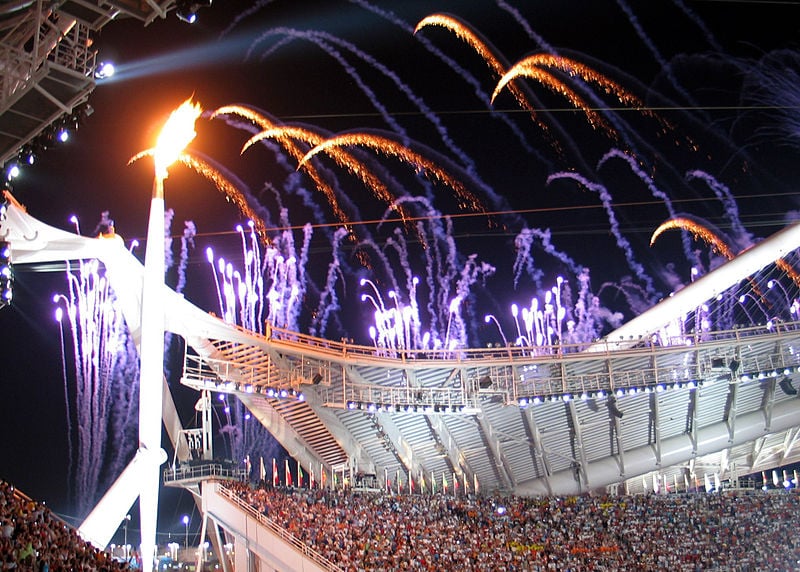
Since September 1997, when Athens secured the hosting of the 2004 Olympic Games, the Greek prime minister oversaw the major infrastructure works needed.
Athens Airport
The new Athens International Airport was inaugurated in 2001, however, Simitis faced criticism for the decision to involve foreign companies, particularly German firms like Hochtief and Fraport, in the construction and management of Athens International Airport.
Critics, especially from within Greece, argued that the involvement of German companies represented a loss of control over a crucial national asset. However, Simitis defended the move, arguing that it was necessary to secure the financial and technical expertise needed to build and efficiently manage a modern international airport.
Metro

The Athens metro subway system started operating in 2000. It alleviated traffic congestion, offering a fast, efficient alternative to driving in a city plagued by heavy traffic.
The construction was carried out by a consortium of companies, with the primary contractor being Aktor, a Greek construction company. Other key players included Alstom and Siemens, which provided equipment and technology for the project.
There was significant criticism surrounding Siemens’ involvement in the Athens Metro project, particularly due to the company’s role in a large corruption scandal in Greece.
Facelift of Athens
A ring road around the wider Athens area was constructed and a new tram system was running by Spring 2004. The city of Athens and the suburbs got a nice facelift with Olympic game facilities spread around the city.
The 2004 Olympic Games were hailed as “unforgettable dream games” by then International Olympic Committee president Jacques Rogge, while also receiving praise as one of the best ever. However, there was a debate over the cost of the games, with the Simitis government receiving criticism for excessive spending. There was also criticism from popular media linking the cost of the 2004 Olympics with the country’s economic crisis of 2010. However, there is no hard evidence to support this claim.
Rio-Antirio Bridge
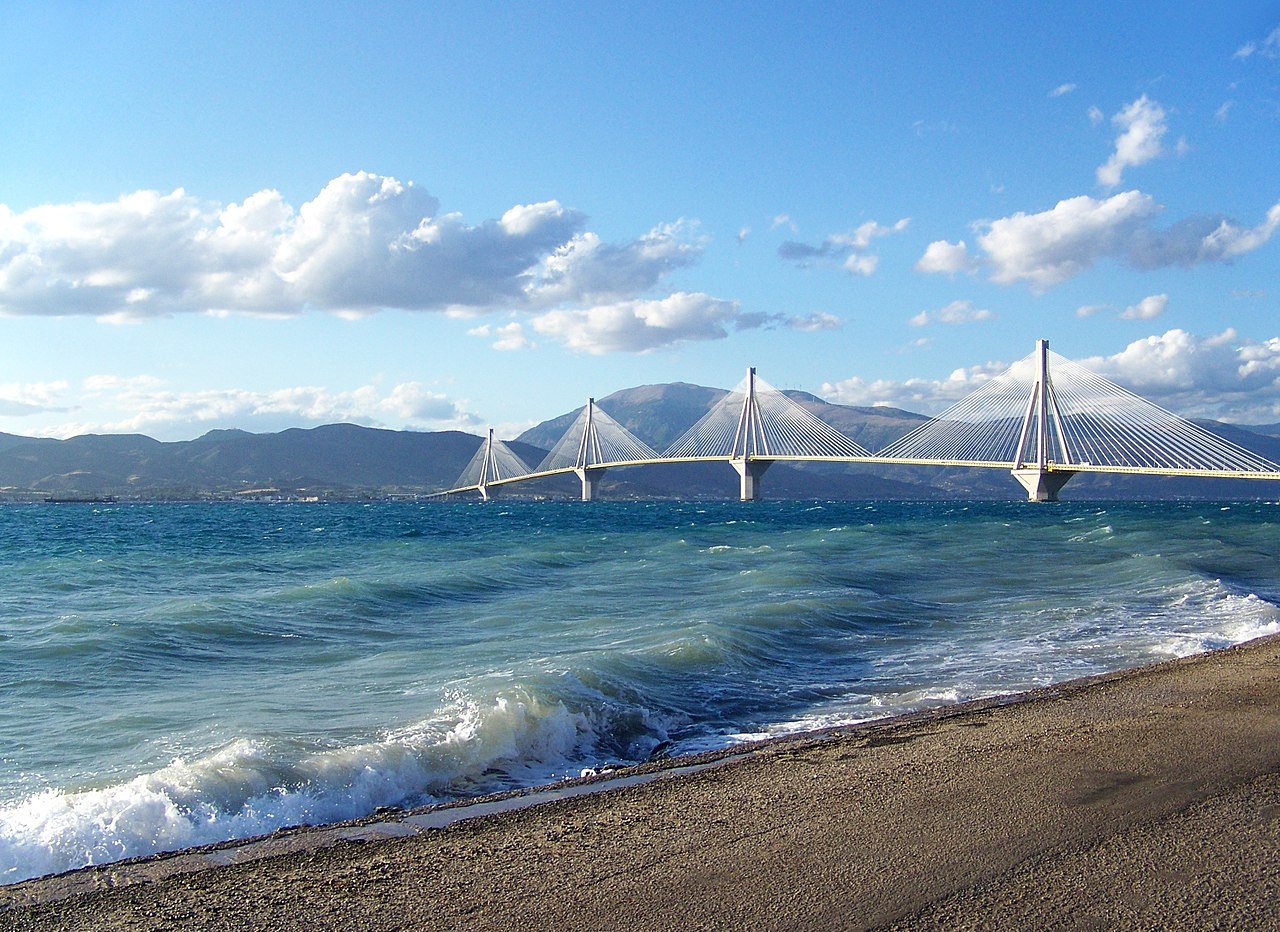
Along with the major public works necessary for the 2004 Summer Olympics, the Simitis government completed important infrastructure projects such as the Rio-Antirio Bridge (2004) the connects the Peloponnese with Central Greece, and a big part of the Egnatia Odos, the 670-km national highway that starts in Igoumenitsa in Epirus and ends at the Greek-Turkish border at Kipoi in Thrace.
Attiki Odos
Other important public works were the Attiki Odos (2001), a number of connected toll outer beltways that run around the Athens metropolitan area and other Attica destinations. When Attiki Odos was initially built and opened, it significantly reduced traffic congestion in Athens, improved access to key areas like the airport and port, and boosted economic activity by enhancing connectivity. The highway also increased safety with modern road design and management systems, played a crucial role in supporting the 2004 Olympic Games, and offered some environmental benefits by reducing traffic in residential zones.
Hospitals
New hospitals were inaugurated during the Simitis government, namely the Attikon Hospital; the Thriasio General Hospital of Elefsina; the General Hospital of Katerini; the General Papageorgiou Hospital of Thessaloniki; the General Hospital of Trikala; the General Hospital of Lamia; the University Regional Hospital of Larissa; the General Hospital of Rhodes Andreas Papandreou; Prefectural General Hospital of Chania Agios Georgios; the University General Hospital of Attikon; the General Hospital of Kalamata; the University General Hospital of Alexandroupolis; the General Hospital of Grevena; the General Hospital of Serres; the General Hospital of Thebes; the General Hospital of Pyrgos Andreas Papandreou; and the General Hospital of Kavala.
The late former Greek prime minister also established the Greek Ombudsman, the Personal Data Protection Authority and several Citizen Service Centers (KEP) throughout cities in Greece.
The Siemens Scandal
Perhaps the darkest chapter of Simitis’ government was the Siemens scandal in Greece, which emerged in the 2000s.
Siemens, the German multinational corporation, was accused of paying millions of euros in bribes to Greek politicians, businessmen, and public officials to secure public contracts for key infrastructure projects, including the Athens Metro, telecommunications, and defense deals. The scandal spanned several years, with Siemens allegedly funneling money to ensure favorable treatment and the awarding of tenders.
Several Greek government officials were implicated and faced charges in connection with the scandal. As of August 2012, the Greek government signed a settlement with Siemens worth 330 million euros. Despite this, the full extent of the scandal and the involvement of specific officials remain controversial, and the incident severely damaged Siemens’ reputation in Greece.
Legacy
On January 7, 2004, with the aim of ensuring a smooth political succession, the former prime minister announced his resignation from the presidency of PASOK, but remained prime minister until the end of his second term and the holding of parliamentary elections on March 7, 2004. PASOK lost the election to New Democracy led by Costas Karamanlis.
Despite his many detractors, Costas Simitis was a well respected leader by a wide range of Greeks. His death is honored by a four-day national mourning, apt for a leader who worked for Greece’s best interests.
See all the latest news from Greece and the world at Greekreporter.com. Contact our newsroom to report an update or send your story, photos and videos. Follow GR on Google News and subscribe here to our daily email!

