



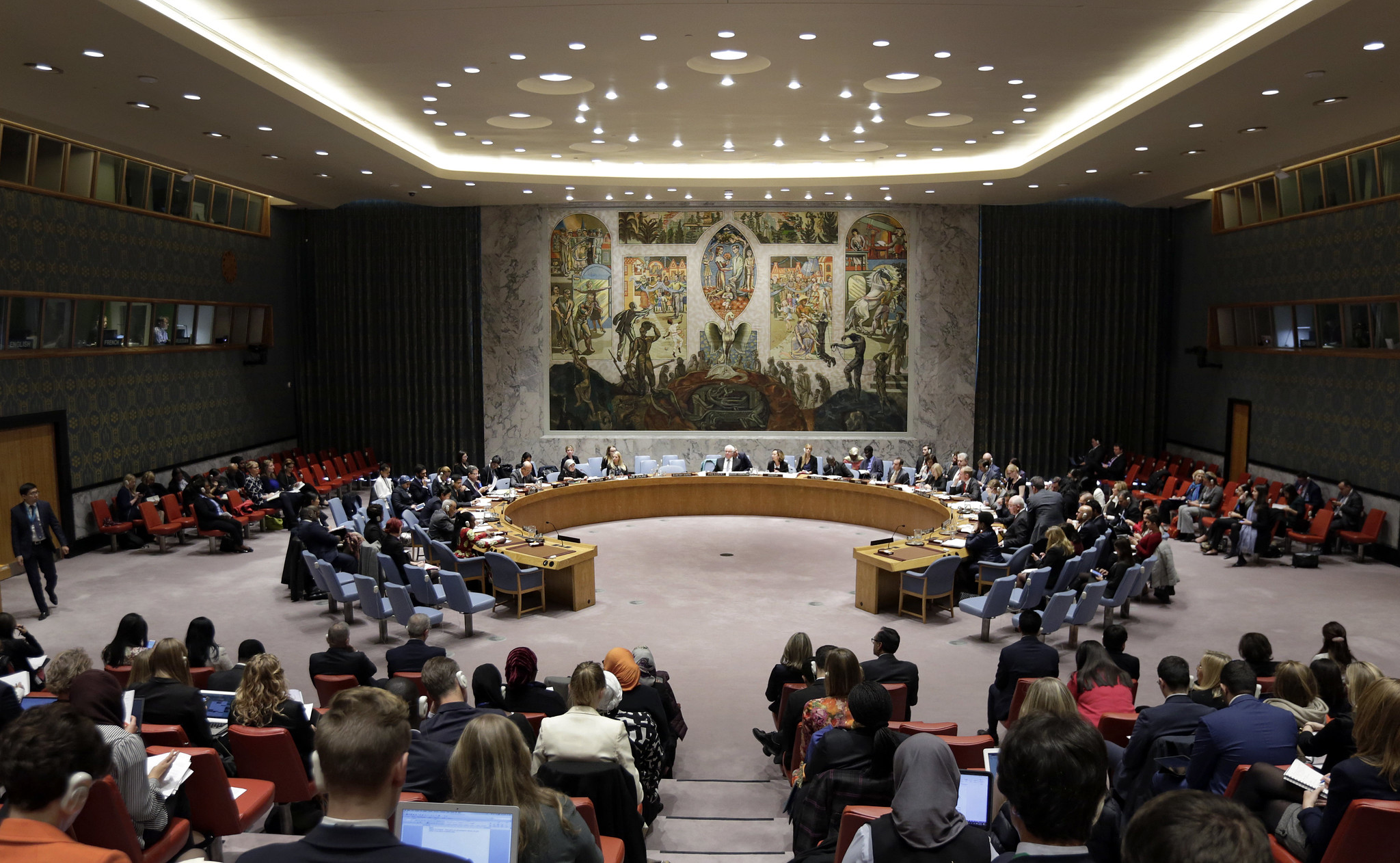
Greece, a non-permanent member of the UN Security Council since January 1st, called for a Gaza ceasefire during an emergency session held on Friday.
During the meeting, convened at Algeria’s request after a series of Israeli attacks on hospitals in Gaza, Greece called for a balanced approach that upholds humanitarian principles. It also stressed the need for dialogue and diplomacy in order to deal with the humanitarian crisis in the besieged strip.
The Permanent Representative of Greece to the United Nations, Ambassador Evangelos Sekeris, expressed his country’s deep concern that “after more than a year of ongoing conflict in Gaza, an end to the human suffering remains elusive.”
During the session, UN High Commissioner for Human Rights Volker Turk presented a heart-wrenching report on the deteriorating humanitarian situation in Gaza. The report detailed continuous Israeli attacks on healthcare facilities and alarming mortality rates among newborns.
“While we recognize Israel’s right to self-defense and the shock that the Israeli society has been through following the death of 1,200 citizens and the captivity of 100 hostages for 14 months, we have to remind ourselves that when all else fails, the international law and the international humanitarian law is the compass to our humanity,” Sekeris said.
He added that “The destruction of the healthcare system, in combination with the killing of patients, humanitarian workers, medical staff and other civilians, constitute severe violations of international humanitarian and human rights law.”
Sekeris also urged the immediate opening of crossings for the unhindered distribution of aid into Gaza and the assurance that shelters for the displaced remain safe havens rather than “death traps.”
Greece, a long-term Israeli ally, called for a ceasefire along with “the immediate and unconditional release of all hostages,” while stressing that “the only long-term solution for the region is to revitalize the political process” and pave the way for “a political horizon for a two-state solution.”
Greece Joins the UN Security Council as Non-Permanent Member
Greece officially began its two-year term as a non-permanent United Nations Security Council member on January 1, 2025.
The Council comprises 15 members: Five permanent members: China, France, Russian Federation, the United Kingdom, and the United States, and ten non-permanent members elected for two-year terms by the General Assembly.
The non-permanent members of the Council have several important functions, even though they do not have veto power like the five permanent members. They participate fully in discussions, debates, and decision-making on all issues on the Security Council’s agenda. This includes matters related to international peace and security, conflict resolution, and sanctions.
They also have the right to vote on resolutions and decisions of the Council. For a resolution to be adopted, it requires at least 9 votes out of 15, including no vetoes from permanent members. Non-permanent members’ votes can thus be crucial.
Apart from Greece, Denmark, Pakistan, Panama, and Somalia are the four countries to get a non-permanent seat.
Greece was elected by securing 182 votes from the total of 188 countries that participated in the electoral process last June.
Greece’s priorities in the UN Security Council
Greek Foreign Minister George Gerapetritis outlined the country’s main priorities in an interview with the Athens-Macedonian News Agency (AMNA).
More specifically, these priorities include promoting peaceful resolutions to global conflicts, upholding international law and strengthening the role of women in peace and security processes.
Additionally, the Greek government plans to emphasize humanitarian issues, including the protection of children in armed conflict and the existential threat of climate change.
Gerapetritis explained that Greece’s key goals on the Security Council also include enhancing maritime security and addressing the impact of terrorism.
“The realignment of the Security Council’s composition remains essential, as the current structure fails to reflect the modern geopolitical realities,” he said, also noting that veto power often hampers necessary decision-making. He criticized the system as “problematic,” especially when it obstructs critical decisions grounded in international law.
Turning to Greek foreign policy, Gerapetritis noted that Greek-Turkish relations have improved significantly in the past year and a half.
“Our intention in the coming period, ahead of the High-Level Cooperation Council meeting in the first months of 2025, is to continue exploring ways to strengthen our cooperation, as this is in the best interest of the peace and prosperity of both peoples,” he said.
On the Cyprus issue, Gerapetritis described ongoing efforts in collaboration with the Republic of Cyprus, supporting the UN secretary-general’s initiatives and aiming for a just, sustainable solution in line with UN resolutions.
See all the latest news from Greece and the world at Greekreporter.com. Contact our newsroom to report an update or send your story, photos and videos. Follow GR on Google News and subscribe here to our daily email!

