



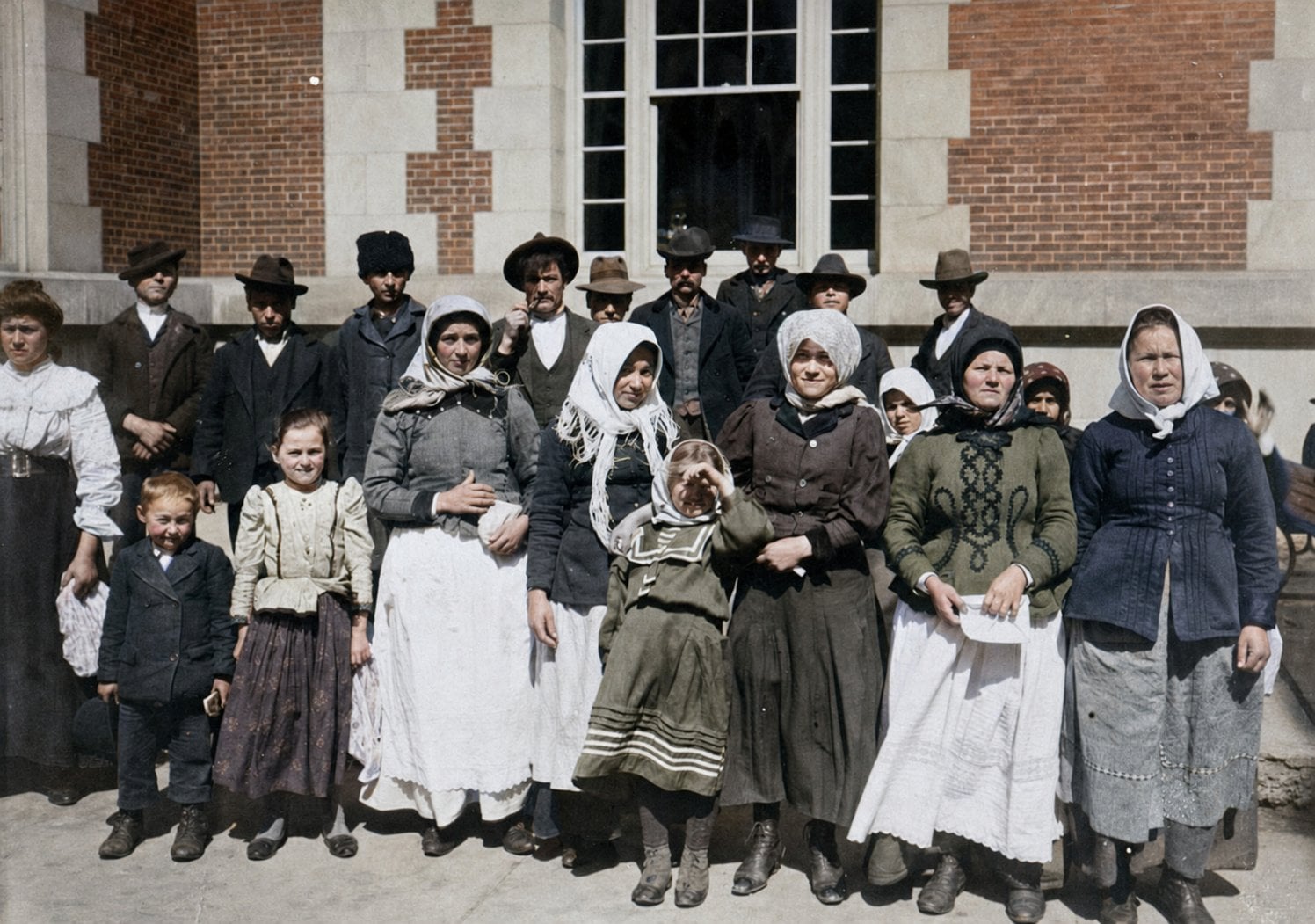
On November 12, 1954, Ellis Island closed its doors after more than six decades as America’s most famous immigration gateway, ending a chapter in the nation’s history that had transformed the lives of millions of Europeans, including hundreds of thousands of Greeks seeking economic opportunity and a new beginning.
The immigration station in New York Harbor had processed more than 12 million people since opening on January 1, 1892. Among them were Greek laborers, farmers, merchants and families who crossed the Atlantic to escape poverty, political instability and limited opportunities in their homeland. Their journeys helped establish Greek-American communities in New York, Chicago, Boston and cities across the United States.
According to the National Park Service, the final detainees were released on November 12, 1954. Among them was Arne Peterssen, a Norwegian merchant seaman who had overstayed his shore leave. By then, Ellis Island had largely ceased functioning as a processing center for newly arriving immigrants, having become primarily a detention facility following changes to American immigration laws in the 1920s.
For Greek Americans, however, Ellis Island remained much more than a former government installation. It represented the beginning of a migration that would reshape communities on both sides of the Atlantic.
From Greek villages to New York’s immigrant neighborhoods
The largest wave of Greek immigration occurred between 1890 and 1924. According to the Hellenic American Project at Queens College, approximately 421,000 Greeks immigrated to the United States between 1890 and 1921, many arriving through New York before traveling to industrial centers, railroad construction sites, mines and agricultural communities.
One of the personal histories preserved in New York’s immigration museums is that of Victoria Confino, whose family came from Kastoria, in northern Greece. Confino, a young Greek Jewish immigrant, arrived through Ellis Island in 1913 and settled with her family at 97 Orchard Street on Manhattan’s Lower East Side. Her experience is documented by the Tenement Museum and the National Archives, which preserve the family’s passenger records, photographs and evidence of their early years in America.
Another remarkable story preserved by the National Park Service is that of Doukenie Babayanie Bacos, a woman of Greek ancestry born in the Ottoman Empire.
Doukenie dreamed of becoming a physician and supporting her family, an ambition that challenged the expectations placed on young women of her generation. When she explained her aspirations to an uncle living in the United States, he unexpectedly purchased her a one-way ticket to America.
Her recollections, preserved in the Ellis Island Oral History Project, illustrate how migration offered opportunities for education and independence, particularly to women whose prospects had been limited in their communities of origin.
Other Greek immigrants arrived with more immediate economic ambitions.
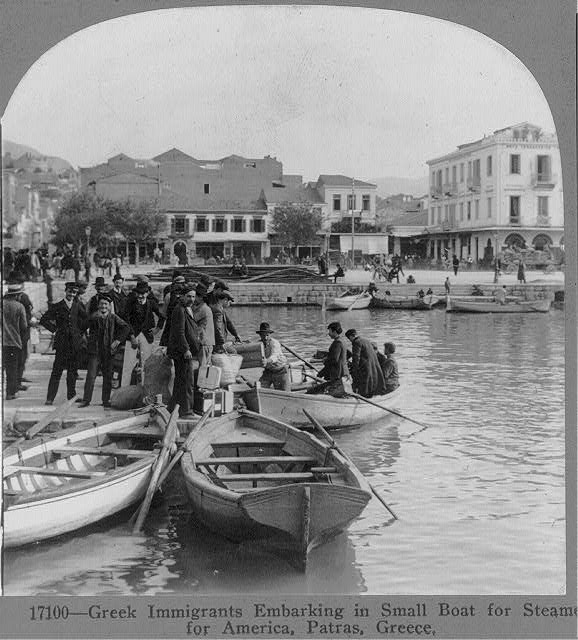
Ioannis Lougaris, who left Greece in 1907 at the age of 19, later described the sacrifices his family made to finance his journey. In an oral history interview recorded in 1964 and subsequently examined by historian Alicia Barber for Nevada Public Radio, Lougaris recalled that his father mortgaged farmland, a donkey and a goat to raise the $100 necessary for his departure.
Lougaris eventually settled in Nevada, where he became involved in efforts to establish a hospital for military veterans. His story reflects how Greek immigrants contributed to American civic life far beyond the traditional centers of the Greek diaspora.
The closing of Ellis Island and the rise of Greek America
The decline of Ellis Island began with restrictive immigration legislation in the early 1920s. The Immigration Act of 1924 introduced national-origin quotas that sharply reduced arrivals from southern and eastern Europe, including Greece.
As immigration procedures increasingly shifted to American consulates overseas, the island’s original purpose diminished. During World War II and the early Cold War, its facilities were used mainly for detention and other government activities.
Following its closure in 1954, Ellis Island was largely abandoned. President Lyndon Johnson incorporated it into the Statue of Liberty National Monument in 1965, while an extensive restoration eventually led to the opening of the Ellis Island Immigration Museum in September 1990.
Although the immigration station had closed, Greek immigration continued. The Immigration and Nationality Act of 1965 removed the national-origins quota system, opening the way for another substantial wave of immigrants from Greece.
Many settled in Astoria, Queens, which developed into one of the largest Greek communities outside Greece and Cyprus. Greek Orthodox churches, schools, restaurants, professional associations and community organizations became central institutions in neighborhoods where successive generations maintained connections with their ancestral homeland.
The Greek-American presence also extended across New York City. Earlier immigrants had established businesses and community institutions in Manhattan and Brooklyn, while later generations increasingly moved into Queens, Long Island and surrounding suburbs.
Seventy-two years after its closure, Ellis Island remains a place where those individual journeys can still be traced through passenger manifests, photographs, immigration documents and recorded testimonies. For the descendants of Greek immigrants, those records preserve the first American chapters of families whose histories eventually became part of the broader Greek-American experience.
See all the latest news from Greece and the world at Greekreporter.com. Contact our newsroom to report an update or send your story, photos and videos. Follow GR on Google News and subscribe here to our daily email!

