



Archaeologists working in Czech Republic have uncovered 16 Neolithic houses built by the region’s first farmers nearly 7,000 years ago, among thousands of finds unearthed during a major highway excavation in central Moravia.
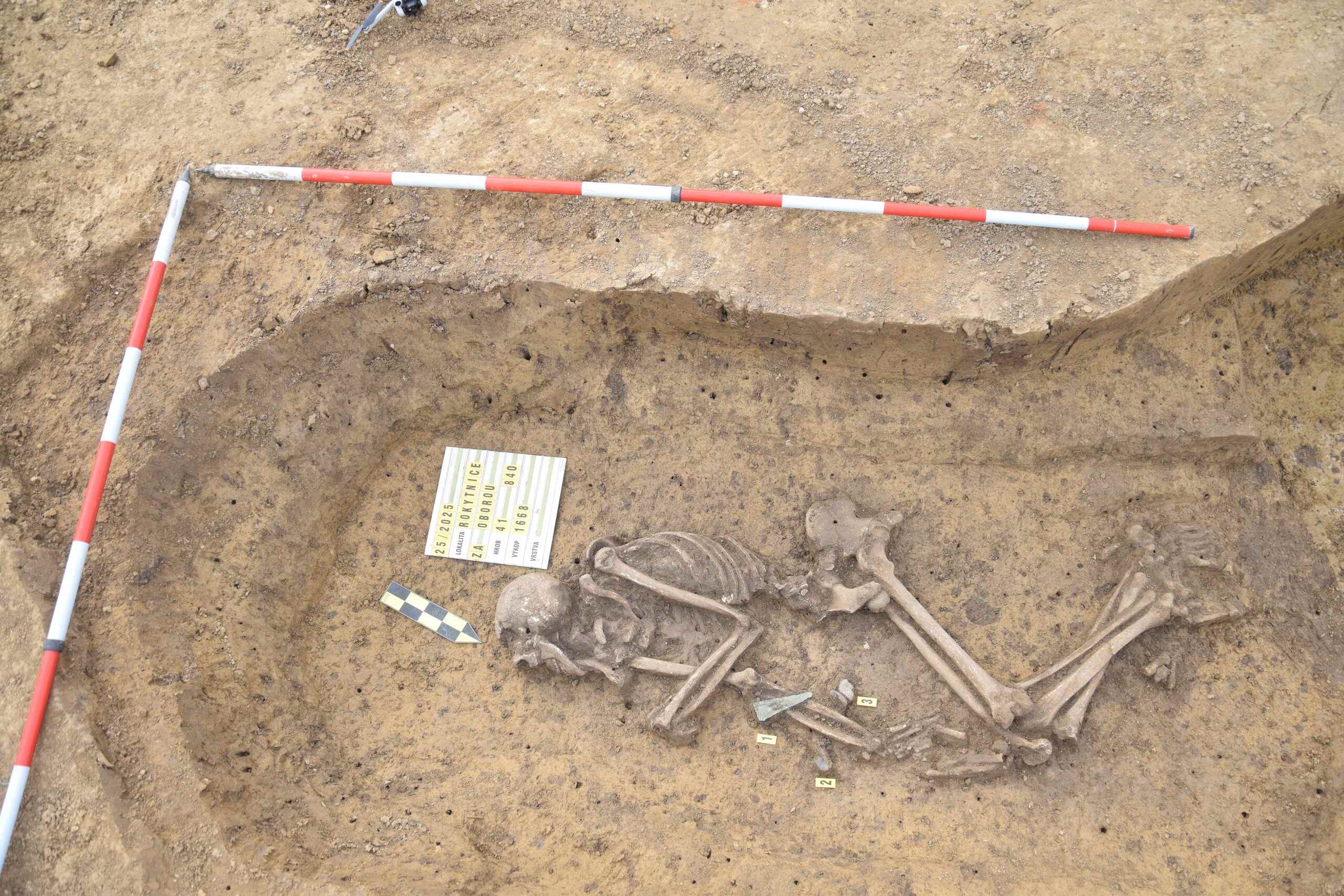
The discovery came during a rescue dig along the planned route of the D55 highway between the towns of Kokory and Přerov, where experts also found burial grounds spanning the early and late Bronze Age.
The excavation was carried out by the Archaeological Centre Olomouc on behalf of the Road and Motorway Directorate. Work began in September 2025 and wrapped up on July 29, 2026, covering close to seven kilometers (4.3 miles) of the future highway.
Rescue excavation along D55 highway route uncovers ancient layers
During that time, researchers examined 1,879 settlement features, 65 graves containing skeletal remains or cremated ashes, and one additional burial found inside a settlement pit. The team confirmed all 12 archaeological sites they had expected to find along the route and also discovered a previously unknown site in the Dluhonice area.
Marek Kalábek, who led the rescue excavation, said the project confirmed that the land between Kokory and Přerov had been settled for a long stretch of history.
He noted that even though the excavated area was fairly short, it showed signs of human life reaching from the Neolithic period all the way to the Middle Ages, giving researchers a clearer picture of how settlement patterns shifted over several thousand years.
Kokory-Podsedky site yields Neolithic houses and Bronze Age graves in Czech Republic
The richest results came from a site called Kokory-Podsedky, where archaeologists examined 974 individual features. Additional finds turned up nearby in the Kokory and Rokytnice areas, where researchers uncovered large settlements belonging to the Linear Pottery culture, the group of early farmers who arrived in central Moravia about 7,000 years ago.
Based on the findings so far, experts have identified roughly 16 long Neolithic houses at these Czech Republic sites, some measuring up to 36 meters (118 feet), along with storage pits and ovens tied to daily farming life.
The dig also turned up prehistoric cemeteries. One, roughly 4,000 years old, belonged to the Nitra and Unetice cultures of the early Bronze Age. Another held cremated remains from the Lusatian urnfield culture of the late Bronze Age. Grave goods included copper ornaments, bone beads, flint arrowheads, a stone wrist guard, ceramic pots, and bronze pins and bracelets.
More graves found as museum prepares public presentation
Kalábek said combining large settlements with nearby cemeteries gives researchers a fuller view of both daily life and burial customs, and shows how the landscape changed over thousands of years.
At the Rokytnice sites, archaeologists found two more early Bronze Age cemeteries and 18 late Bronze Age cremation graves. In Dluhonice, they uncovered a Corded Ware culture grave from the late Eneolithic period, containing ceramic vessels, a copper ornament, and a stone tool.
Fieldwork has ended, but the analysis is ongoing. Finds will undergo conservation, documentation, and lab study at the Archaeological Centre Olomouc before being transferred to the Regional Museum’s Centre of Museum Archaeology in Olomouc.
See all the latest news from Greece and the world at Greekreporter.com. Contact our newsroom to report an update or send your story, photos and videos. Follow GR on Google News and subscribe here to our daily email!

