



An ancient fortress that guarded Egypt’s western frontier more than 3,000 years ago has yielded a rare horse burial, inscriptions linked to Ramesses II and evidence of military and daily life.
Archaeologists in northern Egypt have uncovered a residential complex, grain stores, ovens and the carefully arranged burial of a horse inside a New Kingdom fortress, offering new evidence of life along the country’s western frontier.
The Egyptian archaeological mission made the discoveries at Tell Al-Abqain in Beheira Governorate, on the western edge of the Nile Delta. The fortress formed part of a defensive network built to protect ancient Egypt from attacks by Libyan groups. Archaeologists have found evidence of similar New Kingdom military fortifications in Egypt’s Sinai, where forts guarded important routes and the country’s eastern frontier.
Mud-brick complex reveals life inside fortress
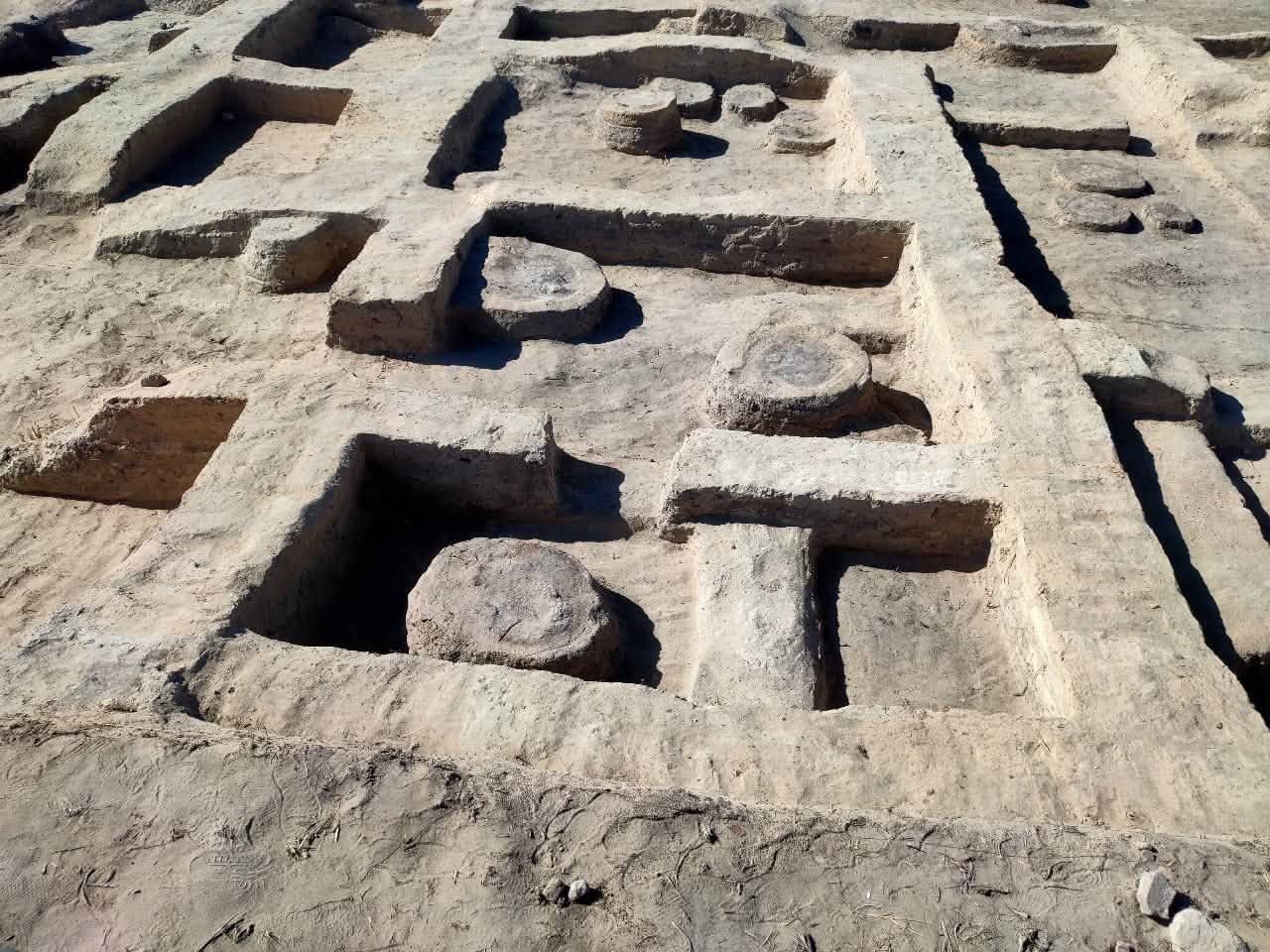
Excavations uncovered a large mud-brick residential complex with a main street about four meters (13 feet) wide. The road runs east to west and intersects another street leading to the fortress’s limestone southern entrance. Rooms within the complex contained grain silos and cylindrical pottery ovens used to prepare food. Similar evidence of homes, ovens, and storage silos was recently found at a 3,500-year-old settlement in Egypt.
In rooms north of the main street, archaeologists found large pottery jars still holding charred wheat grains. Living quarters also appeared near wells in the southeastern part of the fortress. Earlier excavations there uncovered three stone wells bearing inscriptions with the titles of King Ramesses II.
Horse burial points to military activity

One of the most unusual discoveries was the complete burial of a young male horse. Preliminary studies indicate the animal belonged to a medium-sized type characterized by agility and speed. Researchers believe such horses could have been used for training, military activities, or pulling chariots. The position of the animal’s body and head suggests it was deliberately and carefully buried.
Nearby, archaeologists found cylindrical objects made from alabaster and limestone. They believe the pieces may have been finials from a chariot horse harness, potentially providing further evidence of chariot activity at the fortress.
Royal inscriptions and religious objects emerge
The mission also uncovered part of a limestone stela preserving traces of a hieratic inscription linked to King Merneptah. Archaeologists described it as the first discovery of its kind in excavations in the Beheira region. The surviving text praises the king’s strength, compares his power to Seth and refers to the god Ptah.
Another limestone stela preserves the birth, throne, and Horus names of Ramesses II. Archaeologists recently found another Ramesses II inscription at Tell Abu Seifi, where evidence may help identify the location of the lost ancient city of Mesen.
A separate stela depicts a restrained captive identified by archaeologists as a Libyan prisoner from the Meshwesh based on his clothing. Researchers also recovered scarabs bearing the names of Ramesses II and Seti I, along with references to Amun, Sekhmet, Ptah and Seth. Amulets shaped like fish, lotus flowers, cobras, baboons and the nefer sign provide further evidence of religious practices at the settlement.
Other finds include pottery, an Abydos pilgrimage flask, loom weights, grinding stones, weighing equipment and jewelry. Excavations at Tell Al-Abqain are continuing as researchers work to better understand the fortress and its role in Egypt’s New Kingdom defenses.
See all the latest news from Greece and the world at Greekreporter.com. Contact our newsroom to report an update or send your story, photos and videos. Follow GR on Google News and subscribe here to our daily email!

