



Agesilaus, a king of Sparta who fought battles and held power longer than most men even lived, had his last campaign carry him far from Greece into the land of the Nile in Egypt. His career stretched across decades of war, diplomacy, and personal sacrifice. At more than eighty years old, he still sought challenge. In Egypt, he fought as a mercenary for an Egyptian rebel king, humbled generals half his age, and left behind one of the most remarkable final acts in ancient history.
Our main source for these events is the biographer Plutarch’s Life of Agesilaus in which Plutarch tells of how the Spartan king, weary of politics at home, crossed to Egypt to fight as a mercenary. He was already a legend, but he was also a man who refused to age quietly.
A Spartan in Egypt
The backdrop was Egypt’s constant turmoil in the fourth century BC. Local rulers rose and fell as Persian influence pressed down on the land. At that time, a rebel named Tachos tried to seize the throne and break Persian control. He needed soldiers with experience, so he called upon Agesilaus and the Spartans.
Agesilaus agreed. Though he was over eighty years old, he still commanded loyalty and discipline. He left Greece with a small but battle-hardened Spartan force. Egyptians who initially saw him, mocked his size and appearance. Plutarch described him as short, unimpressive, and limping. To them, he looked more like a frail old man than a warrior. They laughed, and they attempted to flatter him with gifts of geese and calves. Agesilaus bluntly responded: “Watch me work.”
The irrigation trenches
The Egyptians soon discovered that his words carried weight. At one point, a massive rebel army surrounded Agesilaus and his allies. The situation looked hopeless, and panic gripped the Egyptians. Even seasoned commanders lost heart.
But Agesilaus kept calm, studying the ground with the sharp eye of a veteran. Around their position, he noticed irrigation ditches, dug to channel Nile water into the fields. To the Egyptians, these ditches seemed like obstacles, but for Agesilaus, they were tools.
He ordered the Spartans to convert these ditches into trenches and then placed his men in positions that forced the enemy to charge through narrow lanes. What looked like weakness became a trap.
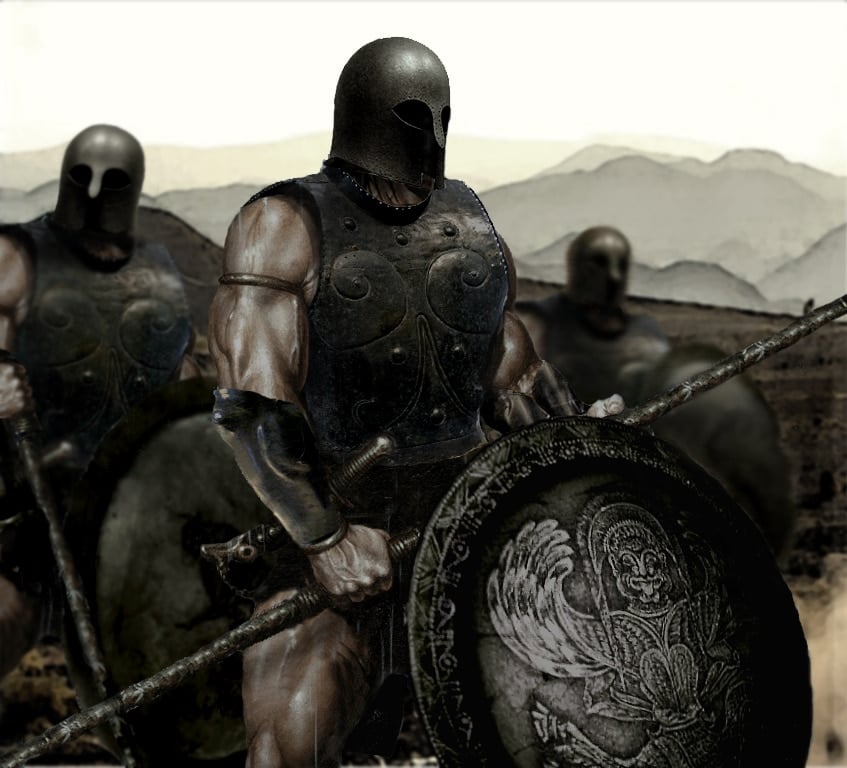
When the rebel host advanced, they funneled into the killing zones. Spartans held their ground with shields and spears. The Egyptians descended into chaos. Agesilaus himself, though old and limping, led the countercharge. His presence inspired the men, with soldiers sixty years younger than him falling in droves and thousands dying while fleeing.
Agesilaus had not won as a result of numbers. He won due to geography, discipline, and clarity of mind. Tachos eventually lost his grip on power. Another contender, Nectanebo II, offered Agesilaus substantial compensation for support, and the Spartan accepted. With the help of Agesilaus and his disciplined troops, Nectanebo II took the throne of Egypt.
For his services, Agesilaus received 230 talents. Yet his victory was not just about wealth. He had once again proven that strategy and resolve were more important than appearances. Egyptians who had once mocked him now revered him as the man who shaped their future.
The last voyage
After the campaign ended, Agesilaus prepared for his return home. However, the season was late, and winter made sailing dangerous. His ships hugged the coast of what is today Libya, never daring to cross open waters. Along this cautious path, the fleet came to a lonely shore. The place was known as the Harbour of Menelaus, named for the legendary Spartan who had journeyed to Troy centuries earlier.
There, on an uninhabited stretch of coast, Agesilaus fell ill. He died quietly at the age of eighty-four, and his body was carried back to Sparta in wax, preserved until it could rest in his homeland.
Agesilaus left behind a record of victories and contradictions, ruling Sparta during its last great century of power. He fought Persians, Thebans, and even Athenians, made enemies, and inspired loyalty in equal measure. His final campaign in Egypt captures the essence of his life.
Mocked for his appearance, Agesilaus showed his worth through action. Outnumbered in battle, he turned the land itself into an ally, and though old in years, he fought with the energy and insight of a young man. Plutarch’s portrait presents not just a Spartan king but a warrior who refused to bow to time.
His death far from home adds a final layer of irony. Agesilaus spent his life defending Sparta, yet his last service was to Egypt. Still, even there, he remained himself: practical, cunning, and relentless.
@cribhistory Egypt Laughed at this Spartan King This is why you never mock a Spartan. Even an ancient one. #sparta #ancienthistory #historytok #warhistory
See all the latest news from Greece and the world at Greekreporter.com. Contact our newsroom to report an update or send your story, photos and videos. Follow GR on Google News and subscribe here to our daily email!

