



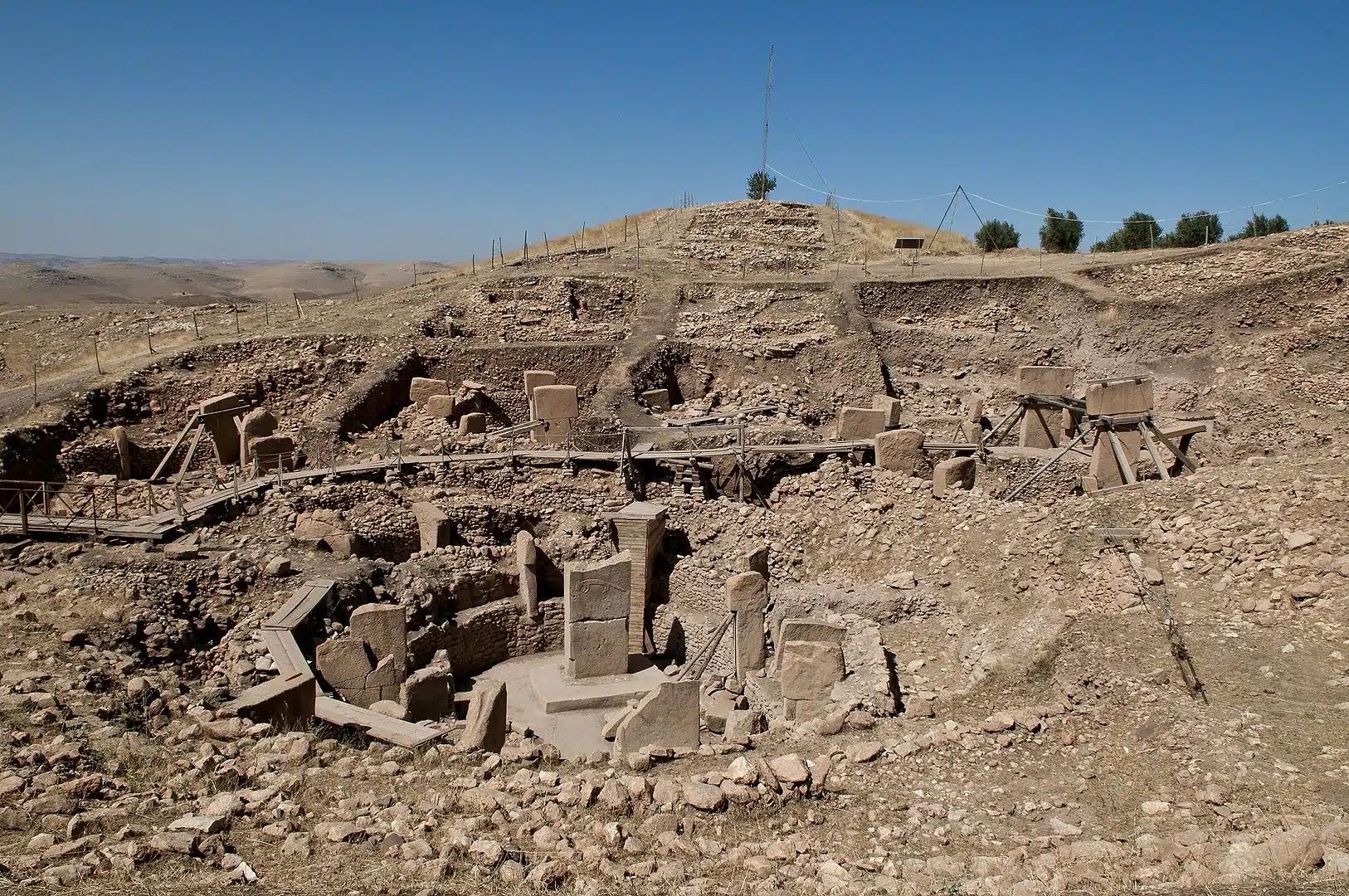
Archaeologists at Göbeklitepe in southeastern Turkey have uncovered rectangular buildings that may offer new evidence of everyday life and homes at the Neolithic settlement.
The structures lie just below the modern surface in a newly opened excavation area. Researchers believe they belong to Göbeklitepe’s second phase of occupation. Unlike the site’s famous monumental enclosures, the buildings contain fewer large stone pillars and have interiors that may have supported domestic activities.
Excavation director Prof. Dr. Necmi Karul said the team’s initial impression is that some may have been homes. Researchers, however, say more evidence is needed before they can determine how the buildings were used.
Archaeologists open a new excavation area
The team is working in an area north of Göbeklitepe’s main protected archaeological zone. Excavations began after olive trees were relocated from about 1,500 square meters, or roughly 16,000 square feet, of ground.
Researchers are removing the surface layer across a broad area before digging deeper. The method allows them to map the distribution of buildings across this part of the settlement.
The structures appeared almost immediately. Karul said rectangular buildings from the site’s second phase were found directly beneath the surface, allowing researchers to identify their plans quickly. Archaeologists have already reached floor levels in several structures.
Erosion explains why the remains are so shallow. The upper sections of the ancient walls wore away over time, leaving the surviving parts close to the present ground level.
Buildings may have served as homes
The structures resemble buildings previously excavated in an area known as GT1. However, their internal organization may help researchers trace changes at Göbeklitepe over time.
Karul said large stone pillars appear to have become less prominent during this phase. The buildings contain fewer pillars, while their interiors appear more suitable for daily activities.
Architecture alone cannot prove that people lived in them. Researchers will examine soil and sediment from the floors for microscopic remains, plant material, traces of food preparation, and other residues. Such evidence could reveal what activities took place inside.
Archaeologists at Göbeklitepe have uncovered 10,000-year-old rectangular buildings that may have been homes.
The discovery could add to growing evidence that the famous Neolithic site was not only a ceremonial center, but also a place where people lived their daily lives. pic.twitter.com/uWbjfpvoU2
— Tom Marvolo Riddle (@tom_riddle2025) August 13, 2026
The findings are important because Göbeklitepe was once viewed mainly through its monumental architecture. Its circular and oval enclosures, enormous T-shaped pillars and animal carvings transformed ideas about early Neolithic communities.
More recent excavations have produced evidence of domestic buildings alongside larger communal structures. Karul said this suggests Göbeklitepe was a settlement where different types of buildings were used at the same time, rather than simply a ritual center.
Similar patterns have emerged at other Neolithic sites studied through the Taş Tepeler project, which includes prehistoric settlements across the Şanlıurfa region.
Work continues across Göbeklitepe
Archaeological and conservation work is continuing elsewhere at the site. Teams are excavating around circular buildings on the slope. Conservation work has largely finished at Structure C and has shifted to Structure D, a major monumental enclosure.
The rectangular buildings remain at an early stage of excavation. If further analysis supports their use as homes, they could strengthen evidence that monumental architecture and everyday domestic life existed side by side at Göbeklitepe.
See all the latest news from Greece and the world at Greekreporter.com. Contact our newsroom to report an update or send your story, photos and videos. Follow GR on Google News and subscribe here to our daily email!

