



One of Greece’s most celebrated archaeological monuments is moving closer to welcoming visitors. Restoration work at the monumental Kasta Tomb in Amphipolis has reached a series of major milestones, with the Greek Ministry of Culture confirming that the unique Macedonian burial monument is expected to open to the public in 2028.
The announcement comes as the ministry also unveiled newly completed conservation and accessibility projects across the archaeological site of Amphipolis, part of an investment program exceeding €20 million (about $23 million) aimed at transforming the historic city into a world-class cultural destination.
Kasta Tomb restoration enters decisive phase

Discovered in 2014, the Kasta Tomb drew worldwide attention for its monumental scale, marble sphinxes, Caryatid statues, and spectacular mosaic floor, making it one of the most significant archaeological discoveries in Greece in recent decades.
According to the Ministry of Culture, restoration has now reached an advanced stage. Archaeologists have completed the excavation and presentation of the tomb’s entire 497-meter (1,631-foot) marble enclosure, restored the original geometry of the burial mound and carried out extensive stabilization work throughout the monument.
Among the most technically demanding achievements has been the reinstallation of the tomb’s massive marble entrance door after painstaking conservation and reconstruction.

Temporary steel supports that had stabilized the interior since excavation have now been removed, allowing the monument’s original architectural design to be appreciated for the first time in years.
The next phase includes completion of masonry repairs, installation of the final flooring, and construction of an entrance staircase designed to allow visitors safe access while preserving the monument’s authenticity. Construction of a new museum building, which will house permanent exhibitions and digital interpretation displays, is scheduled to begin in early September.
Ancient Amphipolis receives new visitor facilities
Alongside the work at Kasta Hill, the Ministry officially opened two major projects designed to improve the archaeological park. The first concerns the conservation of the Ancient Wooden Bridge of Amphipolis, one of the world’s rare surviving examples of ancient timber bridge engineering.
The remains consist of oak piles preserved beneath the waters of the Strymon River, dating back as early as the 6th century BC, before the Athenian foundation of Amphipolis itself. A new protective shelter now safeguards the fragile wooden remains, while multimedia installations help visitors visualize how the bridge originally appeared and functioned.
The bridge occupies an important place in ancient history. According to Thucydides, it was here that the Spartan general Brasidas crossed the Strymon River on his successful capture of Amphipolis in 424 BC during the Peloponnesian War. Radiocarbon dating has shown that the crossing remained in use continuously from the Archaic period through the Byzantine era and even into the 18th century.
Improved accessibility throughout the archaeological site

The Ministry also completed a major accessibility project allowing more visitors to experience the archaeological site. New routes now connect the Acropolis, the ancient gymnasium and the northern fortifications, while an elevator, Braille signage, accessible parking and improved pathways make key monuments accessible to visitors with mobility or visual impairments.
The approximately €3 million ($3.45 million) projects were financed through Greece’s Recovery and Resilience Fund.
A broader vision for Amphipolis
Culture Minister Lina Mendoni stated the projects form part of a long-term strategy launched in 2019 to protect, restore, and promote Amphipolis as a unified archaeological destination of international significance.
She described the restoration of the Kasta Tomb as both a scientific and engineering achievement, noting that the monument’s complexity continues to present new research challenges addressed through collaboration between Greek authorities and European research institutions. “The goal is for the restoration, presentation and promotion of the Kasta Tomb to become an international model,” Mendoni said.
She added that Amphipolis should be viewed not only through the famous tomb but as an archaeological landscape spanning more than two millennia—from the Archaic and Classical periods through the Hellenistic, Roman, and Byzantine eras.
Why Amphipolis matters
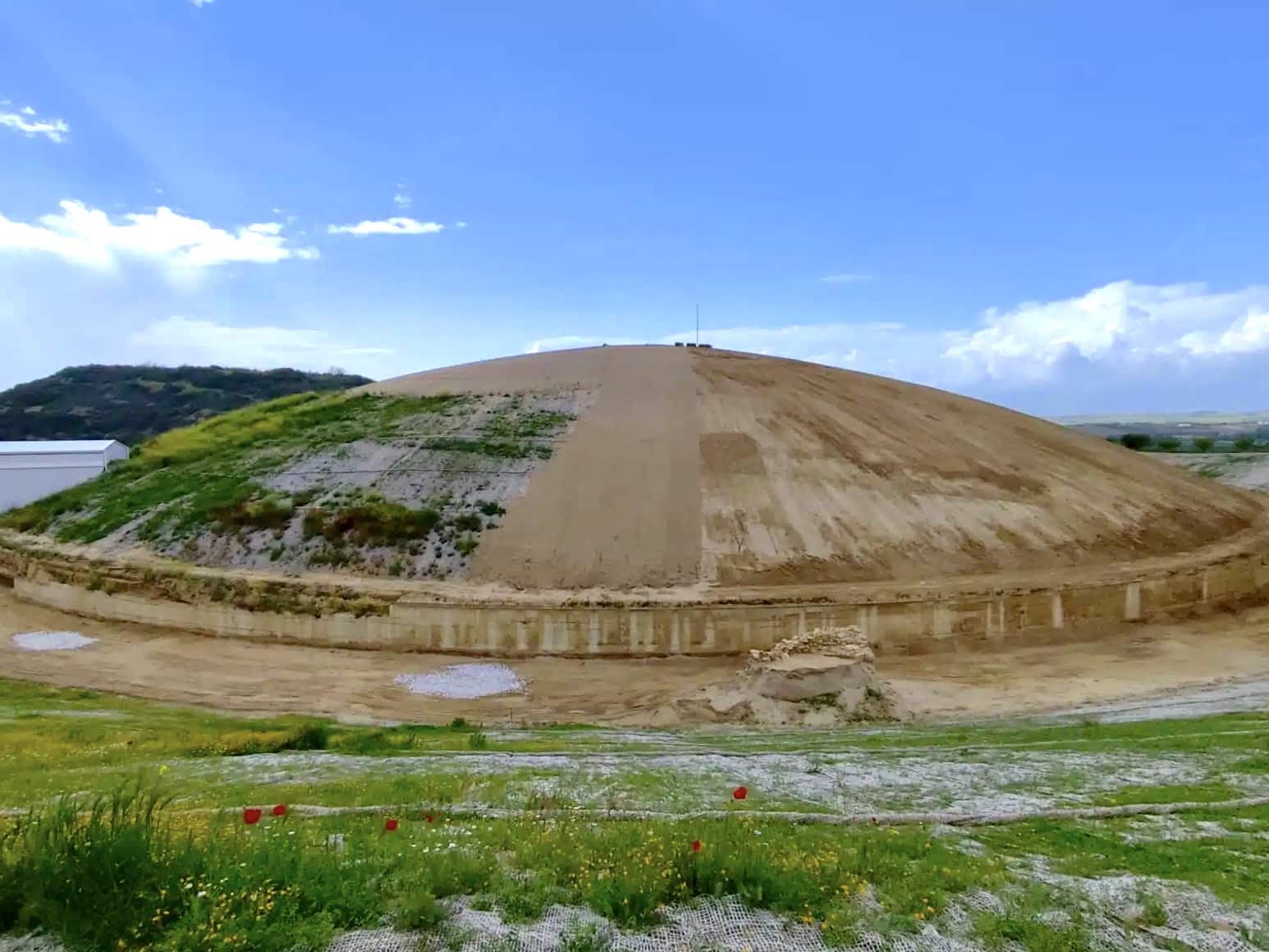
Founded by the Athenians in 437 BC near the Strymon River, Amphipolis became one of the most strategically important cities of ancient Macedonia thanks to its access to timber, gold mines, and trade routes into Thrace.
After Philip II conquered the city, it became a major center of the Macedonian kingdom and later served as an important base for Alexander the Great’s military campaigns. Several of Alexander’s leading admirals and companions, including Nearchus, Androsthenes and Laomedon, were from Amphipolis.
The spectacular Kasta Tomb, although its occupant remains unknown, is widely believed to date to the late fourth century BC, shortly after Alexander’s death. Its monumental architecture and lavish decoration suggest it was built for someone of exceptional status during the early Hellenistic period.
With restoration progressing steadily and visitor infrastructure expanding across the wider archaeological site, Greek authorities hope that by 2028, the Kasta Tomb will become the centerpiece of one of the country’s most vital archaeological destinations.
Related: The Guardian of Amphipolis: Full Documentary
See all the latest news from Greece and the world at Greekreporter.com. Contact our newsroom to report an update or send your story, photos and videos. Follow GR on Google News and subscribe here to our daily email!

