



In 1982, Jewish researcher Joseph Ezekiel Yahuda developed one of the most ambitious theories on the connections between the Hebrew and Greek languages. In his work, Hebrew Is Greek, Yahuda argued that Biblical Hebrew contained a far deeper Greek foundation than scholars had previously thought possible. He not only suggested occasional Greek influence but posited that Hebrew represented Greek expressed through an alternative linguistic form. His theory also linked the ancient Hebrews with broader Aegean and Eastern Mediterranean traditions.
The ancient Mediterranean was a vast world shaped by migration, trade, warfare, and cultural exchange. Greeks, Egyptians, Canaanites, and other peoples navigated the same seas for centuries, carrying their languages and traditions with them. As a result, scholars and researchers have explored whether deeper connections existed between Greek and Hebrew.
Joseph Yahuda’s approach invites readers to reconsider the ancient world as an interconnected cultural space. Rather than viewing civilizations as isolated societies, his theory emphasizes movement, contact, and exchange. It also raises an intriguing question: could Hebrew have Greek Aegean roots?
Joseph Yahuda and the Greek-Hebrew language connection
Joseph Yahuda devoted considerable attention to the relationship between Hebrew and Greek. He examined similarities among words, names, sounds, and linguistic structures, arguing that these connections reflected more than occasional borrowing.
Yahuda proposed that the Greek and Hebrew languages shared a closer historical relationship than traditionally accepted and believed that the latter preserved linguistic and cultural elements connected to the former. According to this view, Greek may have contributed to the development of Hebrew to an extent.
This argument challenges traditional assumptions about the origins and classification of ancient languages. Hebrew is generally classified as a Northwest Semitic language, while Greek belongs to the Hellenic branch. Nonetheless, Joseph Yahuda looked beyond modern linguistic categories and focused instead on potential ancient cultural connections.
He viewed language as a record of human migration. Words, he argued, could preserve traces of past interactions long after kingdoms and civilizations had disappeared. Therefore, linguistic similarities might reveal forgotten contacts between distant populations.
Moreover, Yahuda examined biblical names and terms by comparing them with Greek, arguing that certain Hebrew expressions became clearer when viewed alongside their Greek counterparts. Through this approach, he sought to uncover an older linguistic layer that existed beneath later traditions.
His theory remains particularly intriguing because the Eastern Mediterranean was a region of continuous cultural exchange. Ships connected Crete, Cyprus, Egypt, Anatolia, the Levant, and mainland Greece, allowing merchants to exchange goods and migrants to carry languages, beliefs, and customs across the region.
The Aegean world
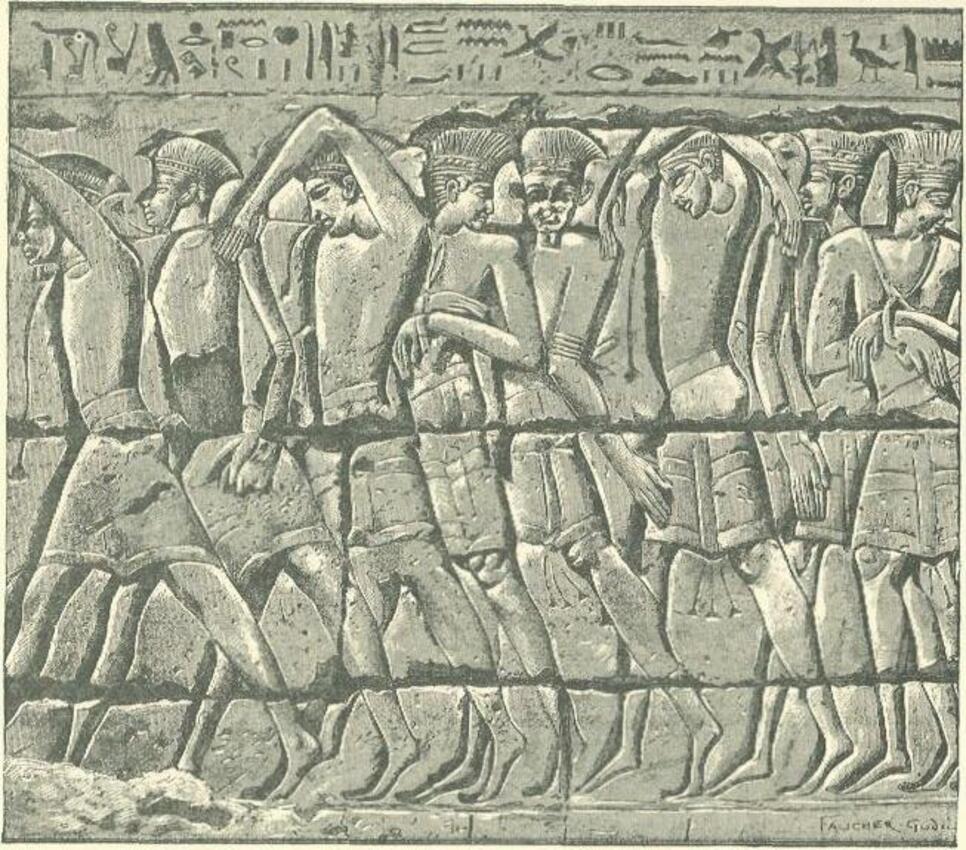
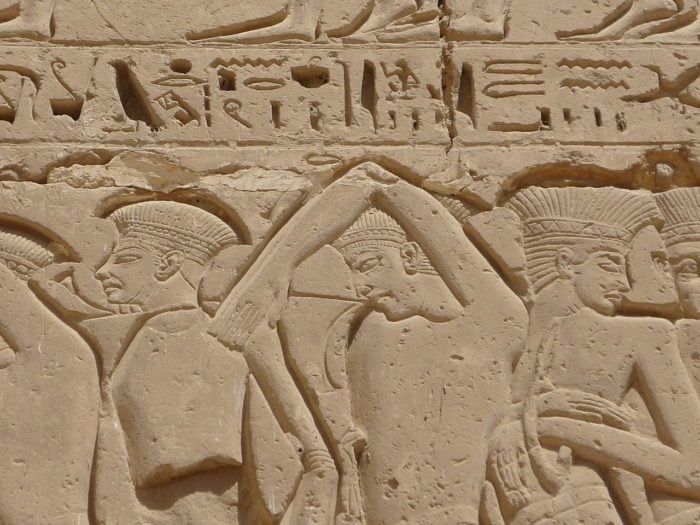
The Peleset provide another vital element in this discussion. Egyptian records identify the this group as belonging to the Sea Peoples, and most historians associate them with the Philistines of biblical tradition.
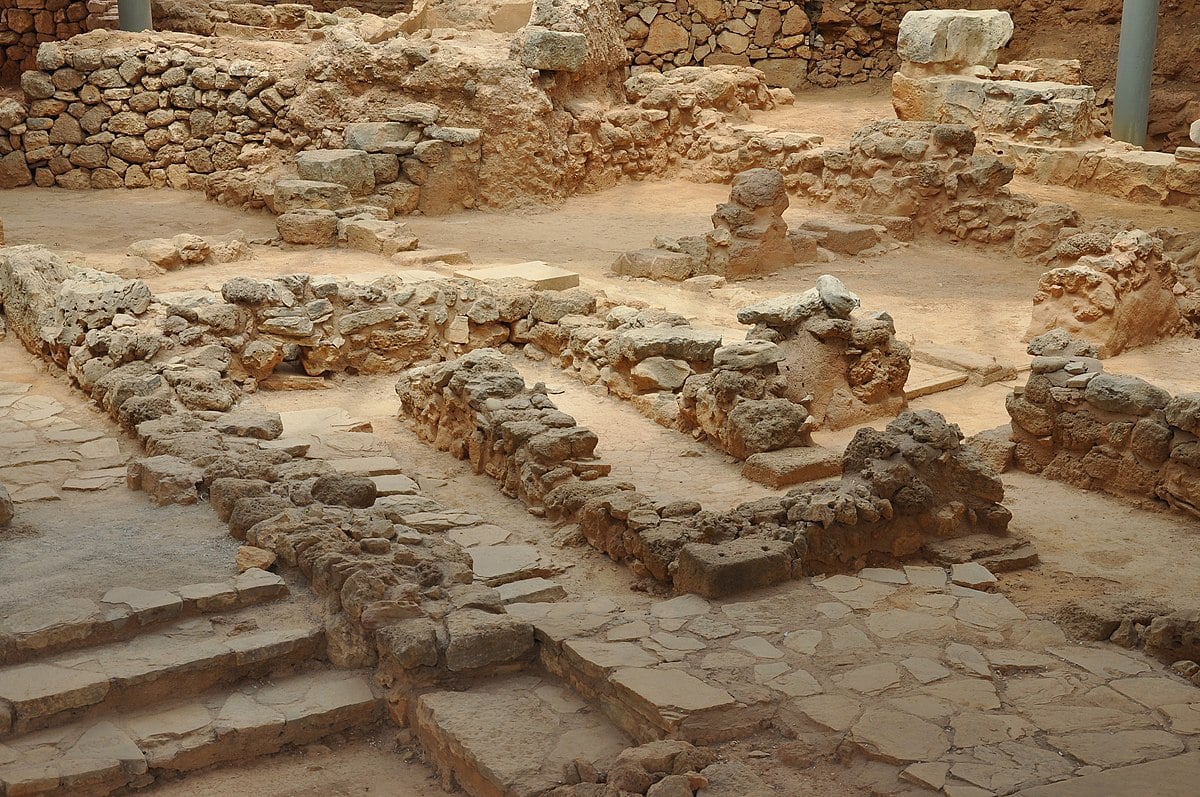
The Philistines settled along the southern Levantine coast, establishing major cities such as Gaza, Ashkelon, Ashdod, Ekron, and Gath. These communities developed strong connections with the broader Mediterranean world. Archaeological discoveries have revealed clear Aegean influences within early Philistine culture. Pottery styles provide some of the strongest evidence, as early Philistine ceramics often exhibit similarities with Mycenaean traditions.
In addition, certain Philistine customs and material remains suggest cultural links with the Aegean. Such findings provide support for the idea that groups from the Aegean region crossed the sea and established settlements in the Levant. The name Peleset also appears connected to the later name Philistines, linking Egyptian records with biblical traditions and placing the Philistines within the wider population movements that followed the collapse of the Late Bronze Age.
The Peleset may have included people from multiple regions. However, the Aegean element appears especially significant. Their arrival introduced new cultural traditions into the Levant and contributed to the region’s evolving identity. The Peleset therefore represent a historical bridge between the Aegean world and the biblical lands. Their presence demonstrates that Aegean populations reached the Eastern Mediterranean during a period of major transformation.

Could the Peleset have preserved Greek speech?
The Peleset connection adds another layer to Joseph Yahuda’s theory. If Aegean peoples settled in the Levant, they may have brought Greek or Greek-adjacent speech with them. Their language could have influenced neighboring populations, with words potentially entering local dialects through trade, warfare, intermarriage, and political interaction.
The Philistines lived alongside ancient Israelite communities for centuries, and their relationship involved conflict, diplomacy, and cultural exchange. Therefore, opportunities for linguistic influence remained possible.
Although biblical narratives often portray Philistines and Israelites as rivals, neighboring societies rarely remained completely isolated from one another. They exchanged technologies, customs, religious ideas, and vocabulary. The Philistines also occupied noteworthy coastal cities that connected inland populations with Mediterranean trade networks. Their ports encouraged contact among diverse peoples and facilitated the movement of languages and traditions.
The Peleset may therefore represent one possible route through which Aegean traditions reached the Levant. This possibility contributes to continued interest in Yahuda’s linguistic arguments. Such contact could have occurred through multiple historical channels. Aegean migrants reached the Levant, Greek merchants traveled to Eastern Mediterranean ports, and Cypriot communities helped connect Greece with Syria and Palestine.
Greek words and Hebrew meanings
Joseph Yahuda approached linguistic comparison by examining both meaning and sound. He searched for similarities he believed preserved related concepts across the two languages. This method viewed language as a form of cultural inheritance. A word could retain traces of ancient memories even after its pronunciation changed over time. Across generations, communities often adapted foreign words to fit their own linguistic patterns and grammar.
As a result, direct similarities could gradually disappear. However, it is possible that traces of earlier connections remained within names, religious terms, and traditional expressions. Yahuda believed Greek provided useful explanations for certain Hebrew forms, for instance and argued that certain obscure Hebrew words became clearer when examined through the lens of the Greek language. He drew attention to similarities between Hebrew and Greek words associated with key cultural concepts, examining terms associated with light, divinity, kingship, sacred authority, and human identity. He also compared personal and geographical names that appeared to preserve related sounds.
Yahuda considered the Hebrew word Abba, meaning “father,” alongside Greek expressions associated with paternal authority. He also explored possible relationships between Hebrew divine names and Greek religious vocabulary. These comparisons formed part of his broader effort to identify an Ancient Greek layer within Hebrew tradition. He further connected the Hebrew name Keren with the Greek word keras (κέρας), meaning “horn” and compared the Hebrew Eretz, meaning “land” or “earth,” with the Greek era (ἔρα), which has a similar connotation. Another proposed connection linked the Hebrew Mahané, meaning “camp,” with the Greek mēchanē (μηχανή), meaning “device,” “contrivance,” or “engine.”
Lastly, he looked at names found throughout biblical history. According to his approach, certain names preserved Greek roots that later evolved into Hebrew forms. Changes in pronunciation over time, he argued, may have obscured earlier connections.
A Mediterranean linguistic landscape
The Ancient Mediterranean was home to a diverse range of languages. Greek, Egyptian, Hebrew, Phoenician, Aramaic, and many other tongues existed alongside one another, creating a complex linguistic environment. A majority of people in the region were multilingual, while merchants relied on shared vocabulary to conduct trade, soldiers encountered foreign commands, and royal courts employed interpreters and diplomats. As a result, polyglotism became a defining feature of many ancient societies.
The Peleset may have contributed to this interconnected environment. Their Aegean heritage linked them with populations across the sea, while their settlement in the Levant allowed for the evolution of new opportunities for cultural interaction and exchange. Over time, their language may have changed as local languages influenced later generations. Nevertheless, certain words, names, or cultural expressions potentially preserved traces of earlier traditions.
This is reflective of patterns observed in other ancient migrations whereby migrant groups often adopted the languages of their new surroundings even as they maintained elements of their original identity through names, customs, and traditional vocabulary. In this way, descendants preserved cultural memory even after major linguistic shifts. It is, thus, highly plausible for the Peleset to have followed a similar path. Consequently, Greek linguistic influences could have entered the Levant through migration, surviving within local traditions.
Ancient cultural memory
Yahuda’s theory encourages a broader understanding of ancient identity by challenging modern assumptions pertaining to fixed cultural and linguistic boundaries. While contemporary categories often emphasize clear divisions between peoples, ancient communities existed within a world defined by movement, interaction, and continual cultural exchange.
A society could embody multiple influences simultaneously, speaking one language while preserving traditions, customs, and collective memories connected to another homeland. The Peleset illustrate this complexity. Their material culture reflects Aegean connections, yet they ultimately developed a distinct identity within the Levant.
Hebrew likewise emerged within a region shaped by diverse cultural encounters. Its speakers interacted with Egyptians, Canaanites, Phoenicians, Philistines, Aramaeans, and later Greek populations, creating a linguistic and cultural environment in which ideas and expressions could circulate across boundaries. Yahuda’s work invites readers to examine these ancient connections, placing Greek culture within a broader biblical context while emphasizing the shared Mediterranean world that influenced numerous societies.
A familiar word may preserve traces of forgotten migrations, while a name might reveal relationships between communities separated by geography and time. The Peleset, in particular, demonstrate that Aegean peoples reached the biblical world, providing a historical setting in which possible Greek influences could have developed and endured.
See all the latest news from Greece and the world at Greekreporter.com. Contact our newsroom to report an update or send your story, photos and videos. Follow GR on Google News and subscribe here to our daily email!

