



Ancient Pella is known worldwide as the birthplace of Alexander the Great and the capital from which the Macedonian kingdom expanded across the ancient world. New archaeological research, however, is now revealing Pella’s pre-Hellenistic history.
A multidisciplinary research program focuses on the investigation of the origins, boundaries, and urban development of ancient Pella with the help of geophysical surveys, surface investigations, and targeted excavations so as to understand how the city evolved from its earliest phases through the Hellenistic period.
The project is led by Dr. Elisavet Tsigarida, Honorary Director of the Greek Ministry of Culture, together with archaeologist Dr. Stratos Nanoglou of the Ephorate of Antiquities of Thessaloniki City, Professor of Classical Archaeology Dr. Lisa Nevett, and archaeologist Dr. David Stone.
The research centers on the built environment of ancient Pella and its surrounding territory, seeking to reconstruct not only the city associated with Macedonia’s kings but also the earlier settlement that preceded it.
Beneath the Hellenistic city
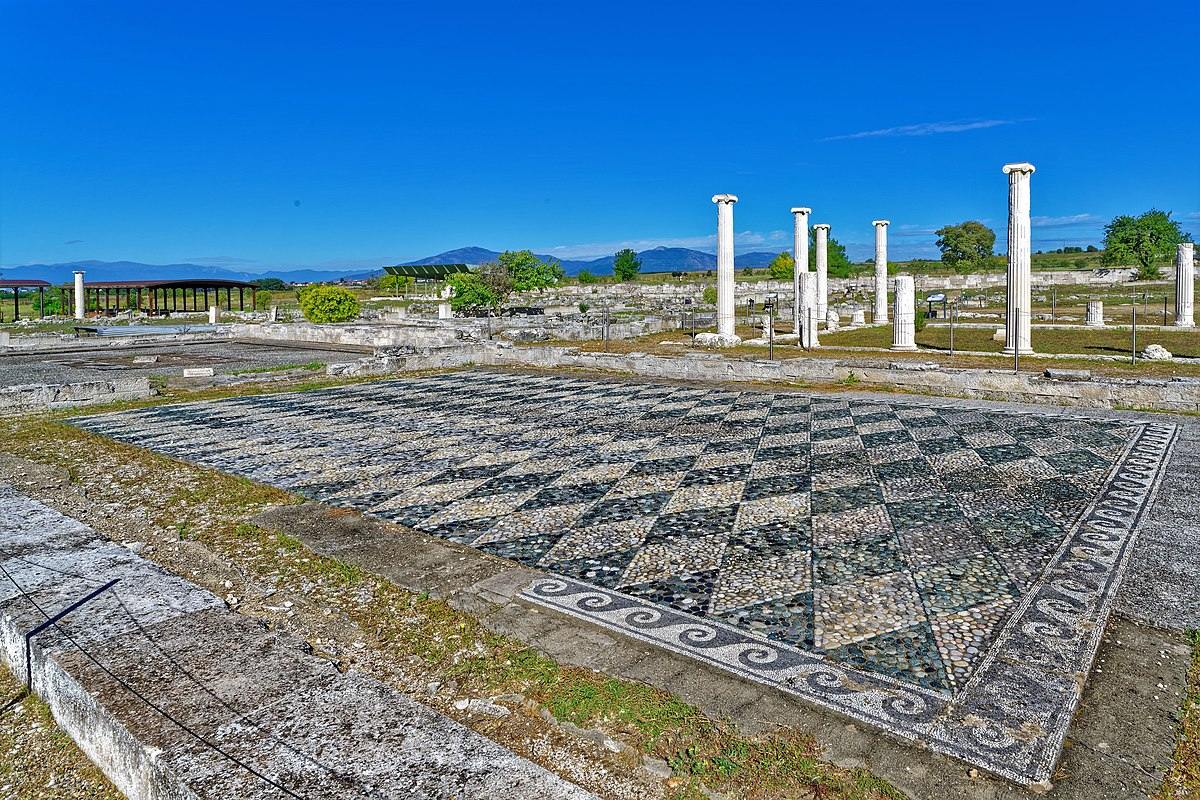
Much of what is known about Pella comes from its Hellenistic remains, which have been revealed through decades of excavation. The visible remains include the palace complex, public buildings, the agora, and impressive private residences adorned with mosaics. However, researchers are now looking even further back into the past.
“We know the Hellenistic years quite well, as the city is visible through excavations. What interests us now is the early history of Pella,” Dr. Elisavet Tsigarida told the Athens-Macedonian News Agency. According to Tsigarida, archaeological evidence indicates that by the beginning of the 4th century BC, the urban layout recognizable today in the Hellenistic city had already begun to take shape.
“The evidence we have shows that already from the beginning of the 4th century BC, the urban grid that we recognize today in the Hellenistic city had been formed,” she explained. When the Macedonians established the new city farther south, closer to the sea, it evolved in accordance with this organized urban plan. The earlier Pella, however, remains much harder to identify.
“The older Pella lies beneath the Hellenistic city and has largely been destroyed, making it difficult to locate. However, what we have collected indicates that Pella existed before the foundation of the Macedonian city, although we cannot yet determine what form it had at that time,” Tsigarida said.
Using technology to uncover a lost landscape
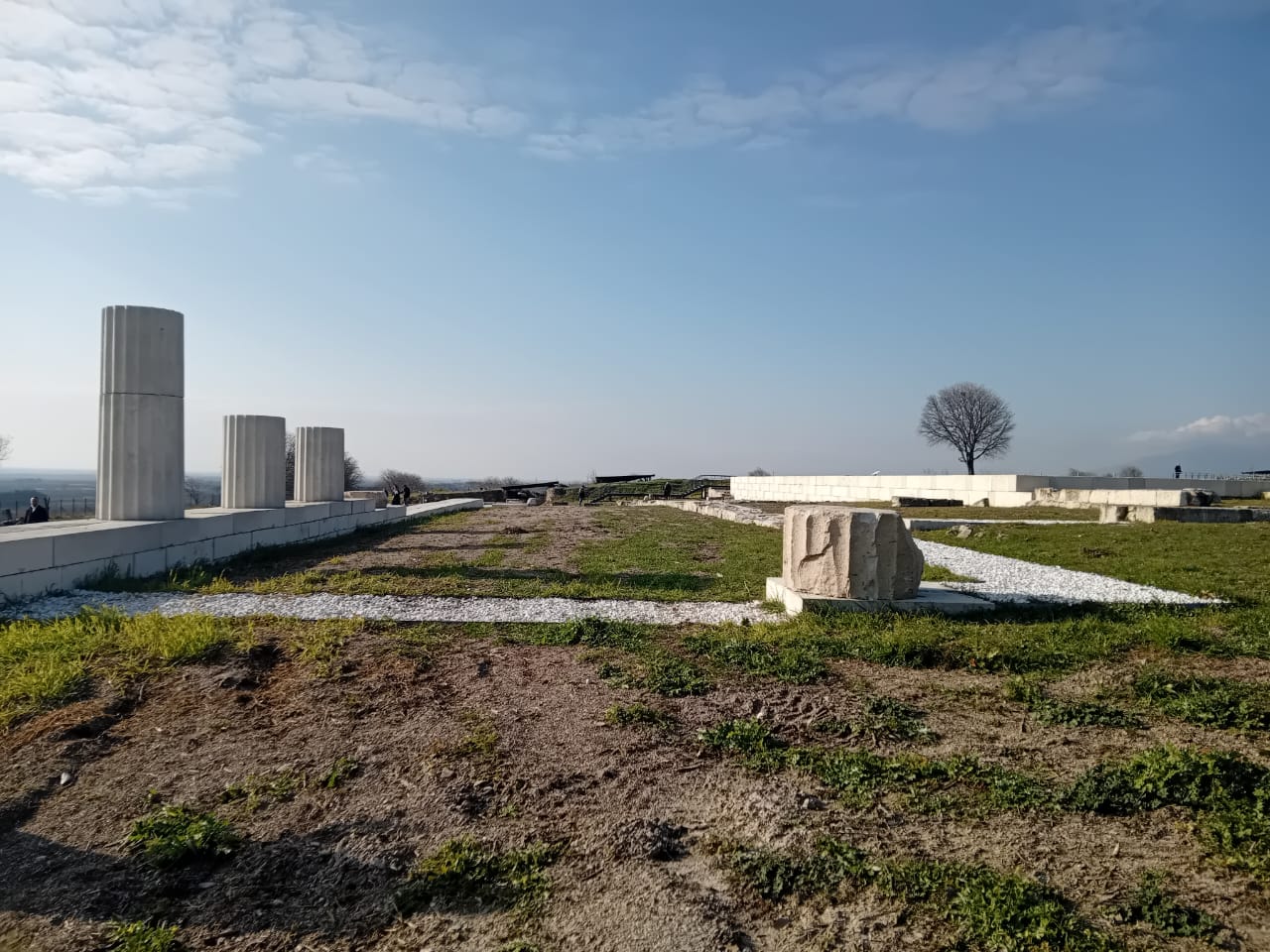
One of the most important tools in the research has been geophysical surveying, which allows archaeologists to detect structures beneath the ground without extensive excavation. This has helped researchers identify previously unknown features of ancient Pella’s urban landscape, including the southern limits of the city and clues pertaining to its relationship with the coastline.
Over the past five years, surveys have produced significant results by locating the southern boundaries of the ancient city and approaching the position of the ancient shoreline, when the sea extended much closer to Pella than is the case today. “With geophysical surveying, we were even able to identify buildings that are probably connected with the installations of the ancient harbor,” Tsigarida said.
She added that one of the most significant discoveries was the correlation between underground structures detected by geophysical methods and surface archaeological evidence. “The most impressive thing was that where the survey showed that the buildings ended, the findings from the surface survey also stopped. Beyond that point, there were no traces of human activity, confirming that the sea was located there,” she explained.
A new picture of Macedonia’s capital
Understanding the exact boundaries of ancient Pella is important not only for archaeological research but also for managing and protecting the wider archaeological landscape. In addition to being the birthplace of Alexander the Great, the findings provide a more thorough picture of Pella as a city shaped by geography, trade, and human activity. The study also highlights how much remains to be discovered beneath and around one of Greece’s most vital ancient sites.
While Alexander’s legacy significantly contributed to Pella’s becoming renowned worldwide, archaeologists are now revealing the deeper history of the city itself, including its origins and how it expanded and was transformed from a coastal settlement into the center of one of the ancient Mediterranean’s most powerful kingdoms.
Related: Restored Palace of Pella Reopens at Alexander the Great’s Birthplace
See all the latest news from Greece and the world at Greekreporter.com. Contact our newsroom to report an update or send your story, photos and videos. Follow GR on Google News and subscribe here to our daily email!

