



Every year in parts of Madagascar, children are condemned simply because of the circumstances of their birth. Some are targeted because they are twins, a condition that centuries-old traditions in parts of the island associate with misfortune. Others are hunted because they have albinism, as local superstitions falsely claim their body parts possess magical powers capable of bringing wealth or good fortune.
Standing between these children and almost certain death is an unlikely protector: Bishop Prodromos of Toliara and South Madagascar, whose Orthodox Christian mission has become one of the country’s few sanctuaries for children rejected, abandoned, or hunted because of deeply rooted beliefs.
While the Diocese is widely known for its medical programs, schools, and efforts to combat severe infant malnutrition, one of its most extraordinary missions has remained largely unseen—the rescue of children whose lives are threatened by superstition.
This is the second part of Greek Reporter‘s special on-the-ground report from Madagascar, where our team traveled deep into the island’s remote south to document the humanitarian work of the Orthodox mission serving some of the country’s most vulnerable communities.
Children condemned for being twins
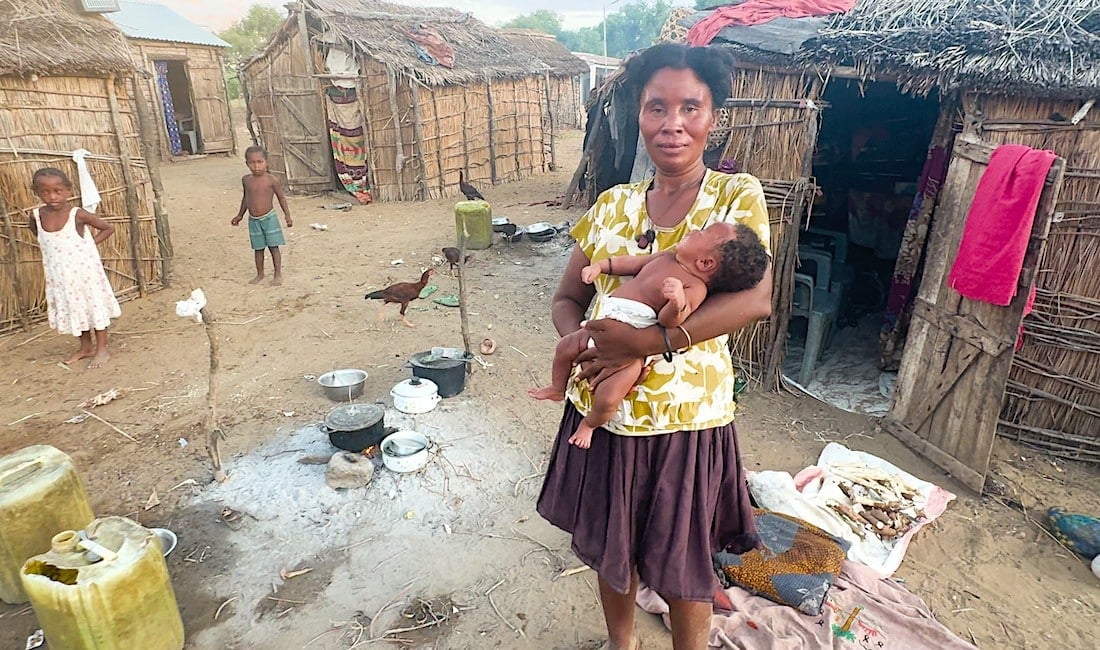
One of the most heartbreaking traditions survives around the eastern region of Mananjary. According to local custom, twins are believed to bring misfortune not only upon their family but upon the entire community. Oral tradition traces the belief to an ancient story of a tribal queen who abandoned her twin children after fleeing the region. Since then, twins have been regarded as a curse capable of bringing famine, disease, and death.
The consequences are devastating. Parents are often pressured to choose which child will survive. One infant may be abandoned or killed, while the surviving sibling is raised alone. Because families fear social ostracism, few are willing to adopt children believed to carry such a stigma.
“When I first came to this area as bishop and was trying to get to know my entire province, I arrived at that place and when I heard about this custom, I was truly shocked,” Bishop Prodromos told Greek Reporter. “From that moment on, I felt a desire to save these children.”
Hunted for their albinism
Children born with albinism face a different but equally terrifying danger. Across parts of Africa, criminal networks continue to exploit long-standing superstitions claiming that the bones, eyes, hair, or other body parts of people with albinism possess magical properties capable of bringing prosperity or success. Those beliefs have fueled kidnappings and murders for decades.
To protect vulnerable children, Bishop Prodromos established the Santa Marina Children’s Home in Belemoka near the Diocese headquarters in Toliara. Today, the orphanage shelters around one hundred children rescued from abuse, abandonment, and trafficking. Among them is Emma. When she was just three years old, traffickers kidnapped her from her village, carrying her inside a burlap sack for three days. They intended to kill her and sell parts of her body.
Her life was saved only because someone in a nearby village shouted at the kidnappers, who panicked, dropped the sack, and fled. Emma remembers little about her early childhood. She does not know her original name, where she was born, or who her parents were. Her earliest memory is hearing the men discuss how they planned to remove her eyes. Her family never came looking for her.
Building a refuge
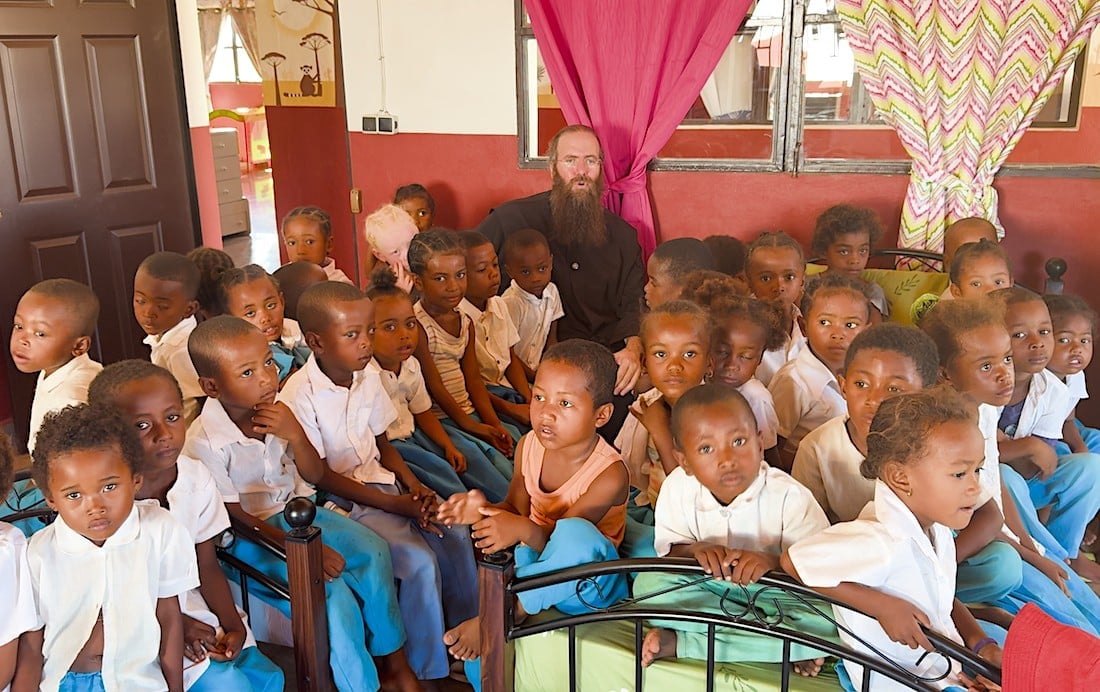
Creating a permanent refuge required more than compassion. Madagascar’s authorities would only license the orphanage after the Diocese constructed a complete residential complex, including dormitories, classrooms, kitchens, and dining facilities.
The project stalled because the mission lacked €110,000 (about $125,600) needed to complete construction. Then, Bishop Prodromos received an unexpected phone call from Greece. An anonymous donor had intended to finance the construction of a church. Instead, the Bishop explained that the greatest need was not another church building but a home where endangered children could survive. Five days later, the donor called back. The entire amount had been transferred.
Today, the orphanage’s operating expenses are largely covered through the generosity of the Athanasios and Marina Martinou family, whose support is dedicated to the memory of their late daughter, Athinoula. “I am merely a steward of your love,” Bishop Prodromos says with characteristic humility. “I try to manage it in the best possible way.”
Winning trust instead of confrontation: The Orthodox bishop in Madagascar
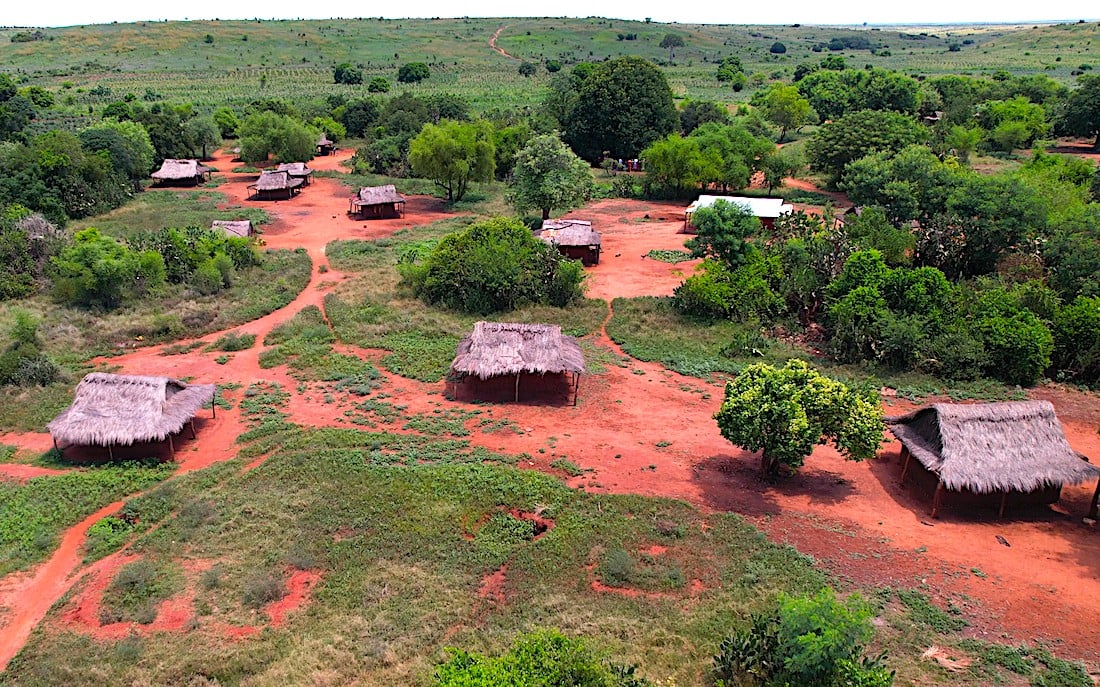
Rather than confronting local beliefs through condemnation, the Orthodox mission has chosen a different path. It offers medical care, education, food, and shelter to everyone, regardless of religion or background. “The state and the people here in Madagascar recognize our efforts,” Bishop Prodromos told Greek Reporter.
“What touches these people is that, as the Orthodox Church, we never ask what anyone believes in. We only see them as people. The issue of faith is purely a matter of freedom, and this touches people here deeply.” That philosophy earned the mission extraordinary respect during a period of violent political unrest. As riots swept through the city, businesses and warehouses were looted, and the Diocese feared losing its food supplies used to feed hundreds of malnourished infants every month.
When the curfew ended, the mission’s warehouses stood untouched. A handwritten message had been left on one of the doors: “Because you respected us, we respected you.”
A mission in Madagascar that came full circle with the Orthodox bishop

Perhaps no one better represents the mission’s impact than Lortine. Today, she directs the Orthodox Health Center and oversees many of the Diocese’s humanitarian programs. However, years ago, she was one of the children the mission exists for. “I am a victim of these cases,” she told Greek Reporter.
“I didn’t know my own story before, and I didn’t know Bishop Prodromos would one day create an orphanage specifically for children like me.” Her survival came through a chain of quiet interventions long before she understood what had happened. Now she has become the protector.
Every day, she helps rescue children from the same traditions that nearly claimed her own life, ensuring that what was once a place of fear has become a sanctuary of hope.
Visit the Diocese’s website for more details and to learn about how you can help with its mission in Madagascar.
Related: The Good Samaritans of South Madagascar: Inside the Miracle of the Greek Orthodox Mission
See all the latest news from Greece and the world at Greekreporter.com. Contact our newsroom to report an update or send your story, photos and videos. Follow GR on Google News and subscribe here to our daily email!

