



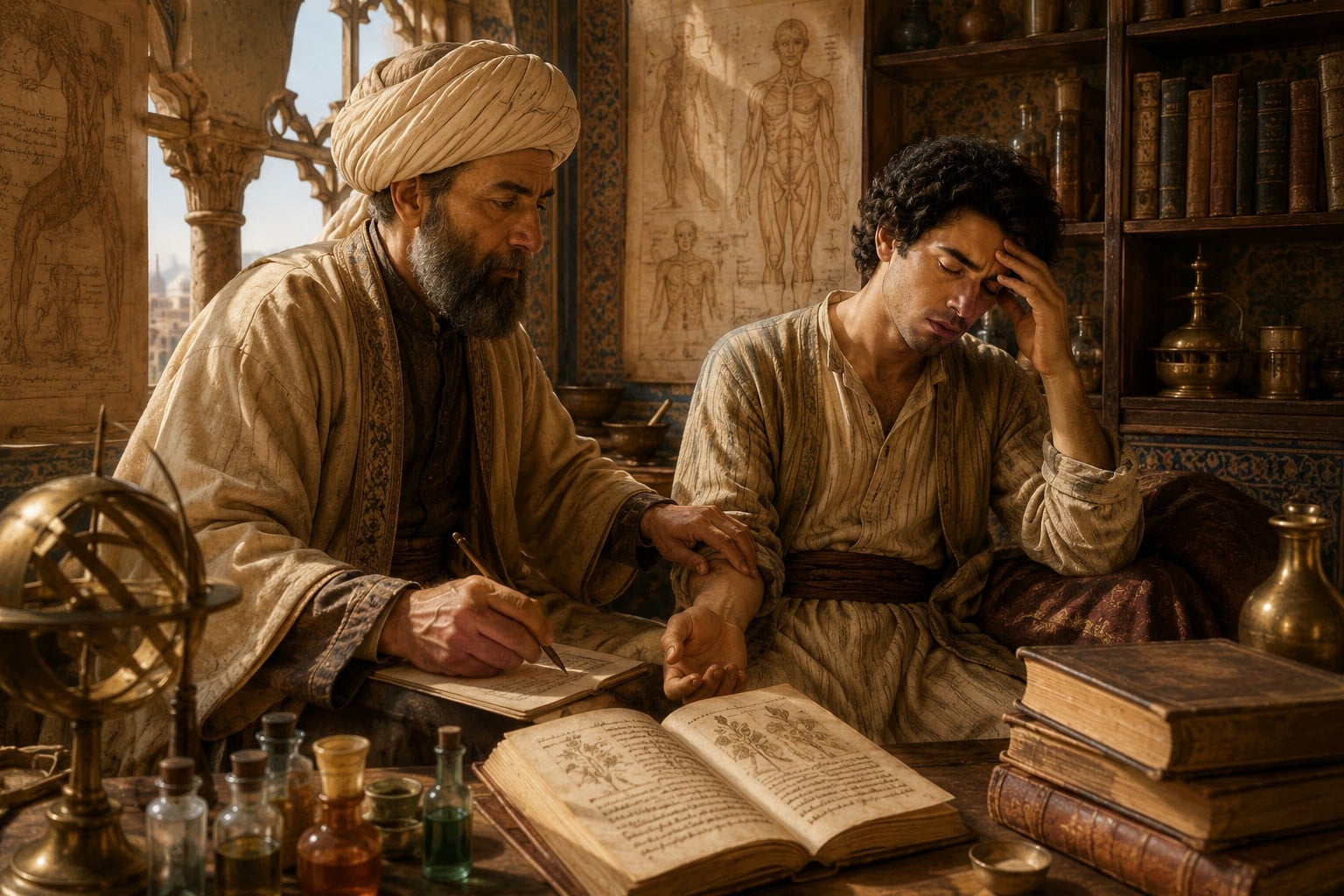
Lovesickness was recognized as a distinct mental illness by physicians in the medieval Islamic world, according to new research. Rather than treating the condition as a form of melancholy, as many physicians in ancient Greece had done, Islamic scholars developed their own medical understanding of the illness, known as “ishq.”
The study found that medieval Islamic physicians expanded on earlier Greek medical traditions instead of simply adopting them. They argued that lovesickness had its own causes, symptoms, and treatments, making it a separate psychological condition that required its own diagnosis.
Early physicians saw lovesickness differently
Medical views changed over time. Physicians writing in the 10th century often described lovesickness as an illness that mainly affected people driven by uncontrolled desire or poor judgment.
By later centuries, however, scholars argued that the condition could affect anyone, regardless of status or moral character. Their writings suggested that even prophets, saints and other respected religious figures could suffer from it.
The findings reveal how ideas about mental health evolved across the medieval Islamic world, reflecting a growing interest in understanding the emotional and psychological causes of illness.
Emotional distress was believed to affect the body
Researchers found that medieval Islamic physicians believed emotional distress could directly affect physical health. They viewed the mind and body as closely connected and argued that intense emotions could produce real physical symptoms.
In the 11th century, the physician Ibn Sīnā, also known as Avicenna, described a woman whose lovesickness left her physically weak and ill. His writings presented emotional suffering as a condition capable of harming the body, not just the mind.
A different explanation emerged in the 13th century. Physician Ibn al-Nafīs argued that lovesickness resulted from a build-up of seminal fluids. Based on this theory, he believed young people, unmarried individuals, and even those considered morally upright were more likely to develop the illness.
Literature and mysticism influenced medical thinking
The study found that medical ideas about lovesickness continued to evolve through the 16th century. Physicians increasingly discussed the condition alongside literary works on obsessive love and religious writings.
Sufi mysticism also shaped these medical discussions. In the Sufi tradition, particularly the teachings associated with the 13th-century poet and mystic al-Rūmī, love became a central force connecting people with God. Researchers say these religious ideas influenced how some physicians interpreted emotional suffering and lovesickness.
Ottoman physician expanded the theory
One of the most influential later physicians was Ibn al-Mubārak, who served as court physician to the Ottoman sultans Selim I and Süleyman the Magnificent.
After studying under the philosopher-theologian Jalāl al-Dīn al-Dawānī in Shīrāz, he expanded on Ibn al-Nafīs’ ideas, arguing that lovesickness could arise unintentionally and affect even the most virtuous people.
Spiritual love required a different treatment
Ibn al-Mubārak also distinguished between romantic and spiritual lovesickness. While lawful sexual intercourse was commonly viewed as a treatment for romantic lovesickness, he argued that it did not apply to prophets and saints because their suffering was not rooted in physical desire.
Instead, he wrote, their condition stemmed from spiritual purity and overwhelming love for God, leaving no place for sexual desire.
Study traces centuries of medical thought
Nahyan Fancy, Al Qasimi Professor of Islamic Studies at the University of Exeter, led the research. By examining medical texts alongside works of philosophy, literature and theology, the study shows how medieval Islamic scholars developed a sophisticated understanding of lovesickness as both a psychological and physical condition while reshaping inherited medical ideas into a distinctly Islamic medical tradition.
See all the latest news from Greece and the world at Greekreporter.com. Contact our newsroom to report an update or send your story, photos and videos. Follow GR on Google News and subscribe here to our daily email!

