



Thousands of animal bones recovered from Dispilio, a Neolithic lakeside settlement in Greece, show how ancient farmers raised cattle, pigs, sheep, and goats more than 5,000 years ago.
The findings come from a new study led by Eleni Samartzidou of the Faculty of History and Archaeology at Aristotle University in Thessaloniki, published in the journal L’Anthropologie.
Samartzidou and her team examined 9,471 bones and bone fragments from the site’s main domesticated animals. They studied jawbones and other skeletal parts to estimate the age of the animals at death.
They also measured the bones to track body size changes over time, the sex of the animals, and how far along the domestication process had gone.
The study found that cattle were kept mainly for meat and milk. Pigs were raised for meat and were sometimes killed only after reaching their full adult weight.
Sheep were used mainly for meat, with milk and wool playing a smaller role, and sheep grew larger in size during later periods of the settlement’s history. Goats served mainly as a source of meat and milk, with hides and hair as secondary products.
Animal bones reveal Dispilio’s place in Greece’s Neolithic world
Despite its unusual lakeside setting, Dispilio’s farming methods closely matched those found at other Neolithic sites across Greece.
Researchers describe this as an “intensive mixed farming model,” in which small numbers of animals were raised alongside crops rather than herded on a large scale. The study marks the first detailed look at livestock practices in a prehistoric lakeside community in Greece.
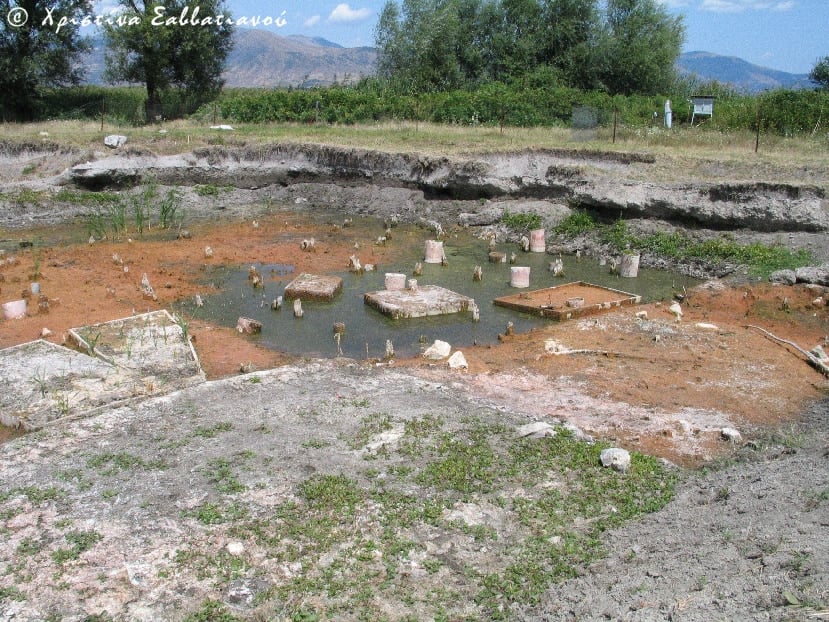
Dispilio sits on the southern shore of Lake Orestias in the Kastoria region of Western Macedonia, about 8 kilometers (5 miles) south of the modern town of Kastoria. The settlement formed a low mound, locally called “Nisi,” meaning island, built up over centuries by human activity and shifting lake levels.
The site covers roughly 10,000 square meters (2.5 acres) and stands out as the only lakeside village in Greece occupied continuously through the entire Neolithic period and into the early Bronze Age.
Bone counts show a slow rise in wild animal remains
Researchers identified close to 10,900 bones and bone fragments down to the species level across five occupation layers.
The share of wild animal remains rose gradually over time, climbing from about 2.6 percent to 4.9 percent in later layers, pointing to a slow shift in how the community used its surrounding environment.
The research team compared the Dispilio bones with animal remains from other major Neolithic sites in Greece.
The comparison showed that despite its distinct lakeside location, Dispilio fits the broader pattern of small-scale, intensive animal farming seen elsewhere in the region during the Neolithic period.
See all the latest news from Greece and the world at Greekreporter.com. Contact our newsroom to report an update or send your story, photos and videos. Follow GR on Google News and subscribe here to our daily email!

