



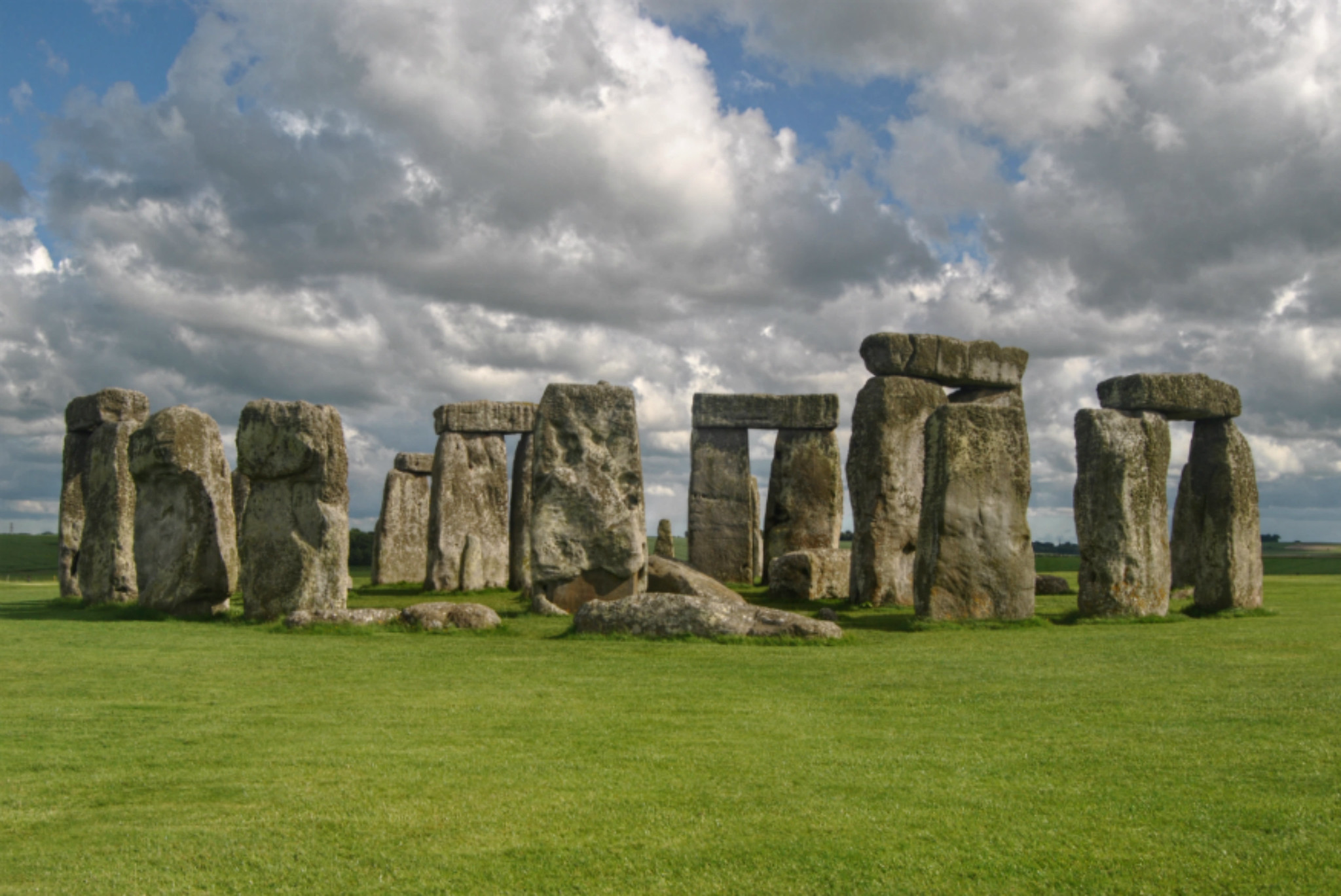
Archaeologists have discovered a 5,000-year-old solstice site near Stonehenge that predates the famous stone circle by about 500 years. The discovery, led by Phil Harding of Wessex Archaeology, is the earliest known structure built to align with the solstice anywhere in the Stonehenge area.
The site lies in Bulford, Wiltshire, roughly five kilometers (3 miles) from Stonehenge. Radiocarbon dating places it at about 5,000 years old. That is the same era when the first earthworks at Stonehenge were built.
Researchers say the structure consisted of two wooden poles set 120 meters (394 feet) apart. The poles formed a line that pointed toward the sunrise on the summer solstice and the sunset on the winter solstice. Only the pits that once held the poles survive today, and they are not open to the public.
Fabio Silva, a skyscape archaeologist with ‘Stone x Sky’ and the Skyscape Academy, analyzed the alignment using reconstructions of the ancient sky and landscape. He found the poles matched the solstice positions to within one degree.
5,000-year-old solstice site confirms alignment near Stonehenge
The findings suggest a similar wooden structure may have stood at Stonehenge during its earliest phase, before the stones were raised. Researchers believe later construction at the site erased any trace of it.
@wessexarch 📢 Discovery led by Phil Harding reveals 5,000-year-old ‘prototype’ for #Stonehenge solar alignment Radiocarbon dated to around 5,000 years ago, the discovery reveals evidence for the earliest known alignment with the solstice in the Stonehenge landscape, at least 500 years before the alignment of the stones at Stonehenge. The structure at the heart of the discovery would have consisted of two wooden poles 120 metres apart. Analysis conducted by leading skyscape archaeologist, Dr Fabio Silva, showed how this would have aligned with the solstices to within an accuracy of one degree, pointing directly towards the midsummer sunrise and midwinter sunset. Located 5km from Stonehenge at Bulford, Wiltshire, the site was likely a focus for major religious gatherings, with extensive evidence of feasting and large-scale gatherings as people came together to celebrate. 🔗 Read more, link in our bio @english.heritage | Ministry of Defence | Defence Infrastructure Organisation | Tetra Tech Europe | The Skyscape Academy | Stone x Sky 🎥 Video description: Phil Harding can be seen at Stonehenge on an overcast day, speaking to camera and wearing his signature hat. #Neolithic #SummerSolstice
The original excavation took place at the solstice site between 2015 and 2017, uncovering 48 pits dated to around 2950 B.C. Workers found pottery, animal bone, worked flints, and charcoal, evidence that large groups gathered there over short periods.
One pit, likely part of a viewing area, held a rare disc-shaped flint knife that researchers believe stood in for the sun.
The dig was carried out south of the Salisbury Plain Training Area for the Ministry of Defence. It came ahead of the construction of new housing for soldiers returning from Germany.
Experts say the find reshapes Stonehenge’s ancient story
Harding called the find one of the most significant of his career. He said that ancient communities valued the sun greatly and were able to track its midsummer position with precision, centuries before Stonehenge took its current form.
Matt Leivers, senior research manager at Wessex Archaeology, said that the site shows how prehistoric people viewed their place in the world. He said that the structure was tied to religion, marking the passage of time and seeking protection and survival.
Silva said that the find shows Stonehenge grew out of older traditions rather than standing as a single, isolated creation. He said that it shows communities were already marking both solstices long before the sarsen stones were raised.
Richard Osgood, of the Ministry of Defence’s Defence Infrastructure Organisation, said that the outcome was unexpected. He said that a routine excavation turned into a discovery that changed how experts understand the ceremonial landscape surrounding the area.
See all the latest news from Greece and the world at Greekreporter.com. Contact our newsroom to report an update or send your story, photos and videos. Follow GR on Google News and subscribe here to our daily email!

