



Archaeologists have uncovered a well-preserved Roman villa near Rome, complete with colorful mosaics, painted walls, and rooms that survived nearly intact after centuries underground.
The discovery at the Castel di Guido agricultural estate has revealed what researchers believe is part of a larger imperial-age complex that was previously unknown.
The find came through unusual circumstances. A tip about illegal digging at the estate prompted Italy’s Special Superintendence of Rome and the Carabinieri to act. Within days, authorities halted the unauthorized excavation and secured the site, allowing proper archaeological work to begin.
Under the scientific direction of archaeologist Alessia Contino, the team uncovered well-preserved rooms with walls rising up to 1.5 meters (about 5 feet).
Researchers identified the villa’s atrium, which features a central rainwater basin surrounded by geometric and floral decorations. Adjacent rooms contain mosaic floors, and evidence of the estate’s productive activities was also found at the site.
Illegal dig report leads to remarkable Imperial-era discovery
Among the most striking finds is a fragmentary marble statue of a bearded figure carrying a small animal, likely a calf or piglet. Researchers believe it represents Silvanus, an ancient deity associated with rural life.
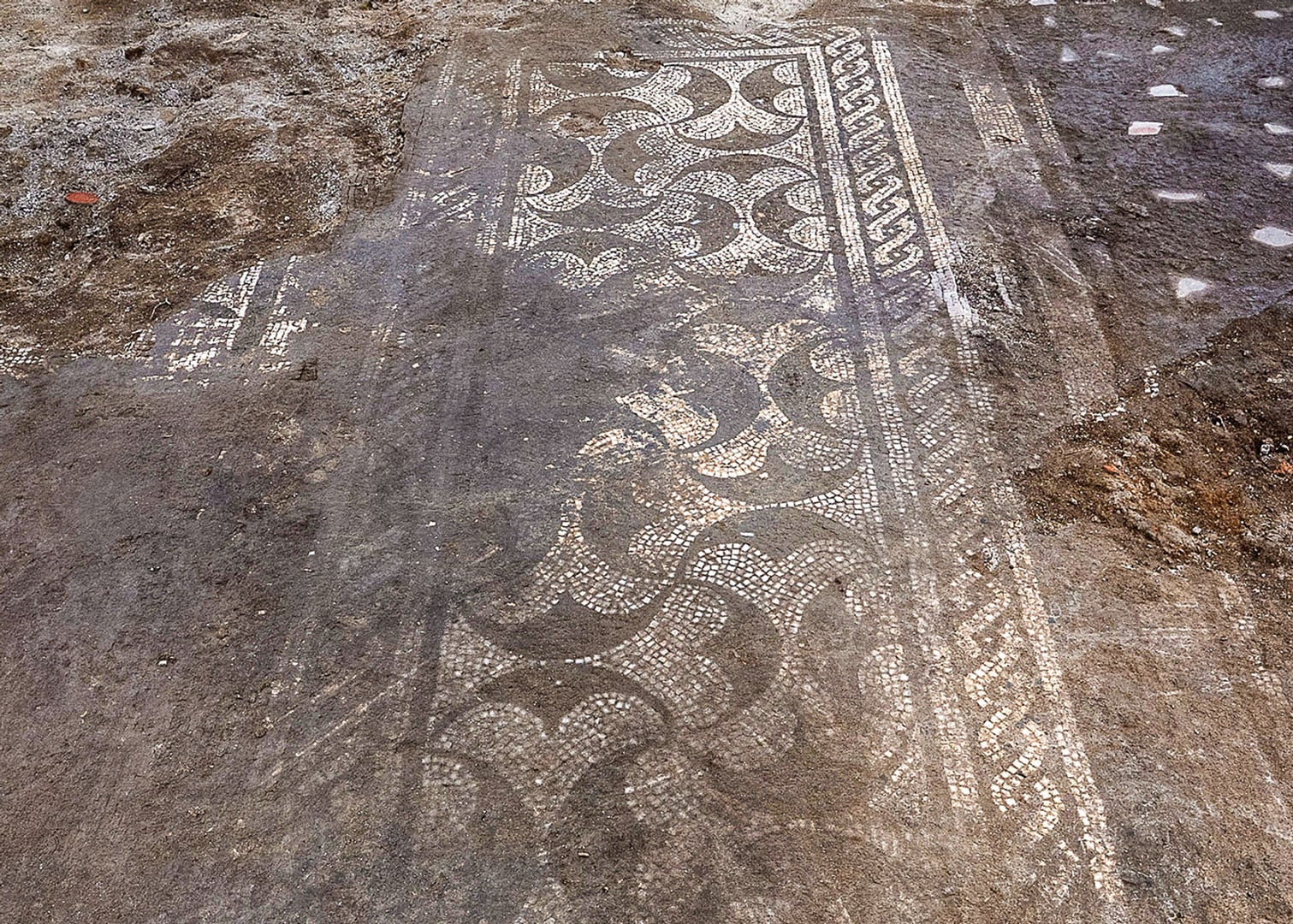
The quality of the villa’s mosaics, painted walls, and white marble statue points to owners who likely belonged to Rome’s aristocracy with close ties to the imperial estate at Lorium.
That territory was historically linked to Emperor Antoninus Pius, who built a residence there. Emperors Hadrian and Marcus Aurelius also frequented the area. The site appears connected to the ancient road known as the Via Aurelia.
Contino said that the community tip and the speed of the official response made it possible to identify part of this previously unrecorded imperial-era villa and bring to light an exceptional set of decorations, along with the fine white marble statue.
She called it an important new discovery that opens fresh possibilities for understanding and protecting the region’s historical heritage.
Roman villa’s mosaics and painted walls tied to imperial aristocracy
Culture Minister Alessandro Giuli said that officials and military personnel worked together within days to stop the illegal dig, secure the area, and begin uncovering a significant chapter of Roman history. He described the operation as an exemplary act of protection and research.

Daniela Porro, the Special Superintendent of Rome, said that the find highlights the city’s remarkable archaeological wealth far beyond its historic center.
The excavation opens to the public on June 20, 2026, with free guided treks. The route covers roughly 1 kilometer (0.6 miles) and takes between 90 minutes and two hours to complete. Visitors will be able to view the villa’s remains and observe the mosaics currently undergoing restoration.
See all the latest news from Greece and the world at Greekreporter.com. Contact our newsroom to report an update or send your story, photos and videos. Follow GR on Google News and subscribe here to our daily email!

