



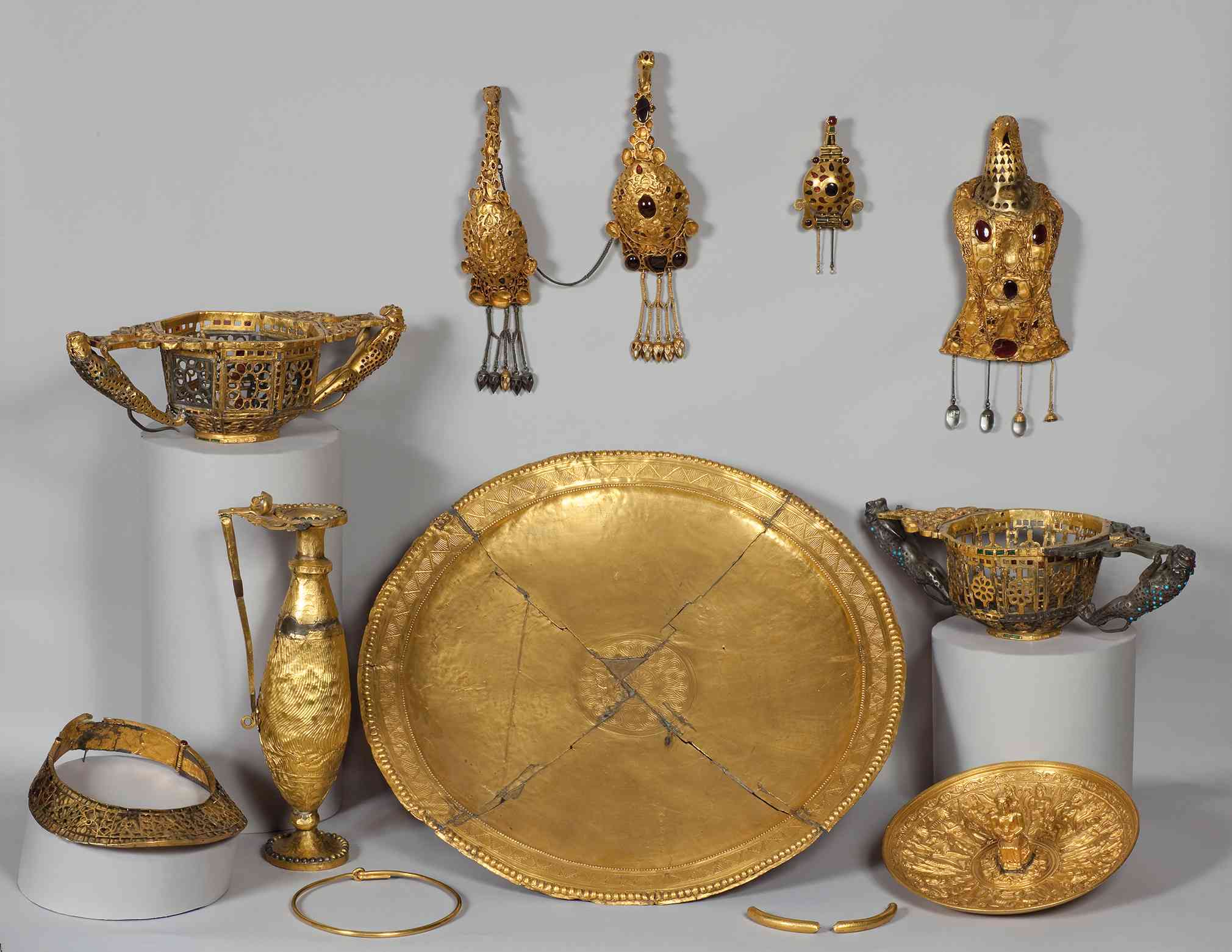
Barbarian elites across Europe used Roman gold jewelry to legitimize their rule and model their authority on imperial power, a practice that enabled a surprisingly smooth transition when they took over the empire in the fifth century, a new study argues.
Susanne Hakenbeck of the University of Cambridge traces this dynamic through centuries of gift-giving, obligation, and imitation along Rome’s northern and eastern frontiers.
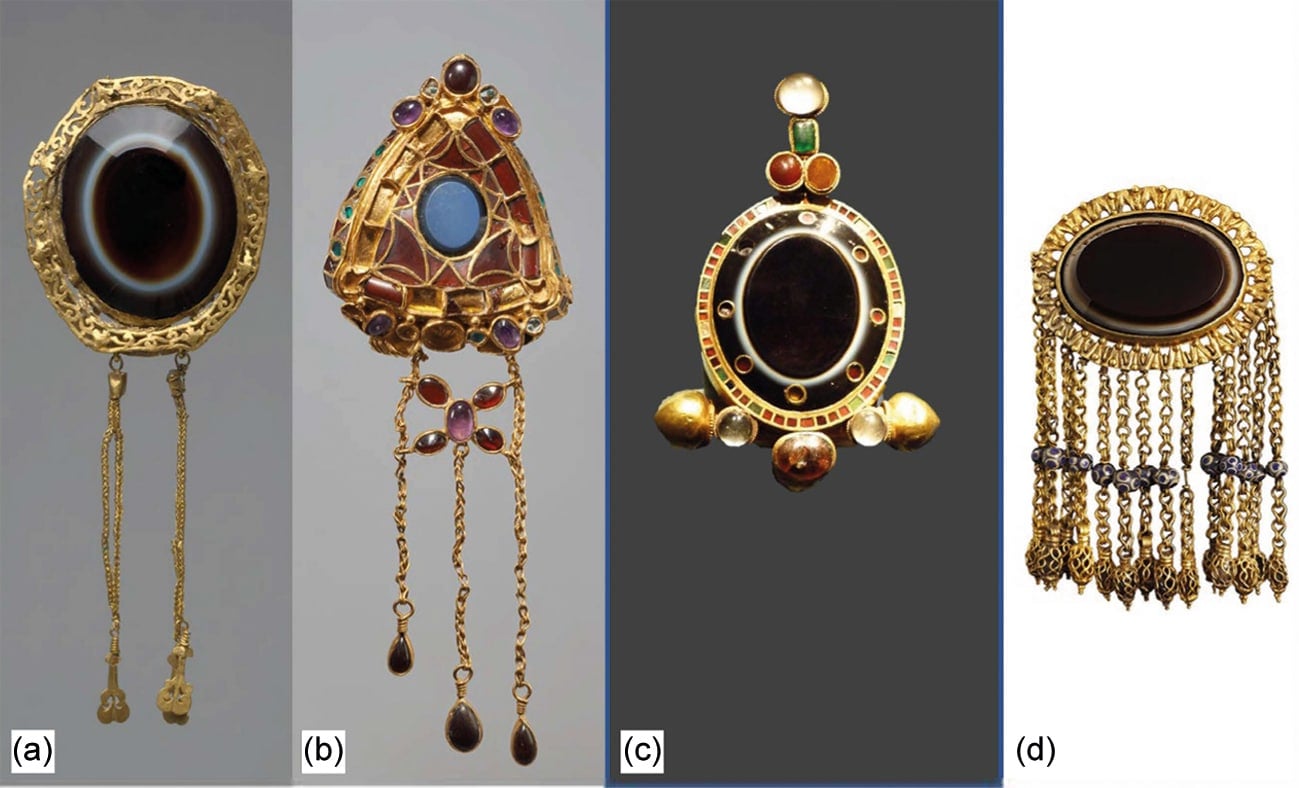
The study, published in the Cambridge Archaeological Journal, examines a series of gold brooches found in Slovakia, Romania, and Georgia. These “imperial brooches” featured oval onyx stones in elaborate gold settings with dangling pendants.
Similar brooches appear on Emperor Justinian in sixth-century Ravenna mosaics and on the Missorium of Theodosius, a ceremonial silver plate from 388 CE. Roman emperors wore them as badges of authority.
Barbarian rulers wore Roman gold jewelry as imperial endorsement
Hakenbeck identifies a newly recognized fourth imperial brooch from Ureki in Georgia, expanding the known reach of these diplomatic gifts to the eastern Black Sea coast. She argues that Mediterranean workshops produced all four brooches, and emperors gave them to outside rulers as high-level diplomatic gestures.
Gold medallions served a similar function. About 100 have been found beyond Rome’s northern frontiers, mostly in Poland, Ukraine, and Romania.
The Szilágysomlyó treasure in Transylvania contained 15 such medallions, some so heavily worn that goldsmiths had replaced their loops more than once, suggesting multiple generations had treasured them.
These gifts created networks of obligation. Unlike the more formalized client kingdoms along Rome’s eastern and North African frontiers, relationships along the northern frontiers were personal and fluid.
Rulers who received imperial gifts owed something in return, whether peace, grain, or military service. After the Marcomannic Wars ended in 180 CE, the defeated Marcomanni paid annual grain levies. In other periods, Gothic groups supplied soldiers directly to Roman armies.
Rulers feasted followers while goldsmiths replicated Roman prestige
Richly furnished graves from this period, such as the chamber grave at Mušov in the Czech Republic, also contained elaborate bronze and silver vessels for communal feasting.
Hakenbeck argues that local rulers used feasting to build loyalty among their own followers, creating obligation networks that mirrored those connecting them to the emperor.
By the fifth century, rulers began commissioning local goldsmiths to copy Roman gold jewelry and medallions rather than waiting to receive them as imperial gifts.
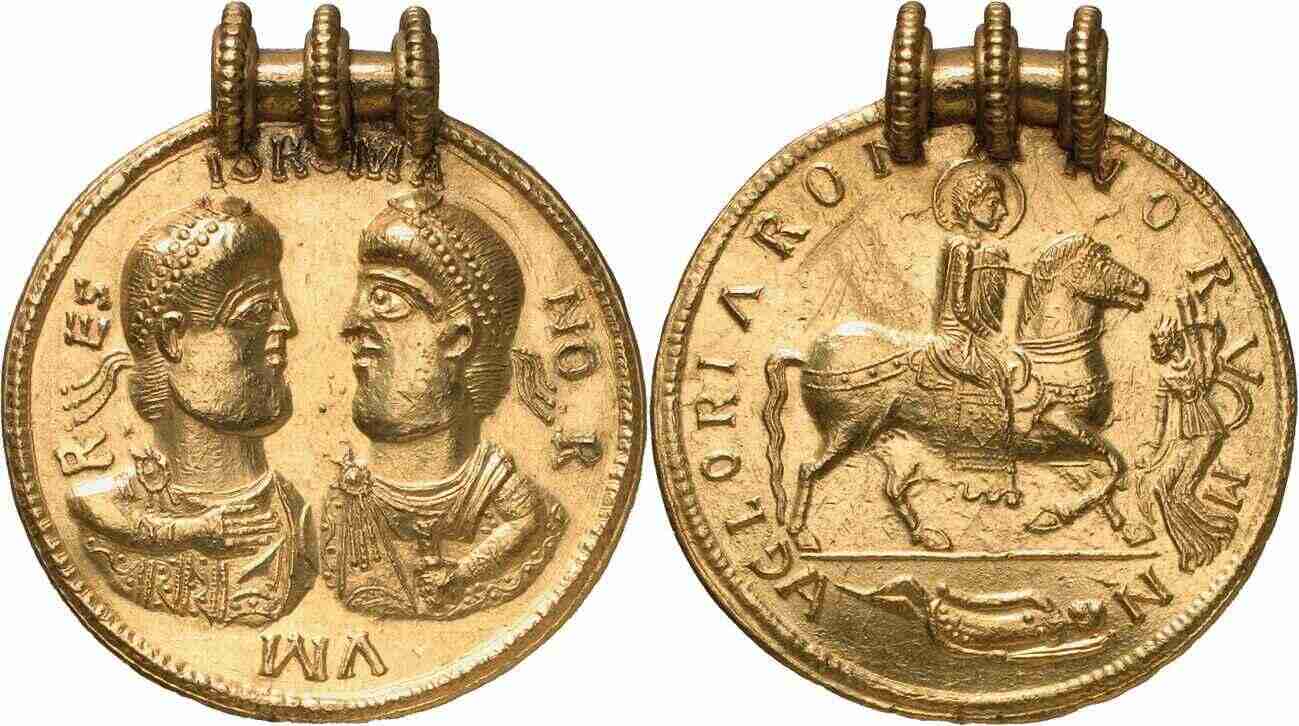
A brooch shaped like an eagle from Pietroasa, Romania, and imitation medallions from Zagorzyn, Poland, including one carrying a misspelled inscription reading “king of the Romans,” were produced entirely outside imperial workshops.
Barbarian rulers retained those objects’ symbolic power but shed the obligations that originally came attached to them.
Centuries of proximity turned outsiders into imperial successors
Frankish king Clovis demonstrated the same logic in 507 CE. After receiving an honorary consulship from the Byzantine emperor Anastasius, Clovis staged his own investiture ceremony.
He combined imperial symbols with rituals he invented himself, presenting himself as a ruler who understood Roman tradition but answered to no one.
Hakenbeck uses the concept of “galactic mimesis” to frame this long transformation. Outlying rulers absorbed the political culture of the imperial center and used it to build their own standing.
Over centuries of diplomacy, trade, and military service, people beyond the frontier mastered how Roman power worked. When the moment came to take over, they were fully prepared.
See all the latest news from Greece and the world at Greekreporter.com. Contact our newsroom to report an update or send your story, photos and videos. Follow GR on Google News and subscribe here to our daily email!

