



Traces of a toxic plant compound found on surgical scissors and tweezers from China represent what researchers believe is the oldest known direct chemical evidence of surgical anesthetic use in Chinese history.
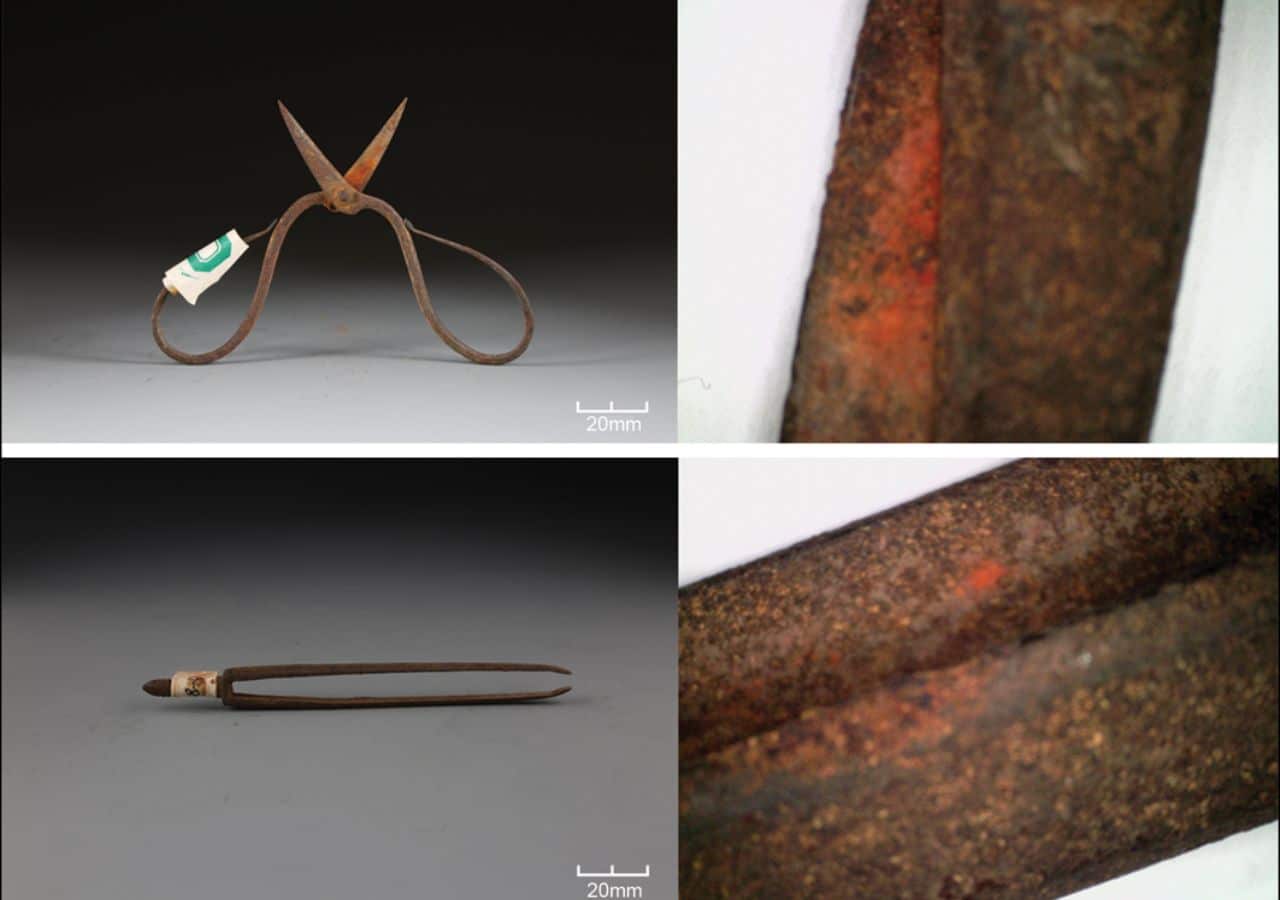
The study centers on two instruments recovered in 1974 from the tomb of Xia Quan, a physician who lived from 1348 to 1411 CE in Jiangyin County, Jiangsu Province. Published in the journal “Antiquity,” the findings shed new light on how Ming Dynasty surgeons managed pain.
Xue Ling, lead author and researcher at the Centre for Medical Archaeology, School of Cultural Heritage, Northwest University in Xi’an, said identifying the tomb’s occupant makes this one of the few cases where medical tools can be linked to a specific individual.
That connection adds significant weight to what the residues reveal about ancient Chinese surgical practice.
Toxic plant residue detected on Ming dynasty surgical tools
Researchers collected just 2 milligrams (0.00007 oz) of red rust residue from concealed, hard-to-clean areas on each instrument. They used stimulated Raman scattering, an advanced optical imaging technique that detects chemical compounds without significantly damaging artifacts.
The analysis identified chemical signatures consistent with aconitine, a compound produced by Aconitum plants. Both Aconitum carmichaelii and Aconitum kusnezoffii appear regularly in Ming Dynasty medicinal prescriptions.
Researchers compared the residue spectra against reference samples of prepared Aconitum carmichaelii and found a close match across key chemical bands.
Ming Texts Confirm Deliberate Use of Numbing Agents
Historical texts support the interpretation. Wang Kentang’s 1602 medical work “Standards for Diagnosis and Treatment” instructs surgeons to apply a numbing agent before using scissors to cut away skin.
Another Ming text describes tweezers being used in dental surgery alongside medicinal pastes. The residues on both instruments were concentrated in functional areas.
Researchers say this points to splashing during topical application rather than later contamination. The red corrosion on the tweezers measured 1.5 millimeters (0.06 in) and was found near the handle.
Aconitine is extremely toxic, but Ming physicians had developed methods to manage that risk. They processed Aconitum by soaking it in black soybean decoctions, boiling it in vinegar, preparing it with boys’ urine, and removing the outer skin of the tuber.
For severe injuries, practitioners added Datura rhizome to increase the anesthetic effect. Researchers consulted 19 historical Chinese anaesthetic formulae during this analysis.
Ancient China’s Oldest Anesthetic Reveals a Distinct Surgical Tradition
Both instruments contained iron at purity levels exceeding 95 percent, reflecting advanced Ming smelting technology.
While European medicine of the same period pursued wound disinfection, Ming surgery focused on conservative operations using core instruments, including knives, scissors, and tweezers. The tools are now held at the Jiangyin Museum.
Researchers say the study demonstrates how residue analysis can recover medical knowledge that written records alone cannot preserve.
See all the latest news from Greece and the world at Greekreporter.com. Contact our newsroom to report an update or send your story, photos and videos. Follow GR on Google News and subscribe here to our daily email!

