



At the historical center of Athens in Plaka, the Benizelos Mansion, or the House of Agia Philothei as it is otherwise known, is the oldest house in Athens. It is now a museum that opened its doors to the public in February 2017.
In 1972, the building was taken over by the Ministry of Culture, and in 1999, ownership was handed over to the Holy Archdiocese of Athens. It was restored and reestablished as a museum with funding from the European Union.
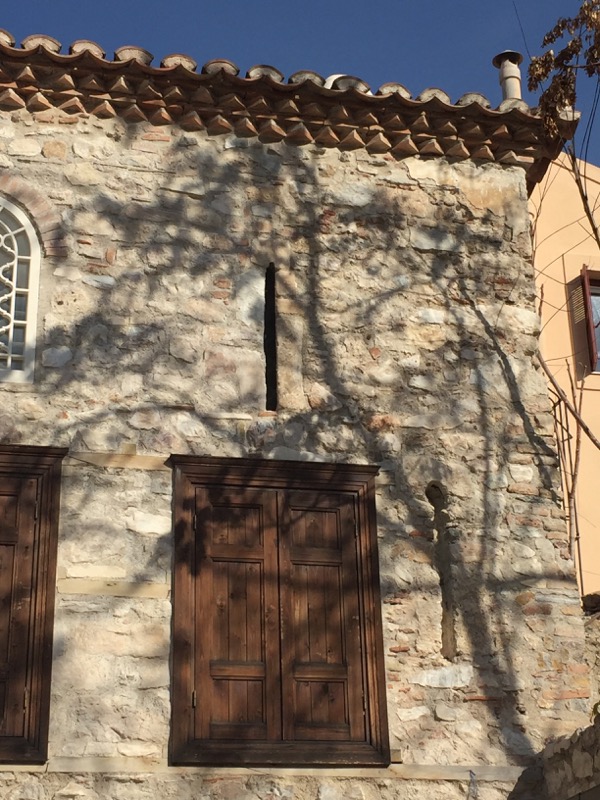
The oldest house in Athens was built in the 16th century
Built at the beginning of the 16th century and renovated at the end of the 17th, it is a characteristic two-storied mansion of the period of the Ottoman occupation. Standing in the middle of the property, the house is a two-story rectangular structure, measuring 9.30 x 23.70 meters, with a stone-built ground floor and mainly timber superstructure.
It has two courts, the north and south. From the interior of the house, immediate access is granted to the north court, still walled today, through an arched portico on the ground floor and a wooden hayiati (an open passageway towards the rooms) on the upper story. The garden of the mansion once lay to the south. This space, overlooked by an enclosed balcony projecting from the center of the corresponding facade of the mansion, is accessible from the north court via a passage.
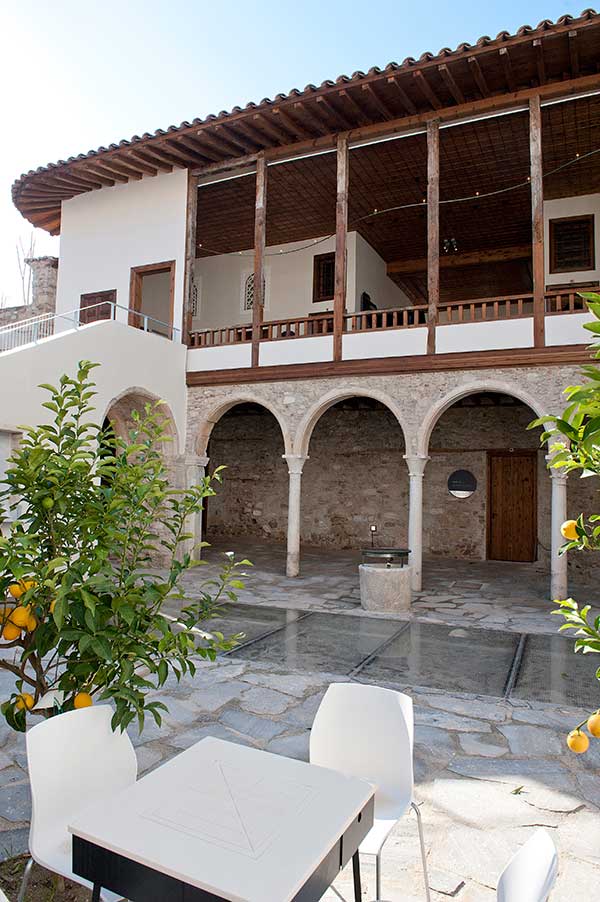
The side facades of the mansion on the east and west were once unencumbered, as windows were found there that had been blocked by later buildings. The initial property must have generally been much wider. It likely included the area to the south in which a medieval olive press has been found, and the ground floor of the structure appears to have continued further to the east, perhaps as a single-story structure with a roof terrace.
Aristocrat Benizelos and Saint Filothei lived in the house
The house belonged to Angelos Benizelos, the descendant of an aristocratic family and father of Saint Filothei. Paraskevi, as was her name, after her brief marriage and widowhood, became a nun and built a monastery near her home, where the Archdiocese of Athens is currently situated.
Deemed an important figure of her time but also likewise influential in subsequent eras, her reputation stems mainly from her social work and her later recognition as a saint. She was one of the very few female neo-martyrs who were martyred during the period of Ottoman rule.
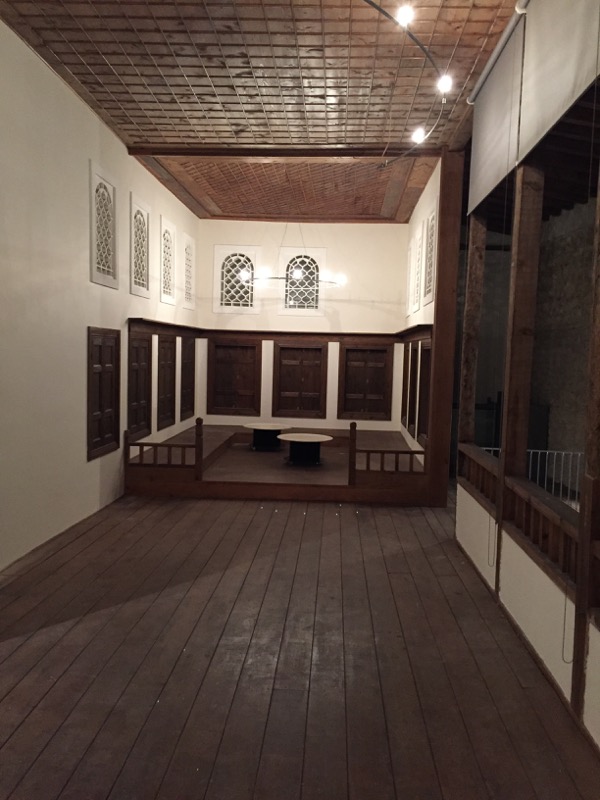
The museum tells the story of the Benizelos family and Agia Filothei and describes the habits and traditions of the Athenian aristocracy prior to the revolution against the Ottoman Empire in 1821.
A series of museum interventions—visual material, video projections, audio applications, and digital interactive exhibits—provide information on the monument as well as the historical reality surrounding it, making it conceptually accessible to all.
See all the latest news from Greece and the world at Greekreporter.com. Contact our newsroom to report an update or send your story, photos and videos. Follow GR on Google News and subscribe here to our daily email!

